Materials & Quality
Foam Density and Cushion Quality, Explained (lb/ft³ Guide)
7 min read
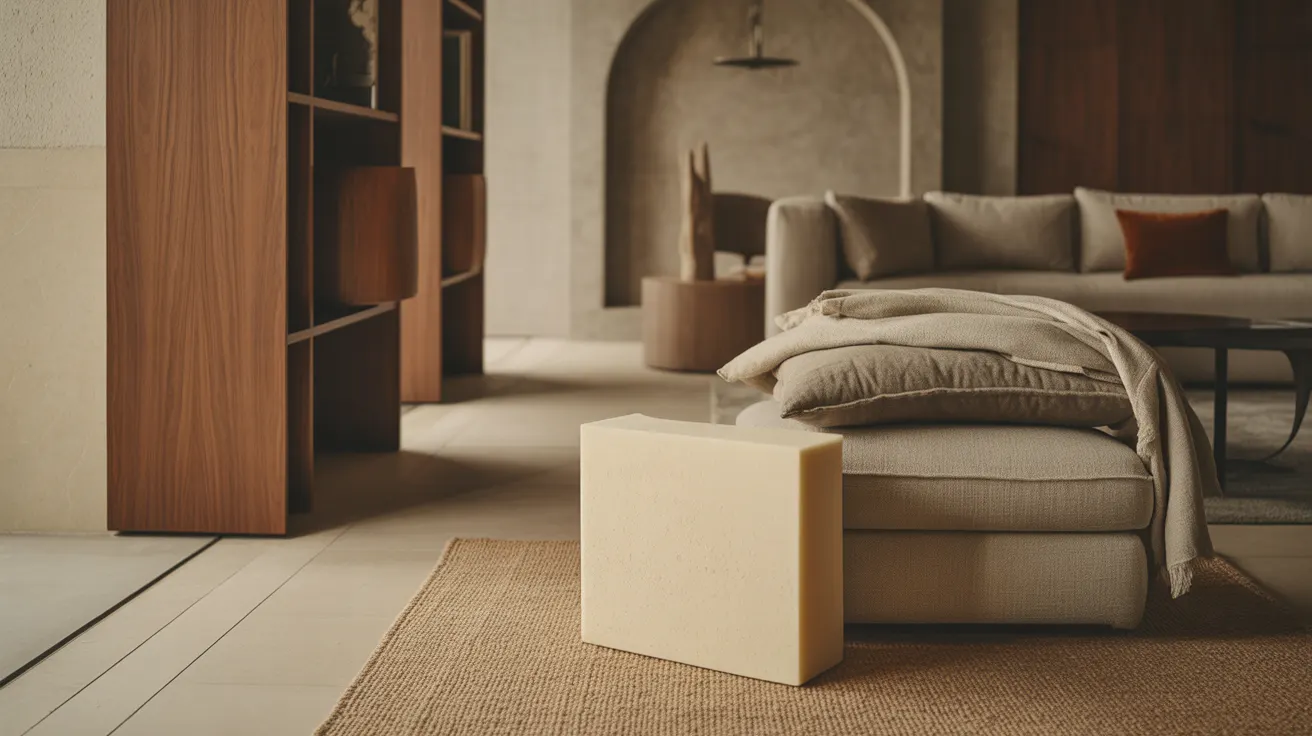
Foam density explained in lb/ft³: what the number means, density vs. firmness vs. ILD, and the ranges to look for so cushions hold their shape for years.
Foam density measures how much material is packed into a cushion's foam, expressed in pounds per cubic foot (lb/ft³) — and it's the single best predictor of whether a cushion holds its shape or develops a permanent dent. For a seat cushion you'll use daily, look for 2.5 lb/ft³ or higher, ideally labeled "high-resilience" or "HR" foam. Here's the part most people miss: density is not the same as firmness. A cushion can be soft and dense, or firm and cheap. Understanding the difference is how you avoid the sag.
What "Density" Means (and What It Doesn't)
Density is a measure of mass: literally how much the foam weighs per cubic foot. Higher density means more foam material in the same space, which is why it correlates so strongly with durability — there's simply more substance to resist breaking down under repeated compression. When a cushion "goes flat" or grows a permanent body-shaped hollow within a year, low-density foam is almost always the culprit.
The common confusion is treating density as a comfort spec. It isn't. Density tells you how long a cushion will last; firmness tells you how it feels. You can have a soft, plush cushion that's also high-density (it'll stay plush for years) or a firm cushion that's low-density (it'll feel hard now and break down fast). Buying on softness alone — and ignoring density — is one of the most common reasons a sofa disappoints by its second year.
Density vs. Firmness vs. ILD
Three foam terms get tangled together. Here's each one, separated.
| Spec | What it measures | Unit | What it tells you |
|---|---|---|---|
| Density | Mass of foam per volume | lb/ft³ | Durability / longevity |
| Firmness (ILD/IFD) | Force to compress the foam 25% | pounds | How hard or soft it feels |
| Resilience | How quickly foam springs back | %/grade | Support and "bounce" |
ILD (Indentation Load Deflection, sometimes IFD) is the firmness number — the pounds of force needed to compress the foam by 25%. Higher ILD feels firmer. Crucially, ILD and density are independent: a foam can be high-density and low-ILD (soft but durable), which is often exactly what you want in a seat. Resilience describes how energetically the foam recovers after you stand up; "high-resilience" (HR) foam is engineered to spring back well, which is why it's the preferred type for seating.
The practical upshot: when judging longevity, look at density. When judging feel, look at firmness/ILD. Don't let one stand in for the other.
Foam Density Ranges to Look For
These are general industry ranges for polyurethane seat foam. They're a guide, not a law — but they'll keep you out of the cheap-foam trap.
| Density (lb/ft³) | Tier | What to expect in a seat cushion |
|---|---|---|
| Under 1.5 | Low / disposable | Flattens within months; avoid for daily seats |
| 1.5–1.8 | Budget | Short life; fine for rarely used pieces |
| 1.8–2.5 | Mid / standard | Reasonable life under moderate use |
| 2.5–3.0 | High-resilience (HR) | Holds shape for years; ideal for daily sofas |
| 3.0+ | Premium / high-density | Long-lasting, supportive; common in quality furniture |
A few notes that make these numbers more useful:
- 2.5 lb/ft³ is a sensible floor for a seat cushion you'll sit on every day. Below roughly 1.8, you're buying foam that's designed to be cheap, not to last.
- Back cushions can be lower density than seats, because they take far less compression — that's normal and not a shortcoming.
- Memory foam (viscoelastic) uses a different density scale; for memory foam, 4–5 lb/ft³ is typically considered high quality. It's more common in mattresses and toppers than in sofa seats.
- Numbers aren't everything. A maker that publishes density figures at all is usually one worth trusting more than one that says nothing.
How Good Cushions Are Actually Built
The best cushions rarely rely on a single block of foam. A common high-quality construction is a firm, high-density foam core wrapped in a softer layer — fiber, down, or down-alternative — so you get supportive structure underneath and a soft, inviting top surface. This gives you the no-fluff durability of foam with a feel that isn't stiff or "plasticky."
That wrap layer is also why two cushions with the same core density can feel completely different. If you love a plush sink, the softness comes from the wrap; the staying power comes from the core. We compare the wrap options — down, foam, and down-alternative — in detail in our guide to sofa cushion fills, which is the natural companion to this one: that article covers which fill, this one covers how to judge the foam itself.
A couple of construction signals worth noting on a spec sheet or in person:
- Different fills for seat vs. back (firmer foam below, softer fiber or down up top) is a sign of thoughtful design.
- Removable, reversible cushion covers let you rotate and flip cushions, which spreads wear and roughly doubles how evenly they age — extending the practical life of even good foam.
How to Check Cushion Quality Yourself
You can't read density with your hands, but you can sense its effects.
- Press and release. Push your hand firmly into the seat and lift it off. Quality high-resilience foam springs back promptly and fully. Slow recovery or a lingering dent suggests low-density foam or tired fill.
- Sit and stand, then look. Sit for a moment, stand, and watch the cushion. It should recover its shape quickly without a lasting hollow.
- Check the weight. Dense foam has heft. A cushion that feels surprisingly light for its size is often low-density.
- Read the spec sheet. Look for the density figure (lb/ft³), the words "high-resilience" or "HR," and whether seat and back use different fills. Where the supplier states the cushion construction, it's in the product description; foam density is rarely listed, so ask before you buy if it matters.
These checks fold neatly into the broader process of judging whether a sofa is well made, where the cushion is one of five things worth verifying.
The Short Version
Foam density (measured in lb/ft³) is the number that predicts whether a cushion lasts or sags — aim for 2.5 or higher for a daily seat, and look for "high-resilience" foam. Keep density separate in your mind from firmness (ILD), which is about feel, not durability: you can have soft-and-durable or firm-and-cheap, so check both. The best cushions pair a dense foam core with a softer wrap for support underneath and comfort on top. Press the cushion, watch it recover, weigh it in your hands, and read the spec sheet — and you'll know which sofa will still feel good in year five.
Ready to compare cushions? Shop Sofas and check the foam density and construction listed on each piece — it's where lasting comfort is decided.
Frequently asked questions
What is a good foam density for a sofa cushion?
For a seat cushion in daily use, aim for at least 2.5 lb/ft³, ideally labeled high-resilience (HR) foam; 3.0+ is premium. Below about 1.8 lb/ft³, the foam is built to be inexpensive and tends to flatten quickly. Back cushions can be lower density because they take less compression.
Is foam density the same as firmness?
No — they're independent. Density (lb/ft³) measures how much material is in the foam and predicts durability. Firmness, measured as ILD, measures how hard the foam feels. A cushion can be soft and dense (plush but long-lasting) or firm and low-density (hard but short-lived). Check both.
What is ILD in foam?
ILD (Indentation Load Deflection, sometimes IFD) is the firmness rating: the pounds of force needed to compress the foam by 25%. A higher ILD feels firmer. It's separate from density, so use ILD to judge feel and density to judge how long the cushion will hold up.
Why do my sofa cushions go flat so fast?
The most common cause is low-density foam — there isn't enough material to resist repeated compression, so it breaks down and a permanent hollow forms. High-resilience foam at 2.5 lb/ft³ or more resists this far better. Rotating and flipping cushions also slows uneven flattening.
Is high-resilience foam worth it?
Yes, for any sofa you'll use daily. High-resilience (HR) foam combines higher density with strong spring-back, so it holds its shape and supports you for years with little maintenance. Wrapped in a soft fiber or down layer, it delivers comfort and longevity — the combination most buyers actually want.