Care & Maintenance
The Best Rugs to Anchor an Open-Plan Space: Editor's Picks
6 min read
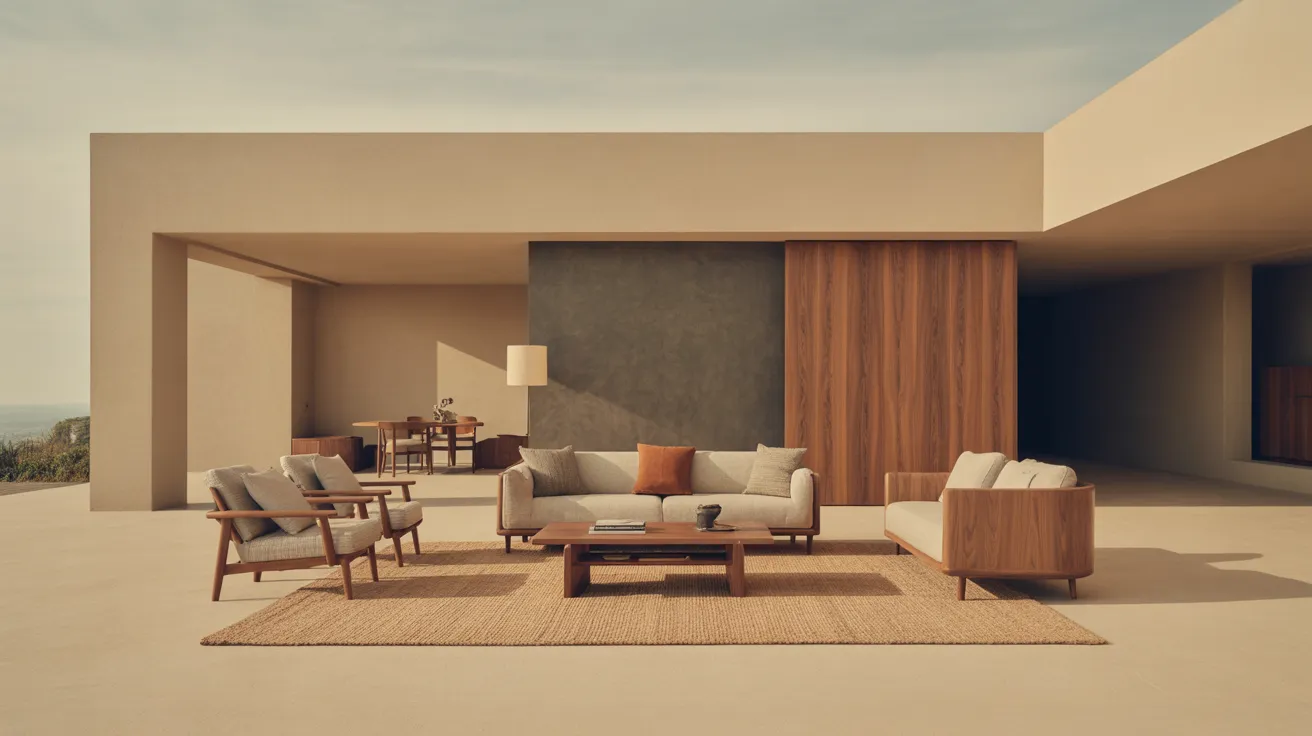
The right rug turns one big room into distinct zones. What to look for in a large area rug, plus six editor's picks for anchoring an open floor plan.
In an open floor plan, rugs do the work that walls do everywhere else: a large, low-pile rug under the seating area, a flatweave under the dining table, and a soft runner along the traffic path turn one echoing room into a home with rooms inside it. The best rugs for the job are bigger than instinct suggests — usually 8x10 or 9x12 in the living zone — with durable fibers and a palette that lets the zones speak to each other. Here's what to look for, followed by our editors' six picks.
What to look for in an open-plan rug
Size: the front-legs rule, scaled up
The classic rule says at least the front legs of every seating piece sit on the rug. In an open plan, go further: when a rug floats in the middle of a large space with no walls to frame it, an undersized one reads like a postage stamp. For most open-concept living zones, that means 8x10 at minimum and often 9x12 or larger. Our complete rug size guide has the numbers for every room and layout.
One zone, one rug
Each functional area — lounging, dining, reading, sleeping in a studio — earns its own rug. The gaps of bare floor between them are not wasted space; they're the hallways of your invisible floor plan. Keep 12 to 24 inches of floor visible between rugs so each zone reads as deliberate. For the full logic of dividing a big room, see our guide to zoning an open-plan space.
Fiber follows function
Open plans concentrate foot traffic along predictable paths, and different zones punish rugs differently. Wool is the workhorse for seating areas — resilient, naturally stain-resistant, and soft enough for floor-sitting. Flatweaves and tightly woven low piles belong under dining tables, where chairs slide and crumbs fall. Performance and washable fibers earn their keep near entries and kitchens. Save plush, deep piles for low-traffic comfort zones.
A palette that converses
The rugs in one open space don't need to match — matching can actually flatten the room. They need to relate: a shared undertone, one repeated accent, or a consistent warmth across different patterns. The simplest formula is one quiet anchor rug, one pattern, one texture, all in the same temperature family.
Pile height and practicalities
Under dining tables, keep pile low so chairs glide. In walkways, low pile and dense weaves resist crushing. Everywhere, use a rug pad — it prevents creep on hard floors, protects the rug's foundation, and makes a medium-pile rug feel like a deeper one.
Editor's picks: six rugs that organize a big room
Each slot describes the kind of rug our editors would pull first when anchoring an open-concept space.
The slot: An oversized (9x12 or larger) low-pile wool rug in a warm neutral — sand, oat, or soft greige — with subtle tonal variation rather than pattern.
Why it works: This is the anchor. It defines the main seating zone, takes daily traffic without showing it, and gives every other choice in the room something calm to stand on. Tonal variation hides life; flat solid colors don't.
The slot: A flatweave or tightly hand-loomed rug for the dining zone, sized so chairs stay on the rug even when pulled out — typically the table's footprint plus 24 to 30 inches on every side.
Why it works: Dining zones need a rug that chairs glide over and crumbs sweep off. A flatweave in a quiet geometric or stripe links visually to the anchor rug while signaling, without a single wall, that this is where dinner happens.
The slot: A smaller (around 6x9) rug with real character — a bold geometric, a vintage-inspired pattern, or strong texture — to define a reading corner or secondary seating zone.
Why it works: Open plans need a moment of personality, and a secondary zone is the safe place to spend it. Because the anchor rug is quiet, this one can be loud without the room arguing with itself.
The slot: A durable runner — washable or performance fiber, low pile, 8 feet or longer — for the main traffic path between zones or along a kitchen island.
Why it works: The unsung hero of open-plan living. A runner makes the walkway explicit, protects the floor where wear actually happens, and visually stitches the zones together as you move between them.
The slot: A plush, deeper-pile rug — shag, high-pile wool, or a soft blend — for the studio sleeping corner or a dedicated lounge nook away from main walkways.
Why it works: Zoning isn't only visual; it's tactile. Stepping from smooth floor onto something soft tells your feet the day is over. In studios, this is the single most effective way to make the bed area feel like a bedroom.
The slot: A layering pair — a large flatwoven natural-fiber base (jute or a jute-wool blend) with a smaller patterned or sheepskin-style rug placed over it at an offset.
Why it works: Layering solves two open-plan problems at once: it lets you reach anchor-rug scale affordably, and it adds the depth that big single-surface rooms tend to lack. The offset placement keeps it looking collected rather than staged.
Getting them home
Large rugs ship more easily than most furniture — rolled, boxed, and manageable in an elevator. Orders over $120 ship free, which covers virtually any anchor-sized rug, and 30-day returns mean you can judge the color in your own light, where it actually matters. If you'd rather not puzzle out the zones alone, our free design plan maps rug sizes onto your real floor plan before you buy anything.
Shop this guide
- 9' X 12' Chocolate And Brown Geometric Washable Indoor Outdoor Area Rug
- 10' X 14' Silver And Ivory Geometric Washable Indoor Outdoor Area Rug
- 8' X 10' Black And Graphite Abstract Washable Indoor Outdoor Area Rug
The short version
Open-plan rooms don't need walls; they need anchors. Give each zone its own rug — a large quiet one for seating, a flatweave for dining, something soft where comfort matters, a runner where feet travel — keep a strip of bare floor between them, and let one shared undertone tie the whole floor together. Size up when in doubt. Rooms forgive a rug that's too generous far more easily than one that's too small.
Find your anchor — browse area rugs, from oversized wool anchors to washable runners.
Frequently asked questions
What size rug is best for an open floor plan?
For the main seating zone, 8x10 is the practical minimum and 9x12 is often better — large enough that all front furniture legs land on it and the zone reads as a room. Dining zones need the table's footprint plus 24 to 30 inches per side.
Should all the rugs in an open-plan space match?
No — identical rugs flatten the space. Aim for rugs that relate instead: a shared undertone or accent color, varied pattern scales, and one quiet anchor so the bolder pieces have somewhere to rest.
How much space should there be between rugs?
Leave roughly 12 to 24 inches of visible floor between zone rugs. The bare floor acts as a pathway and keeps each zone looking intentional rather than wall-to-wall accidental.
Do I need a rug pad on hardwood floors?
Yes. A pad keeps the rug from migrating, cushions the pile so it wears slower, and protects the floor finish underneath. It's the least glamorous purchase in this article and one of the most worthwhile.
Can a rug really replace a wall for dividing space?
Functionally, yes — a rug defines where a zone begins and ends more gracefully than most physical dividers, and it does so without blocking light, the open plan's greatest asset. Pair rugs with lighting changes and furniture orientation and the "rooms" become unmistakable.