Care & Maintenance
The Best Sectionals for Small Spaces: Our Design Team's Picks
6 min read
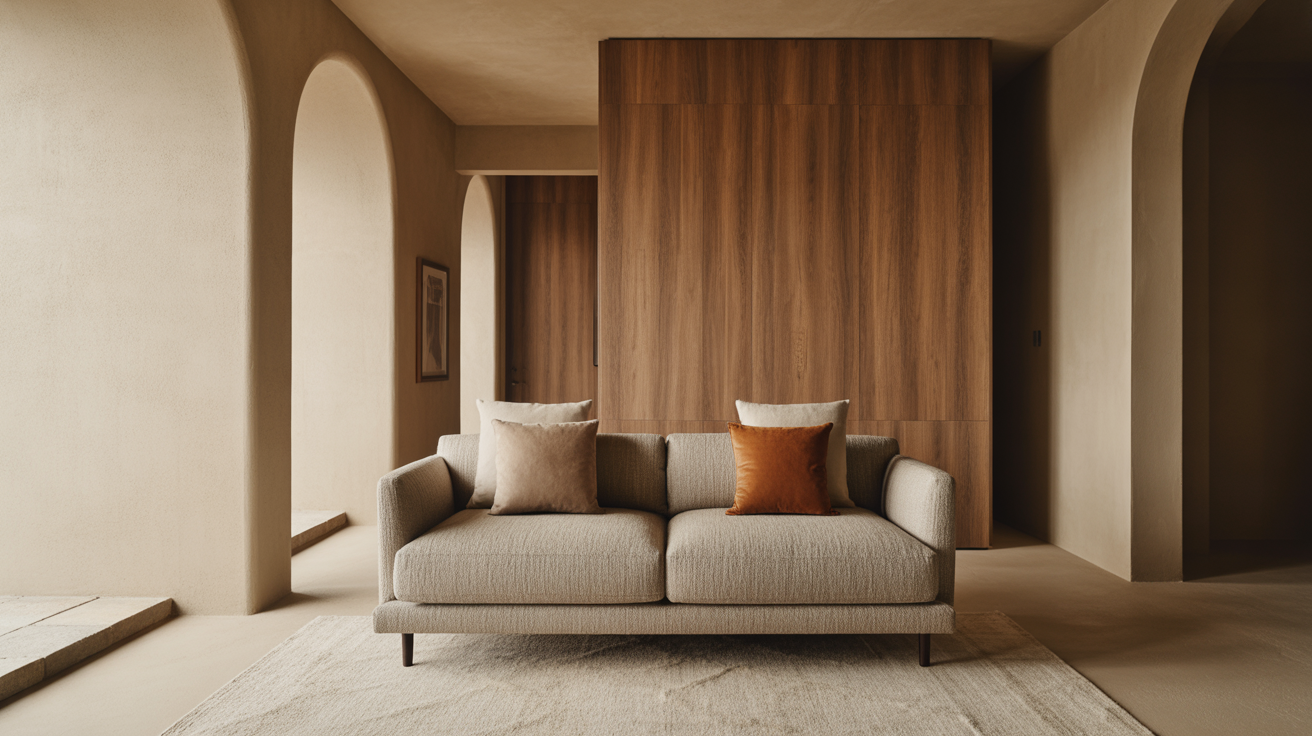
What makes a sectional work in a small space? Our design team breaks down sizing, silhouettes, and seven compact picks for apartments and lofts.
The best sectionals for small spaces share a handful of traits: an overall length around 85 inches or less, a seat depth of 33 to 36 inches, raised legs, and arms slim enough that the footprint goes to seating instead of styling. Below, our design team explains exactly what to measure before you shop — then walks through seven sectional profiles that consistently earn their place in apartments, lofts, and compact living rooms.
What to look for in a small-space sectional
A sectional is the most efficient seating shape there is. One piece, one corner, and suddenly four people fit where a sofa-and-armchair arrangement would crowd the walkway. But efficiency only happens when the proportions are right. Here is what matters most.
Total footprint, not just length
Length gets all the attention, but depth decides whether you can still walk through the room. In most small living rooms, a sectional under 85 inches long with a chaise depth of 60 inches or less leaves space for a coffee table and a clear path. Measure your room first, then subtract 30 to 36 inches for the main walkway. What remains is your sectional budget.
Visual weight
Two sectionals with identical dimensions can feel completely different. Raised legs let light pass underneath, which reads as floor space even when there isn't much. Slim track arms, a lower back height, and a tighter seat all shrink the piece visually. Skirted bases and rolled arms do the opposite — beautiful in a larger room, heavy in a small one.
Chaise logic
A reversible chaise is the small-space shopper's best friend. If you move, or simply rearrange, the long leg of the L switches sides without buying new furniture. If the chaise is fixed, decide its orientation by standing in your doorway: the chaise usually works best on the side farthest from the main traffic path. Still deciding between shapes? Our sectional vs. sofa guide walks through when an L actually beats a straight sofa.
Modularity
Modular sectionals arrive in pieces, fit through narrow doors, and reconfigure when your life does. The trade-off is that connections can shift slightly with heavy use. For renters and frequent movers, the flexibility usually wins.
The delivery path
The most-loved sectional in the world is useless on the wrong side of your door. Measure doorways, hallway turns, stairwells, and elevator interiors before you order — and note the return window in case the math fails anyway. LoftLoom offers 30-day returns, which takes much of the risk out of the measurement.
Our picks: seven sectionals that earn their footprint
Each slot below describes the kind of piece our design team reaches for first when a client has more ideas than square footage.
The slot: A compact L-shaped sectional under 84 inches long with a reversible chaise, raised wood legs, and a seat depth around 34 inches.
Why it works: This is the all-rounder — the piece we recommend when someone says "small living room, normal life." The reversible chaise survives a move, the raised legs keep the room feeling open, and the moderate seat depth suits both upright readers and Sunday sprawlers.
The slot: A two- or three-piece modular sectional with low arms, where each module fits through a 30-inch doorway on its own.
Why it works: Walk-up apartments and tight stairwells defeat one-piece sofas constantly. A modular solves the delivery problem and the next-apartment problem in one purchase. Arrange it as an L now, a long bench later, two facing pieces after that.
The slot: A low-profile sectional with a back height under 30 inches, slim track arms, and a tight upholstered seat.
Why it works: In studios and open lofts, the sofa often sits in the middle of the room rather than against a wall. A low back keeps sightlines clear across the space, so the room reads as one generous area instead of two cramped ones. For more on placement, see our guide to arranging furniture in a small living room.
The slot: A sleeper sectional with a storage chaise — pull-out or fold-down mechanism, lidded compartment under the chaise cushion.
Why it works: When the living room is also the guest room, every piece should hold two jobs. The storage chaise swallows spare bedding so the sleeper function is actually usable, not theoretical. Look for a mechanism that opens without moving the coffee table.
The slot: A compact sectional upholstered in performance fabric — stain-resistant, tightly woven, in a mid-tone that hides daily life.
Why it works: Small spaces concentrate wear. The same sofa that would be one of three seating options in a large house is the only seat in an apartment, which means kids, pets, dinners, and movie nights all land on it. Performance weaves shrug off most of that without demanding a no-snacks policy.
The slot: A loveseat-chaise hybrid — sometimes called a chaise sofa — around 70 to 78 inches long, in a textural fabric like bouclé.
Why it works: This is the smallest true lounging footprint available. It gives one or two people the stretched-out comfort of a sectional in a piece that fits bedrooms, dens, and the narrowest living rooms. The texture does the decorating, so the room needs less around it.
The slot: A gently curved or open-corner sectional designed to float in the room, finished on all sides.
Why it works: Open-plan studios rarely have a natural wall for a sofa. A curved silhouette softens the geometry of a boxy room and looks intentional from every angle — which matters when the back of the sofa is the first thing guests see. The open corner keeps the path through the space easy.
Shop this guide
- Gray Polyester Modular L-Shaped Two-Piece Sofa and Chaise Sectional
- Black Velvet Modular Curved Two Piece Sectional
- Ivory Boucle L Shaped Two Piece Sofa and Chaise Sectional
The short version
Small rooms don't need smaller comfort — they need smarter proportions. Keep the length near 85 inches or under, favor raised legs and slim arms, decide your chaise side from the traffic path, and measure the delivery route before you fall in love. The seven profiles above cover every small-space scenario we see, from walk-up rentals to open lofts.
Ready to find yours? Shop sectional seating — and if you'd like a second opinion on layout, our free design plan pairs you with a designer who works from your actual floor dimensions.
Frequently asked questions
What size sectional fits a small living room?
As a working rule, look for an overall length of 75 to 85 inches and a chaise depth of 60 inches or less. Measure your room, reserve 30 to 36 inches for the main walkway, and let the remainder set your maximum.
Should the chaise go on the left or the right?
Place the chaise on the side away from the room's main traffic path, so nobody squeezes past outstretched legs. If you're unsure — or expect to move — choose a reversible chaise and decide later.
Are modular sectionals worth it for apartments?
Usually, yes. They pass through narrow doors, adapt to new floor plans, and can be expanded over time. The main trade-off is that modules can drift slightly apart with daily use, so look for solid connecting hardware.
Can a sectional work in a studio apartment?
It can, and often better than a sofa — a sectional's corner naturally divides the sleeping area from the living area without a wall. Choose a low back and a finished rear panel since the piece will float in the room.
How do I know a sectional will fit through my door?
Compare the piece's smallest packaged dimension to your narrowest pinch point — door width, hallway turn, stairwell, or elevator. Modular designs nearly always clear; one-piece chaises are where measurements get tight.