Comparisons
Sectional vs. Sofa: Which Is Right for Your Space?
6 min read
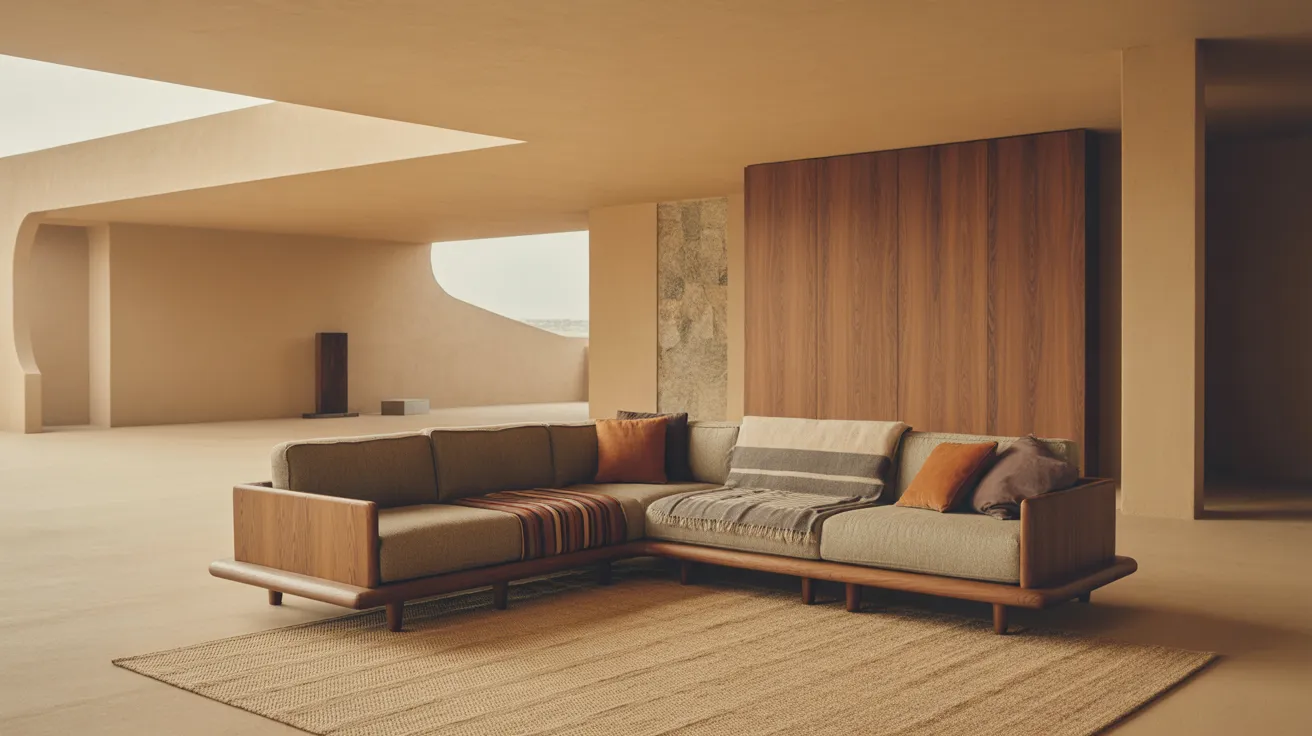
Sectional or sofa? Compare footprint, seating, layout flexibility, and cost so you can choose the right piece for your living room — with real numbers.
Here's the honest short answer: choose a sectional if you have at least 10–12 feet of open wall (or an open floor plan that needs anchoring) and your evenings revolve around stretching out. Choose a standard sofa if your room is under about 12 x 12 feet, your doorways are tight, or you like rearranging furniture more than once a decade. Everything else — comfort, style, quality — is available in both. The real decision is about space and how you actually live in it.
The Real Difference Isn't Comfort — It's Commitment
A well-made sofa and a well-made sectional can feel equally good to sit on. What separates them is footprint and flexibility.
A standard three-seat sofa typically runs 78–90 inches wide and 35–40 inches deep. A sectional starts around 95 inches on its long side and commonly stretches to 120–130 inches or more, with a chaise or return that adds 60–66 inches of depth on one end. That second dimension is what most people underestimate. The sofa occupies a wall; the sectional occupies a corner of your life.
That commitment cuts both ways. A sectional defines a room beautifully — especially in open-plan and loft spaces, where it can zone a living area without a single wall. (If that's your situation, our guide to the modern loft look goes deeper on zoning with furniture.) A sofa, by contrast, leaves room to add: an accent chair this year, a reading corner next year, a full rearrange when the mood strikes.
Side-by-Side Comparison
| Standard Sofa | Sectional | |
|---|---|---|
| Typical width | 78–90" | 95–130"+ on the long side |
| Typical depth | 35–40" | 35–40" body; 60–66" at the chaise |
| Comfortable seating | 3 adults | 4–6 adults |
| Minimum wall length | ~8 ft | ~10–12 ft (plus return wall or open floor) |
| Lounging | One person, sideways | Two people, fully stretched |
| Layout flexibility | High — easy to float, pair, move | Low — the room is built around it |
| Open-plan zoning | Needs help (rugs, chairs) | Excellent — defines the space alone |
| Moving day | Fits most doorways and stairwells | Pieces detach, but plan the route |
| Relative cost | Lower total | Higher total, often lower per seat |
What a Sectional Asks of Your Room
Before you fall for an L-shape, run three measurements:
- Wall length. The long side needs its full footprint plus 4–6 inches of breathing room on each end. A 110-inch sectional really wants a 10-foot wall.
- Walkways. Keep 30–36 inches clear on main paths through the room, and about 18 inches between the seat edge and your coffee table.
- The chaise shadow. A 64-inch chaise projecting into a 12-foot-deep room leaves roughly 7 feet for everything else — table, walkway, media console. Tape the outline on your floor before you order. It takes five minutes and prevents the single most common regret we hear about.
Delivery matters too. Sectionals arrive in sections, which helps, but measure your narrowest doorway, hallway turn, and stairwell anyway. Our sofa measuring guide walks through the exact door-to-room math.
What a Sofa Gives Back
A standard sofa's quiet superpower is composition. Pair an 84-inch sofa with two accent chairs and you seat five — the same as many sectionals — while keeping three conversation angles instead of one long line. That arrangement also works in rooms a sectional would overwhelm: a 11 x 13-foot living room handles a sofa-plus-chairs layout gracefully and a 120-inch sectional poorly.
Sofas are also kinder to renters and frequent movers. They fit more elevators, more landings, more second apartments.
The L-Shaped Sofa in a Small Living Room
Small-space dwellers often assume sectionals are off the table. Not quite. Compact L-shaped sofas in the 90–100-inch range are built for exactly this, and an apartment-scale sectional pushed into a corner can actually seat more people per square foot than a sofa-and-chair arrangement — because corners are otherwise dead space. The rule of thumb: if the sectional's long side fits your longest wall with 6 inches to spare and you can still keep a 30-inch walkway, a small L-shape works.
The Middle Path: A Sofa With a Chaise
A sofa with a reversible chaise — usually 78–90 inches wide — gives you the stretch-out comfort of a sectional in a sofa's footprint. Many let you switch the chaise from left to right, which is a genuine advantage if you move often or like to flip a room seasonally. If you're torn between the two categories, this is usually the answer.
Choose a Sectional If / Choose a Sofa If
Choose a sectional if:
- Your living area is open-plan and needs a piece that defines the space on its own.
- You have a wall of 10 feet or longer (or a true corner) to give it.
- Movie nights, long reads, and naps are the room's main events.
- You regularly seat four or more people.
- You plan to stay put for a few years — this is anchor furniture.
Choose a sofa (or sofa with chaise) if:
- Your room is under roughly 12 x 12 feet, or your walls are broken up by windows and doors.
- You rent, move often, or simply like rearranging.
- You want a layered look — sofa, chairs, ottoman — rather than one dominant piece.
- Doorways, stair turns, or elevator dimensions are tight.
- You'd rather grow the room over time than commit all at once.
Shop this guide
- Ivory Boucle Modular Curved 2 Piece Sofa Sectional
- 160" Light Gray Linen Blend Modular Sofa
- 88" Tan Leather Sofa And Toss Pillows With Brown Legs
The Short Version
Measure first, decide second. If you have 10+ feet of wall or an open plan to anchor — and lounging is the point — a sectional will earn its footprint every evening. If your room is smaller, your layout changes often, or you prefer a composed mix of pieces, a sofa (especially one with a reversible chaise) is the smarter, more flexible buy. Neither is the "better" sofa. One of them is better for your room — and now you know which.
Ready to see both options in person-grade detail? Shop Sofas & Sectionals — filter by width to match the wall you just measured.
Frequently asked questions
Is a sectional cheaper than buying a sofa and chairs separately?
Often, per seat, yes — one sectional usually costs less than a comparable sofa plus two quality chairs. But the sofa-and-chairs route lets you spread the spending over time, which matters if you're furnishing a whole home at once.
Do sectionals make a room look smaller?
A sectional that's scaled to the room makes it look composed; one that's 10 inches too big makes it look cramped. The test is negative space: if you can keep 30-inch walkways and see floor on at least two sides of the piece, you're fine.
Can you put a sectional in the middle of a room?
Yes — floating a sectional is one of the best ways to zone an open plan. Leave 36 inches behind it for a walkway, and consider a console table along the back to finish the view.
What's the smallest room that fits a sectional?
As a working minimum: about 11 x 13 feet for a compact 95-inch L-shape, assuming you keep the layout simple. Below that, a sofa with a chaise almost always serves you better.
Are sectionals harder to move?
The pieces detach, which helps, but individual sections are still bulky — a chaise unit alone can be 60+ inches long. Measure the route, not just the room.