Style & Authority
The Modern Loft Look: Industrial Bones, Warm Layers
7 min read
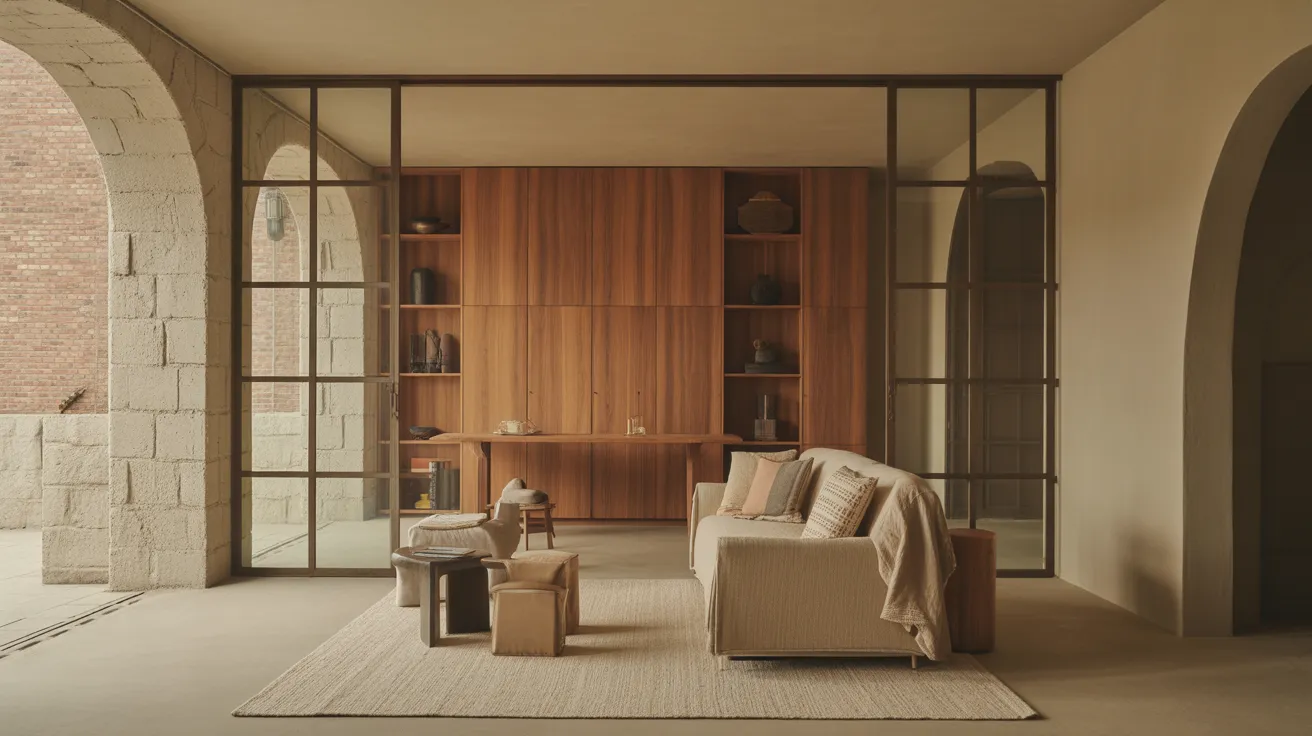
Loft apartment decor ideas that keep the industrial bones and lose the chill — zoning, warm layers, lighting, and furniture scaled for open space.
The modern loft look pairs a building's industrial bones — exposed brick, concrete, steel, big windows, high ceilings — with warm, tactile layers: wood, wool, linen, leather, and low pools of light. The formula is simple to state and easy to get wrong: the architecture stays raw, and everything you add is soft. Done well, a loft feels like a workshop that learned to be a living room.
What Defines the Modern Loft Look
The first wave of loft style, born in converted factories, leaned hard into the factory part: metal stools, caged bulbs, gray everything. It photographed well and lived badly. Concrete and steel are magnificent surfaces, but they reflect sound, hold no heat, and give the eye nowhere soft to land.
The modern version keeps the respect for the building and adds a second material vocabulary on top of it. Think of the room in two registers. The bones — brick, concrete, ductwork, steel windows, raw ceilings — provide structure, scale, and texture you could never buy. The layers — rugs, upholstery, wood furniture, curtains, lamps — provide everything the bones can't: warmth, absorption, comfort, intimacy. Neither register works alone. A loft with no layers is a garage; a loft with hidden bones is just a big beige apartment.
The Principles
1. Honor the bones — don't fight them
Leave brick unpainted where you can. Let ducts and pipes show. Resist the urge to drywall over character; you're living in the one apartment type where rough edges are the asset. Your additions should contrast with the shell, not compete with it.
2. Zone the volume
A loft is usually one large room doing four jobs. Without zones it feels like a furniture showroom after hours. Define each zone with a rug, a lighting change, and furniture orientation — not with walls. A large area rug is the single most effective zoning tool a loft owner has; our guide to zoning an open-plan space breaks down the method in full.
3. Scale up
High ceilings and long sightlines shrink normal furniture. A loft swallows an 84-inch sofa that would dominate a standard living room. Choose deeper sofas, larger rugs (often 9x12 rather than 8x10), oversized art, and pendant lights with real diameter. One generous piece beats three apologetic ones.
4. Warm the light, multiply the sources
Industrial spaces usually come with harsh overheads and enormous windows that go black at night. Counter both with low, warm light: 2700K bulbs throughout, floor and table lamps placed at the edges of each zone, everything on dimmers. The goal at night is islands of glow in a dark volume — that contrast is the loft's evening signature.
5. Mix raw and refined in every zone
Each zone should contain at least one raw element (the brick wall, a steel-framed window, a blackened-metal lamp) and several refined ones (wool, linen, walnut, leather). The tension between rough and soft is the whole style. All-raw is cold; all-soft erases the loft.
The Loft Palette and Materials
| Register | Surfaces and tones | Role in the room |
|---|---|---|
| The bones (keep) | Red-brown brick, gray concrete, blackened steel, raw ceiling | Texture, scale, character — the backdrop you don't buy |
| Warm foundations | Oatmeal, sand, warm white textiles and upholstery | Soften the shell, absorb sound, calm the eye |
| Wood layer | Walnut, oak, warm-toned veneers | Tables, shelving, bed frames — the bridge between steel and softness |
| Deep accents | Charcoal, espresso, olive, rust | Echo the bones in fabric and ceramic form |
| Warm metals | Aged brass, bronze tones | Lamps and hardware — small doses against the steel |
Color strategy: pull your accent tones from the bones themselves. Rust and clay echo brick; charcoal echoes steel; olive sits comfortably against concrete. That's why loft palettes look "found" rather than decorated.
The Loft, Zone by Zone
Living zone
Anchor with the largest rug the zone allows — front legs of all seating on the rug — and float the sofa with its back to the next zone, which gives the open plan an implied wall. A deep sofa in a heavy weave, one leather or wood-framed chair, and a substantial coffee table hold their own against high ceilings. Browse the living collection with scale in mind: in a loft, err larger.
Sleeping zone
Even in a true open loft, the bed deserves the most enclosure you can give it: a corner position, an open bookcase as a divider, or a curtain track hung from the ceiling. Keep bedding pale and matte against the dark shell, and light the zone with two small warm lamps rather than anything overhead. The brightness contrast — dim, warm sleeping zone against the bigger volume — does the psychological work of a wall.
Dining zone
A solid wood table earns its keep here, especially against brick or concrete. Hang a wide pendant 30 to 36 inches above the tabletop to pull the zone together; in a high-ceilinged loft, the pendant also fills vertical space that would otherwise feel vacant. Mixed seating — wood chairs plus a bench — keeps the zone casual, which suits the architecture.
Work corner
Lofts absorb a desk gracefully if you treat it as furniture, not office equipment: a wood-topped desk, a comfortable chair that doesn't look orthopedic, and a dedicated task lamp. Face the desk toward a window if glare allows. Keep cables tamed; visible infrastructure is charming when it's the building's, less so when it's yours.
No Loft? Borrow the Look
You don't need exposed brick to use the formula. The modern loft look translates to any apartment with decent light and one honest material to play the "bones" role — a concrete-look floor, black window frames, even a single dark-painted wall in matte charcoal. Then apply the same layers: large rug, warm woods, low light, scaled-up key pieces. If your space runs small rather than vast, the same warm-layer logic applies at compact scale — our guide to arranging a small living room covers the layouts that keep it workable.
How to Get the Look Without Overbuying
- Start with one big rug per zone, not ten accessories. Rugs zone the space, warm the floor, and fix the acoustics — the three loft problems at once. The area rug selection is the right first stop.
- Swap bulbs and add three lamps. 2700K everywhere, one floor lamp per zone edge. Cheapest transformation available.
- Choose one hero piece per zone. Sofa for living, bed for sleeping, table for dining. Everything else can wait.
- Add textiles in winter weights. Wool throws, heavy curtains, cushion covers with visible weave. Lofts need more textile mass than normal rooms, not more objects.
- Stop before it's full. A loft's luxury is its emptiness. If every zone is furnished, you've gone one zone too far.
The Short Version
- The modern loft look = industrial bones + warm layers. Keep the shell raw; make everything you add soft.
- Zone the open volume with rugs, lighting, and furniture orientation — one rug, one lamp cluster, one hero piece per zone.
- Scale up: bigger sofa, bigger rug, bigger pendant. Lofts shrink timid furniture.
- Light at 2700K from multiple low sources; let the big volume go dim at night.
- Pull accent colors from brick, steel, and concrete so the palette feels found, not applied.
Ready to build it zone by zone? Shop by room and start with the piece each zone actually pivots on.
Frequently asked questions
What is the modern loft look?
It's an interior style that keeps a space's industrial character — brick, concrete, steel, high ceilings — and layers warm, natural materials over it: wood furniture, wool rugs, linen textiles, and low warm lighting. Raw shell, soft contents.
How do I make an industrial loft feel cozy?
Add absorption and warm light. Large rugs, heavy curtains, upholstered furniture, and multiple 2700K lamps on dimmers counter the echo and chill of hard surfaces. Aim for islands of warm light at night rather than one bright overhead.
What furniture works best in a loft apartment?
Larger-scaled, material-forward pieces: deep sofas in heavy weaves, solid wood tables, leather or wood-framed chairs. High ceilings shrink furniture visually, so size up versus what a standard apartment would take.
Can I get the loft look without exposed brick or concrete?
Yes. Designate one raw element to play the "bones" — black window frames, a matte charcoal wall, a concrete-look floor — then apply the warm layers (rug, wood, textiles, low light) exactly as you would in a true loft.
What colors work in a loft?
Pull accents from industrial materials: rust and clay (brick), charcoal (steel), olive and gray-green (concrete), with oatmeal and warm white as the softening base. Avoid cool blue-grays, which push the space back toward warehouse.