Style & Authority
Warm Minimalism: The Complete Guide to 2026's Defining Interior Trend
9 min read
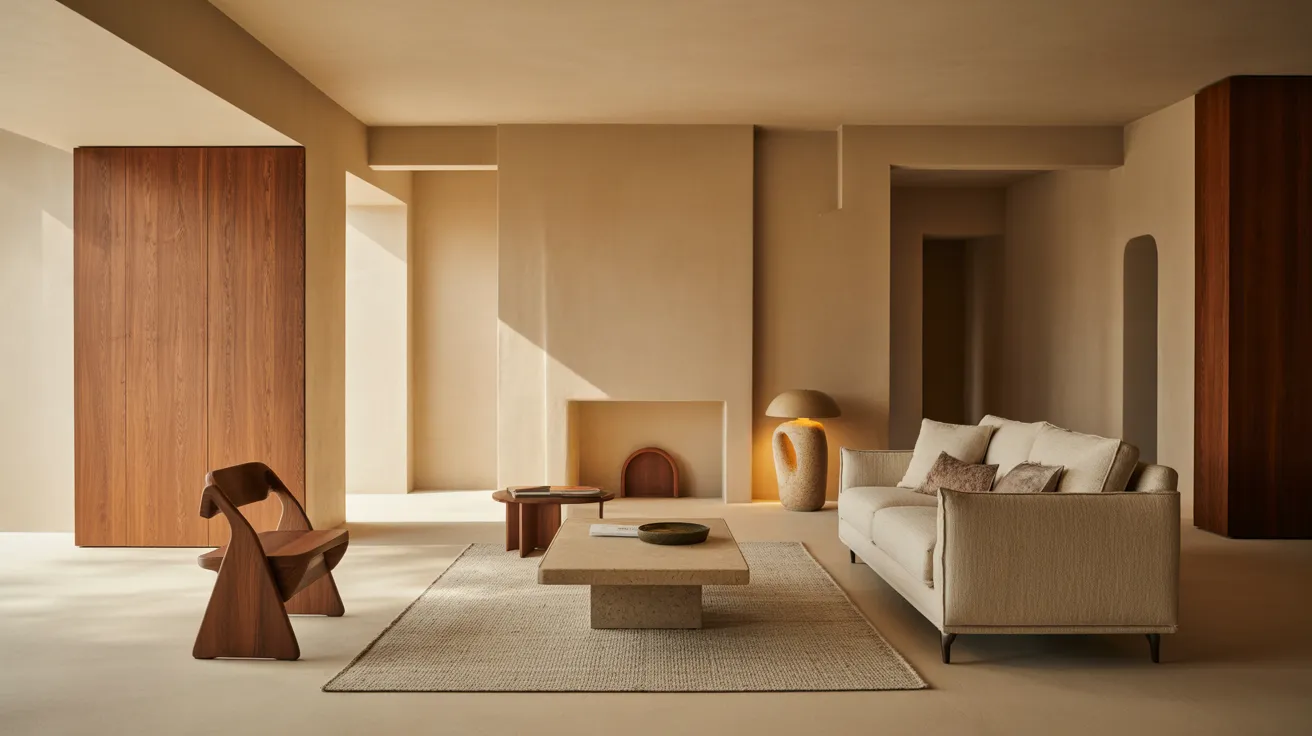
Warm minimalism, explained: the principles, palette, and materials behind 2026's defining interior trend — plus room-by-room ways to get the look at home.
Warm minimalism is an interior design approach that keeps minimalism's discipline — fewer pieces, clean lines, open space — and replaces its cool, hard-edged palette with natural materials, soft texture, and sun-warmed neutrals. The result is a room that feels calm without feeling empty, and edited without feeling staged. Picture pale oak where there used to be gloss white, linen where there used to be vinyl, and one good lamp where there used to be a ceiling full of recessed cans.
What Warm Minimalism Is — and What It Isn't
Minimalism earned a reputation problem. For a decade, the word conjured white-box apartments with one uncomfortable chair, a single fiddle-leaf fig, and the ambient temperature of a dental office. People admired those rooms in photographs and quietly didn't want to live in them.
Warm minimalism is the correction. It holds onto the part of minimalism that actually works — the editing, the breathing room, the refusal to fill every surface — and fixes the part that didn't: the coldness. The restraint stays. The chill goes.
It is just as important to say what warm minimalism isn't. It isn't beige maximalism, where every neutral object you own gets displayed at once. It isn't a farmhouse softened with throw pillows. And it isn't simply painting a stark room greige and calling it done. A warm minimalist room still has fewer things than most rooms. Each of those things just happens to be tactile, natural, and pleasant to be near.
A useful test: would the room feel good on a gray Tuesday in February, lights on, dishes in the sink, no stylist in sight? Cold minimalism fails that test. Warm minimalism is built for it.
Where the Look Comes From
Warm minimalism didn't appear from nowhere. It's a synthesis of several older ideas: the Japanese acceptance of natural imperfection (wabi-sabi), Scandinavian functionalism's love of pale wood and daylight, and the plastered, earthen interiors of Belgian and Mediterranean minimalists who proved that "spare" and "soulful" can be the same room. What the current version adds is scale and practicality — it works in a 700-square-foot apartment with rental-white walls, not just in a converted stone farmhouse. That's a large part of why it has become the defining look of 2026: it asks for less stuff, not more money.
The Five Principles of Warm Minimalism
1. Subtract first, then warm
The most common mistake is buying warmth before creating space for it. Edit the room before you add a single object. Clear surfaces completely, then return only what you actually use or genuinely love. Most rooms feel 30 percent calmer before anything new arrives.
2. Let texture do the work color used to do
Warm minimalist rooms are quiet in color and loud in touch. Bouclé, slubby linen, wool, raw-edged wood, unglazed ceramic, stone with visible grain — these carry the visual interest that pattern and bright color carry in other styles. If a flat photograph of your room looks slightly boring but the room itself feels rich, you've done it correctly. For the mechanics of combining these materials, see our texture pairing guide.
3. Keep contrast low and undertones warm
Choose whites and neutrals with a yellow or red base, never a blue one. The difference between a warm white and a cool white is invisible on a paint chip and enormous on a wall. Keep contrast gentle: oatmeal against sand against clay, rather than stark white against black. Save strong darks for a few grounding moments — a walnut table, an iron lamp base — not entire walls.
4. Choose grounded, rounded forms
Warm minimalism sits low and soft. Sofas with deep seats and gently curved arms. Tables with eased edges and visible wood grain. Beds closer to the floor. Sharp, glossy, spindly furniture reads cold no matter what color it is; substantial, rounded, matte furniture reads calm.
5. Treat light as a material
Light is the cheapest material in the room and the most often wasted. Use 2700K bulbs everywhere (the warm end of standard household bulbs), put your main fixtures on dimmers, and aim for at least three light sources in a living space — none of them relying solely on an overhead. A room lit at knee and eye level feels inhabited; a room lit only from the ceiling feels supervised.
The Warm Minimalist Palette and Materials
The palette works in layers, from light foundations to dark anchors. The proportions matter more than the exact shades: roughly 70 percent foundation, 20 percent mid-tones, 10 percent grounding darks and accents.
| Role | Tones | Materials | Where it works |
|---|---|---|---|
| Foundation (~70%) | Warm white, oatmeal, sand, ecru | Matte paint, linen, cotton, limewash or plaster-look finishes | Walls, sofa upholstery, bedding, curtains |
| Mid-layer (~20%) | Soft clay, camel, mushroom, muted terracotta | Wool, bouclé, jute, slubbed weaves | Rugs, accent chairs, throws, cushions |
| Grounding darks | Walnut, espresso, charcoal, deep olive | Solid wood, slate, blackened steel, iron | Dining tables, shelving, lamp bases, frames |
| Quiet accents | Ochre, faded brick, sage, aged brass | Ceramic, stoneware, dried botanicals, warm metal | Vases, hardware, lighting, small decor |
One warning about beige: a room built from a single flat neutral falls dead. The fix is never more color — it's more texture range within the same tone family. An oatmeal bouclé chair next to an oatmeal linen curtain next to an oatmeal wool rug reads as three different surfaces, not one.
Warm Minimalism, Room by Room
Living room
Start from the floor. A generously sized rug in wool or a wool blend anchors everything — front legs of the sofa and chairs on the rug, with 10 to 18 inches of bare floor showing between the rug's edge and the wall. Choose one substantial sofa in a tactile weave rather than several small seats; warm minimalism favors fewer, larger pieces.
Then practice the hardest discipline in the style: leave one wall mostly bare. Negative space is not unfinished space. It's what lets the textured pieces register. Two or three honest objects on the coffee table — a ceramic bowl, a stack of books, a candle — beat ten decorative ones. Our living room collection is built around exactly this kind of editing: pieces with enough presence to stand alone.
Bedroom
The bedroom is where warm minimalism pays off fastest, because calm is the entire point of the room. Layer bedding in two tones of the same family — say, white linen sheets under an oatmeal duvet with a clay-toned throw folded at the foot. Keep the bed low and the headboard simple. Replace overhead lighting with two bedside lamps at 2700K, and clear the nightstands down to a lamp, a book, and one object. That's it. The empty surface is the luxury.
Dining room
One forgiving wood table — a finish that can absorb a water ring without drama — does more for a warm minimalist dining room than any amount of decor. Hang a single sculptural pendant 30 to 36 inches above the tabletop so the light pools on the surface where people gather. If your chairs are hard, soften them with upholstered seats or pads in a flat-weave fabric; comfort is non-negotiable in this style, because a room nobody lingers in isn't calm, it's just unused.
Entryways and small spaces
Small spaces benefit most from subtraction. An entry needs three things: somewhere to sit (a small bench), somewhere to hang (a simple rail or row of hooks), and somewhere to check yourself (a mirror, which also doubles the light). Resist the console-table-plus-tray-plus-art-plus-basket formula. In a warm minimalist home, the entry's job is to exhale.
How to Get the Look Without Buying Everything New
Warm minimalism is one of the few design styles where the first step costs nothing.
- Remove before you add. Box up everything decorative in one room for a week. Return only what you missed. Most people return less than half.
- Swap every bulb to 2700K and add a dimmer. This is the single highest-impact change under the cost of a throw pillow, and it transforms how every existing piece looks after sunset.
- Re-cover before you replace. Linen or wool pillow covers and one good throw can shift a sofa's whole temperature without replacing the sofa.
- Shop your own home. Move the warmest wood pieces you already own toward the rooms that feel coldest. A walnut side table from the bedroom may be exactly what the living room was missing.
- Make one anchor purchase per room, slowly. A rug, a sofa, or a dining table — chosen deliberately — sets the temperature for everything around it. Smaller pieces from a considered decor selection can follow over months, not weekends.
If your starting point is a modern room that already reads cold — gray floors, white walls, hard light — begin with our guide to making a modern space feel warmer without adding clutter, which tackles that specific problem first.
Where Warm Minimalism Goes Wrong
Three failure modes account for almost every disappointing attempt. The flat beige room: one neutral, one texture, no depth — fix it with texture range, not color. The too-sparse room: minimal pieces at timid scale, so the room feels vacant rather than calm — fix it by scaling up the few pieces you keep. The matching set: sofa, loveseat, and chair in identical fabric, which reads as a showroom, not a home — fix it by varying material across seats while keeping tones related.
The Short Version
- Warm minimalism = minimalist editing + natural warmth. Keep the restraint, lose the chill.
- Subtract first. Most rooms improve before anything new arrives.
- Build in low-contrast warm neutrals — oatmeal, sand, soft clay — and let texture (linen, wool, bouclé, wood, stone) provide the depth.
- Light everything at 2700K, on dimmers, from at least three sources.
- Buy fewer, larger, better pieces. One anchor per room, chosen slowly.
When you're ready to find those anchor pieces, explore the collection — it's built around the same idea this whole style is: fewer things, warmer rooms.
Frequently asked questions
What is warm minimalism in interior design?
Warm minimalism is a design approach that combines minimalist restraint — few pieces, clean lines, open space — with warm neutrals, natural materials, and soft texture. It aims for rooms that feel calm and inviting rather than spare and cold.
How is warm minimalism different from regular minimalism?
The editing is the same; the temperature is different. Traditional minimalism leans on cool whites, hard surfaces, and high contrast. Warm minimalism uses sun-based neutrals (oatmeal, sand, clay), tactile materials like linen, wool, and raw wood, and low, soft lighting around 2700K.
What colors are used in warm minimalism?
Warm whites, oatmeal, sand, ecru, and mushroom as foundations; clay, camel, and muted terracotta in the middle; walnut, charcoal, and deep olive as grounding darks. Undertones stay yellow- or red-based — never blue.
Is warm minimalism the same as japandi?
They're close relatives, not twins. Japandi is a specific Japanese–Scandinavian hybrid with stronger emphasis on craftsmanship, low furniture, and asymmetry. Warm minimalism is the broader umbrella; japandi is one disciplined way to achieve it.
Can warm minimalism work in a small apartment?
It arguably works best there. Fewer, larger pieces make small rooms feel bigger than many small pieces do, and the low-contrast palette keeps visual noise down. Renters can get most of the way there with bulbs, textiles, a rug, and ruthless editing — no painting required.
Is warm minimalism expensive?
No more than any other style, and often less, because the piece count is lower. The budget shifts from quantity to quality: one well-made sofa instead of a sofa plus four impulse purchases.