Style & Authority
How to Decorate with Sculptures: Size, Placement, and Grouping
4 min read
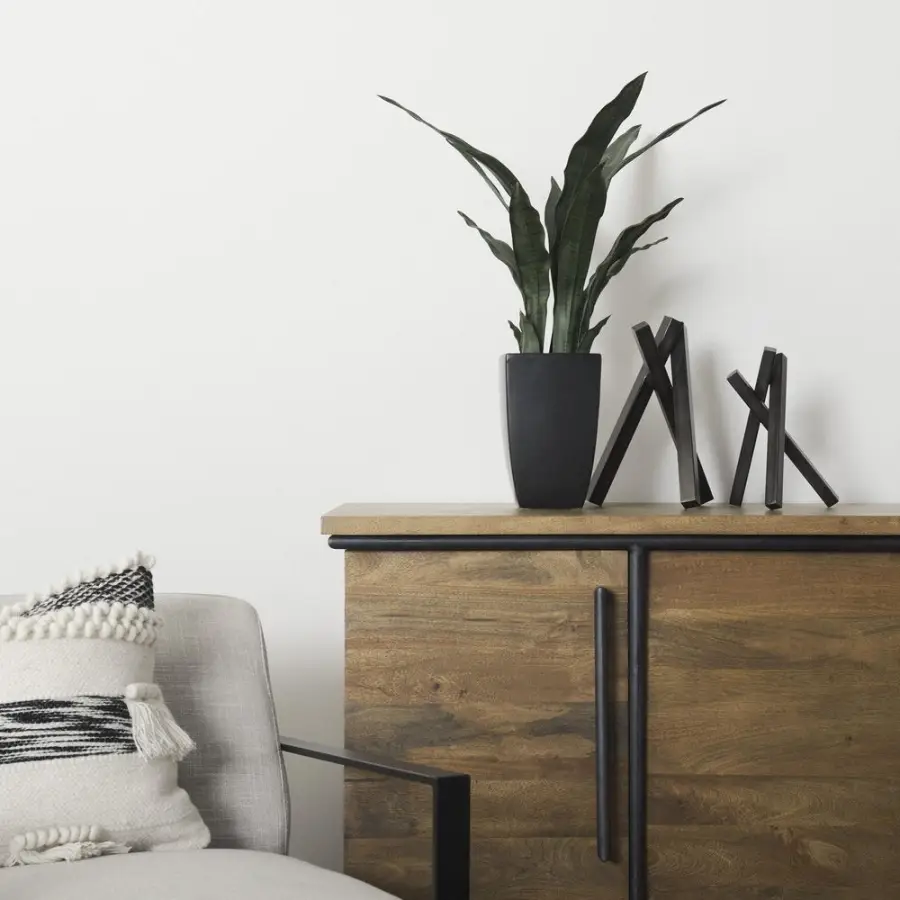
How big a sculpture should be for a console, coffee table or shelf, how to group decorative objects, and where they look best.
A sculpture looks right when its size suits the surface it sits on and it has room around it. Choose one larger piece for a console or sideboard, keep pieces on a coffee table low enough to see over, and group smaller objects in odd numbers at different heights. Most decorating mistakes with sculptures are about scale and crowding, not taste.
Here's how to pick the size, place it, and group it.
Size: match the piece to the surface
Think about where the sculpture will sit and how far away people will see it from.
| Where it goes | What tends to work |
|---|---|
| Console, sideboard or dresser | One taller statement piece, roughly 15 to 24 inches, or a group of three |
| Coffee table | Low pieces, under about 12 inches, so they don't block the view across the seating |
| Bookshelf | Pieces that leave a few inches of air below the shelf above, often 6 to 12 inches tall |
| Side table or nightstand | One small piece next to the lamp, not competing with it |
| Floor or plinth | Large pieces, 30 inches and up, seen from across the room |
A piece that's too small for its surface reads as clutter; one that's too big crowds everything around it. When in doubt, go a size up on a console and a size down on a coffee table.
Group in odd numbers, at different heights
Three objects of different heights — tall, medium, low — make an easy, balanced group, with the tallest at the back or to one side. A group works best when the pieces share one thing, such as a color, a material or a shape, and differ in the rest.
- Vary the height. Put a smaller piece on a stack of books or a tray to lift it.
- Vary the shape. Pair a tall, narrow piece with something round or low.
- Leave space. Some empty surface around a group lets each piece read on its own.
The same thinking applies to shelves; our guide to styling a bookshelf covers spacing books and objects together.
Placement: where sculptures do the most
- On a console or sideboard, a sculpture balances a lamp or a mirror; see our guide to styling a sideboard and to the entry console and mirror.
- On a coffee table, combine one low sculpture with books and a tray; our coffee table styling guide has the method.
- Near light. A lamp or a window brings out the shape and the finish, especially glass and metal.
- Out of harm's way. Keep glass and other fragile pieces off busy walkways and away from the edges of tables in homes with kids or pets.
Materials and finishes
Metal, glass, wood, marble and resin each change the feel. Metal and glass catch the light; wood and stone add warmth and weight. If a room already mixes metals, our guide to mixing metals explains how to keep the finishes working together. Check the listing for weight and material before you buy, especially for shelves and narrow tables.
Shop this guide
- 20" Clear and Brown Murano Glass Modern Abstract Tabletop Sculpture
- 12" Gunmetal Gray Metal Abstract Geometric Tabletop Sculpture
- 6" Gold Metal Geometric Orb Tabletop Sculpture
The short version
Size the sculpture to its surface: taller statement pieces on consoles and sideboards, low pieces on coffee tables, smaller ones on shelves. Group small objects in threes at different heights with one shared color or material, leave space around them, and place them where light can reach them. Shop sculptures and decor.
Frequently asked questions
How big should a sculpture be on a console table?
A single statement piece around 15 to 24 inches tall usually suits a standard console; smaller pieces work better as a group of three at different heights.
How many decorative objects should go on a coffee table?
Usually one to three, kept low, plus books or a tray. Leave enough clear surface to set things down.
Should decor be grouped in odd numbers?
Odd numbers, especially three, tend to look more relaxed and balanced than pairs. Vary the heights and keep one common thread, such as color or material.
Where should I put a glass sculpture?
Somewhere it catches light, near a window or a lamp, and away from busy paths and table edges.