Color, Material & Textiles
How to Mix Metals in Your Home (Brass, Black, Chrome, and More)
7 min read
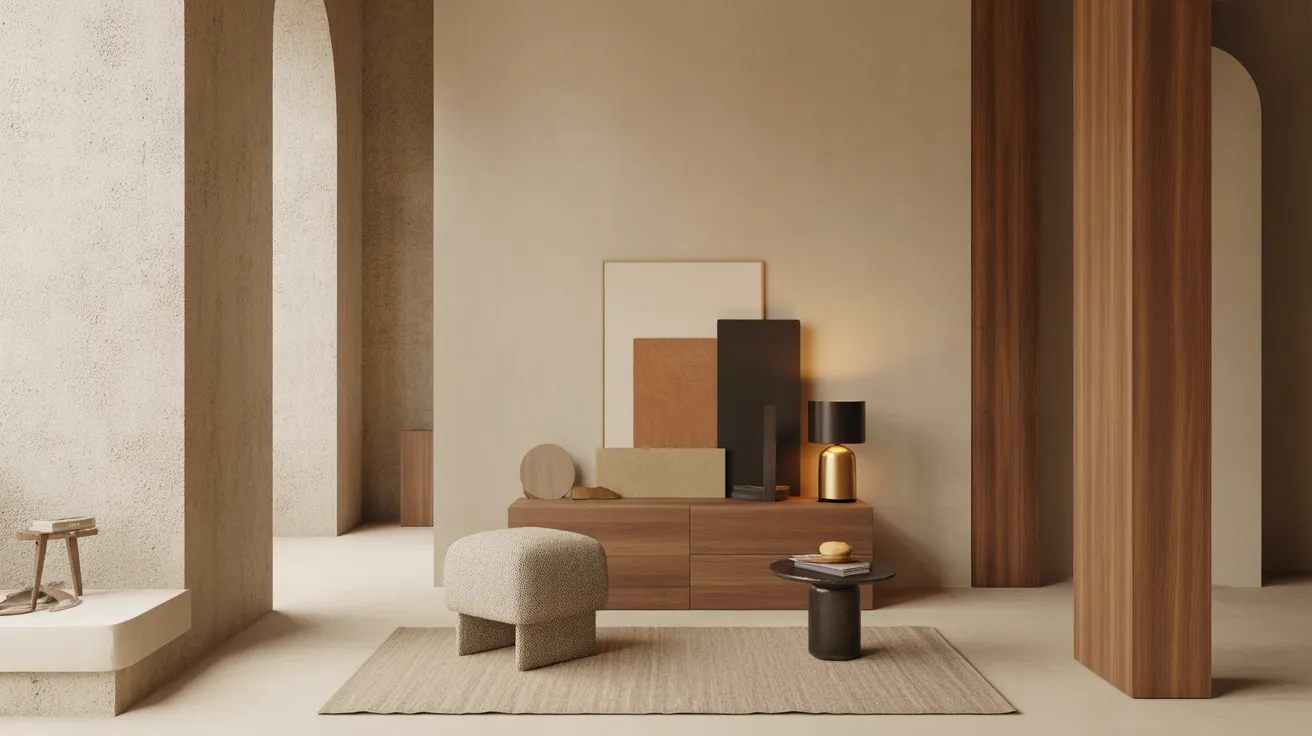
Yes, you can mix metal finishes at home. Learn the dominant-metal rule, which finishes pair best, and how to combine brass, black, and chrome without it clashing.
You can absolutely mix metal finishes in one room — designers do it in nearly every project. The rule is simple: pick one metal to dominate, choose one or two others to support it, and repeat each finish at least twice so the mix looks deliberate. The all-matching alternative, where every faucet, pull, lamp, and frame is the same shade of brushed nickel, is what actually dates a room.
Here's how to combine metals so it reads as designed, not accidental.
Why Matching Every Metal Is the Real Mistake
For years the safe advice was to pick one metal and commit — all chrome, or all brushed nickel, top to bottom. The result is a room with no spark. Metal's whole job is to catch light and add small bright accents, and a single repeated finish gives the eye nothing to discover.
Mixed metals do the opposite. A warm brass pendant over a kitchen with black hardware, or a chrome lamp on a console with aged-bronze pulls, creates contrast that makes each finish more noticeable, not less. The same thing happens when you mix wood tones instead of matching them — contrast creates hierarchy, and hierarchy reads as intentional.
The fear of clashing is real, but it comes from mixing metals randomly, not from mixing them at all. Follow a little structure and the risk disappears.
Understand Warm vs. Cool Metals First
Metals split into two temperature camps, and knowing which is which makes every pairing decision easier.
Warm metals lean yellow, red, or amber: brass, gold, copper, bronze, and aged or antique versions of each. They add warmth and softness and suit warm-toned rooms with wood, linen, and earthy palettes.
Cool metals lean silver, gray, or blue: chrome, polished nickel, stainless steel, and pewter. They read crisp and modern and suit cooler, sleeker rooms.
Black metal (matte black, blackened steel, wrought iron) is the wildcard — technically cool but functionally neutral. It grounds almost any palette and pairs with both warm and cool metals, which is why it shows up in so many modern rooms as the connective finish.
You don't have to stay in one camp. A warm-and-cool mix is one of the most sophisticated combinations there is — the contrast is the point. You just want to do it on purpose.
The Three Rules of Mixing Metals
1. Choose a dominant metal (roughly 60–70%)
Every successful metal mix has a clear lead. Pick the finish that will appear most — usually the one on your largest or most permanent fixtures (lighting, faucets, large hardware) — and let it carry the majority of the metal moments in the room. The supporting metals accent; they don't compete.
2. Limit yourself to two or three metals per room
Two metals is elegant and easy. Three is rich and still controlled. Four or more starts to look like indecision. In most well-balanced rooms you'll find a dominant metal, one accent, and often black steel doing quiet structural work.
3. Repeat each finish at least twice
A single brass object in a room of chrome looks like a mistake; two or three brass moments make it a scheme. Spread each finish to at least two points, and try to vary the height — a metal at floor level (a lamp base or table legs), at eye level (hardware, a frame), and overhead (a fixture) reads far more cohesive than three of the same metal clustered in one spot.
Which Metals Pair Best
| Combination | Reads as | Best in | How to balance |
|---|---|---|---|
| Brass + black | Warm, modern, grounded | Warm and transitional rooms | Brass as accent, black as structure |
| Chrome + black | Crisp, contemporary | Modern, cooler rooms | Black softens chrome's hard shine |
| Brass + chrome | Sophisticated, deliberate | Eclectic, design-forward rooms | Keep one clearly dominant; let warm and cool contrast |
| Bronze + black + brass | Layered, lived-in | Organic and warm-minimal rooms | All warm-leaning; black anchors |
| Nickel + brass | Soft, classic | Traditional and transitional rooms | Brushed-on-brushed reads gentler than polished-on-polished |
A note on finish texture, which matters as much as color: a brushed metal next to a polished one of the same color can look like a mismatch rather than a mix. When pairing two finishes, it's often easier to keep the finish texture consistent — both brushed, or both polished — even when the metals differ.
Where Metals Show Up (and How to Handle Each)
Lighting is usually the boldest metal in the room and a great place to introduce your dominant finish. A statement pendant or a pair of sconces sets the tone for everything else — start here. The lighting collection is where most metal decisions naturally begin.
Hardware — cabinet pulls, knobs, faucets — is the most permanent metal and the trickiest to swap, so it often makes sense as the dominant finish in kitchens and baths. Accent metals can then appear in movable pieces.
Furniture legs and frames carry metal at floor level: a chrome-legged chair, a brass-trimmed coffee table, black steel shelving. These low moments balance overhead lighting and keep the metal distributed.
Decor and frames are where you experiment freely. Lamp bases, mirror frames, vases, candleholders, and picture frames are easy, low-commitment ways to repeat a finish and build the twice-minimum into a room. A handful of pieces from a focused decor selection covers this layer.
How to Mix Metals Without Replacing What You Have
You almost never need to start over.
- Inventory the metal you already own. List every visible finish in the room. You may find you already have a natural dominant metal and just need to commit to it.
- Decide your dominant finish. Usually the one on your lighting or hardware, since those are hardest to change. Build the mix around it.
- Introduce a second metal in something movable. A lamp, a tray, a frame, or a set of candleholders adds a contrast finish without a renovation.
- Add black as the connector. If two metals feel like they're floating, a few black-steel moments — a frame, a lamp, shelf brackets — often tie them together.
- Check the spread, not just the count. Make sure each finish appears at least twice and at varied heights before you buy anything more. The fix is often redistribution, not addition.
Metal is the punctuation in a room, not the paragraph — used last and least. The same restraint that makes a mixed-texture room work applies here: a little catches the light; too much turns busy.
Shop this guide
- 57" Brass Adjustable Traditional Shaped Floor Lamp
- 68" Black And Gold Metal Two Light Task Floor Lamp
- 60" Chrome Two Light Traditional Shaped Floor Lamp
The Short Version
- You can mix metals. Matching every finish is the real dating mistake.
- Pick one dominant metal (60–70%), add one or two supporting finishes, and stop at three.
- Know your temperatures: brass, gold, copper, and bronze are warm; chrome, nickel, and steel are cool; black is the neutral connector.
- Repeat each finish at least twice and spread it across heights — floor, eye level, overhead.
- Start with lighting (your boldest metal), use decor and frames to repeat finishes, and let black tie loose ends together.
When you're ready to set the dominant tone, shop lighting — the pendants, sconces, and lamps there are where most metal schemes begin. Fill in the supporting finishes from the decor collection.
Frequently asked questions
Can you mix metals in one room?
Yes. Mixing metals is standard design practice. The key is to pick one dominant finish (about 60–70% of the metal in the room), add one or two supporting metals, and repeat each finish at least twice so the combination looks intentional.
How many metals can you mix in a room?
Two for an easy, elegant look; three for a richer one. Beyond three, a room starts to look unplanned. Many balanced rooms use a dominant metal, one accent, and black steel as structure.
Can you mix brass and chrome?
Yes, and it's one of the more sophisticated combinations because it pairs a warm metal with a cool one. Make sure one is clearly dominant, repeat each at least twice, and consider keeping the finish texture consistent — both brushed or both polished.
Does black count as a metal when mixing?
Yes, and it's the most flexible one. Matte black and blackened steel are functionally neutral, so they pair with both warm and cool metals and often act as the connector that ties a mix together.
Do my metal finishes have to match my hardware?
No. Hardware is usually the most permanent metal, so it often makes sense as the dominant finish — but accent metals can and should appear elsewhere in lighting, furniture legs, and decor.
Should warm and cool metals ever be mixed?
They can be, and the contrast is exactly what makes the combination feel deliberate. Mixing a warm metal like brass with a cool one like chrome reads as designed, as long as one dominates and each is repeated.