Color, Material & Textiles
How to Mix Throw Pillows Like a Designer (Without Overthinking It)
8 min read
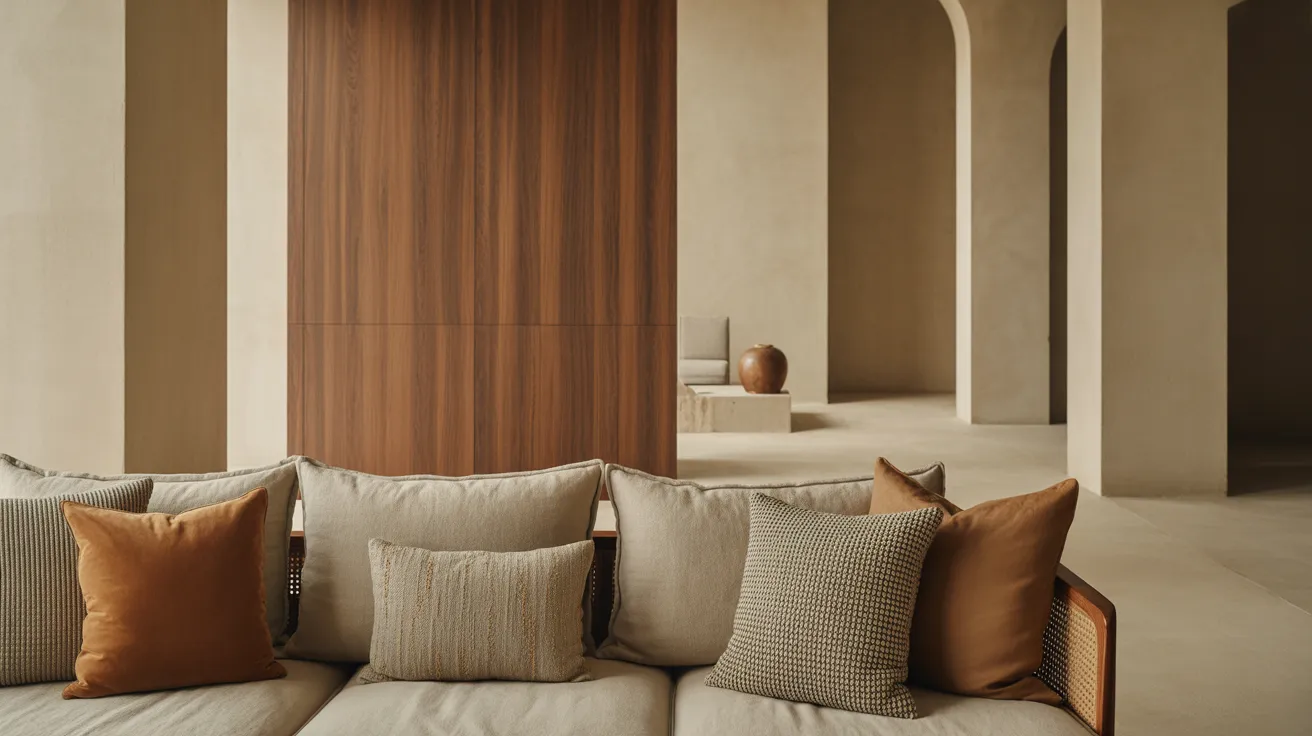
Mix throw pillows like a designer: the odd-number rule, how to combine patterns and solids, sizing, and a no-fail formula for a sofa that looks pulled together.
Mixing throw pillows well comes down to three decisions: vary the size, vary the texture, and let one fabric lead. The designer trick most people miss is that pillows don't need to match — they need to relate. Pull one color from your rug, sofa, or art, repeat it across two or three pillows in different weaves, and let the rest be quiet. A sofa styled this way looks composed instead of coordinated, which is the whole difference.
Here's the method, step by step.
Why a Matching Pillow Set Looks Worse Than a Mixed One
Walk into most furniture stores and you'll see sofas dressed in two identical pillows, dead center, like bookends. It reads as a product photo, not a room. The eye has nothing to explore — same fabric, same size, same distance from the arm — so it slides right off.
A good pillow arrangement does the opposite. It gives the eye a small journey: a large textured square, a smaller patterned one leaning against it, a long lumbar in front breaking the line. Nothing matches exactly, but everything belongs, because the colors are drawn from the same room. That sense of belonging without matching is what people mean when they call a room "designed."
The reassuring part: this is a formula, not a talent. Once you see the moving parts, you can mix pillows in five minutes and have it land every time.
The Four Variables You're Actually Mixing
Every pillow you add changes four things at once. Control them on purpose and the chaos disappears.
Size. This is the most overlooked lever and the most powerful. Pillows of identical size flatten a sofa; varied sizes give it dimension. You want a clear large-to-small descent across the seat — think 22-inch anchors at the arms, an 18- or 20-inch in front, a lumbar to finish.
Texture. Two pillows in the same color but different weaves — a smooth cotton and a nubby bouclé, say — read as two distinct objects and add depth without adding noise. Texture is how you mix without clashing. For the deeper logic on combining materials, our texture pairing guide covers the same principle across a whole room.
Pattern. Patterns carry the personality, but they're also where mixes go wrong. The fix is scale: one large-scale pattern, one small-scale or geometric, never two of the same weight competing.
Color. Pull your palette from something already in the room — the rug, a piece of art, the throw, the wood tones. Pillows that echo the room's existing colors feel inevitable; pillows in a color that appears nowhere else feel like leftovers.
The Designer Formula That Always Works
If you want a single repeatable recipe, this is it. It scales up or down by sofa length.
| Slot | What goes here | Why |
|---|---|---|
| Two outer anchors | Largest pillows (22") in a solid or textured neutral | Frame the arrangement and ground it |
| One or two inner pillows | Mid-size (18–20") carrying your lead pattern | The personality piece — the one with color or print |
| One front lumbar | Long rectangular pillow in a contrast texture | Breaks the row of squares and invites you to lean |
On a standard three-seat sofa, that's typically five pillows. On a loveseat, drop to three (one anchor per arm, one lumbar). On a deep sectional, run the same logic in two clusters rather than one long line — pillows spread evenly across a sectional just look like seating, not styling.
The Rules Worth Knowing
1. Work in odd numbers
Odd-numbered groupings — three, five, seven — almost always look more relaxed and intentional than even ones. Even numbers pull the eye toward symmetry and matching; odd numbers read as collected over time. Five is the sweet spot for a full-size sofa.
2. Mix scale, never weight
The classic combination is one large-scale pattern, one small-scale pattern, and one or two solids or textures in between. The mistake isn't mixing two patterns — it's mixing two patterns of the same scale, which makes them fight. A big botanical and a fine stripe coexist happily. Two medium florals do not.
3. Repeat one color, at least twice
Choose a single accent color and make sure it appears in at least two pillows, ideally in different fabrics. One ochre pillow looks like an accident; an ochre velvet plus an ochre thread running through a patterned pillow looks like a decision. Repetition is what converts a pile into a scheme.
4. Size the insert up, not down
The most common reason pillows look sad and flat is an insert that's too small for the cover. Buy inserts one to two inches larger than the cover — a 22-inch insert in a 20-inch cover — so the pillow sits plump and karate-chops cleanly. Down or down-alternative inserts hold shape better than cheap polyester. Our throw pillow size guide breaks down which cover takes which insert.
5. Keep one finish off-limits: the perfectly puffed showroom look
A pillow karate-chopped to a sharp peak reads as staged. A pillow given a gentle hand-chop and left to slouch slightly against the arm reads as a home. Style for living in, not photographing.
Pillow Mixes by Room and Sofa Color
On a neutral sofa (oatmeal, greige, sand)
Your easiest canvas. Lead with one patterned pillow that introduces color, anchor it with two textured solids a shade or two deeper than the sofa, and finish with a lumbar in the accent color. This is where you can be boldest with pattern, because the sofa won't fight it.
On a dark or jewel-tone sofa (forest, navy, charcoal)
Lighten and warm the pillows so they read against the base. Cream, camel, rust, and brass-adjacent golds glow on a dark sofa. Keep patterns simpler here — the contrast is already doing the work, so two solids and one quiet geometric is plenty.
On a bold or saturated sofa
Pull back. The sofa is the statement, so the pillows should be its supporting cast: textured solids in tones already present in the sofa's color family, plus one neutral to give the eye a rest. Adding a loud pattern to a loud sofa is the fastest way to make a room feel busy.
On a sectional
Treat it as two seating zones, not one runway. Style a cluster of three at the chaise corner and two near the opposite arm, leaving the middle open so the piece still reads as comfortable seating.
How to Get the Look Without Buying a New Set
You probably own more of the right pieces than you think.
- Shop your own home first. Gather every throw pillow you own in one place. You're looking for one good pattern, two textures, and a repeatable accent color — you may already have all four.
- Buy covers, not pillows. Cover-and-insert systems cost less, store flat, and let you swap looks seasonally without storing a closet of full pillows.
- Add texture before you add pattern. If your current pillows are all smooth cotton, one bouclé or chunky-knit cover will do more for the sofa than another print.
- Upgrade the inserts. Sometimes the pillows aren't the problem — the flat inserts are. New down-alternative inserts a size up can revive covers you already like.
- Buy the lead pillow last. Choose your textures and neutrals first, then pick the one patterned pillow that ties them to the room. A few well-chosen pieces from a considered decor selection finish the job without overbuying.
Shop this guide
- Set of Two Blue Striped Cotton Throw Pillow With Tassels
- Set of Two Gray and White Geometric Cotton Throw Pillow
The Short Version
- Pillows should relate, not match. Pull your colors from the rug, art, or sofa.
- Vary size (large anchors, mid accents, one lumbar), texture (smooth against nubby), and pattern scale (one big, one small).
- Work in odd numbers — five on a full sofa, three on a loveseat.
- Repeat one accent color at least twice so the mix reads as a scheme.
- Size inserts up one to two inches; flat pillows are usually an insert problem, not a cover problem.
When you're ready to fill in the gaps, shop decor — the pillows, throws, and textures there are built to mix, so the formula does itself. And if you're styling the whole seating area, the living room collection gives you the anchor pieces to build around.
Frequently asked questions
How many throw pillows should be on a sofa?
Five on a standard three-seat sofa, three on a loveseat or apartment sofa, and clusters of three plus two on a sectional. Work in odd numbers — they look more relaxed than even, matched pairs.
Can you mix two different patterns on the same sofa?
Yes, as long as the patterns are different scales. Pair one large-scale pattern with one small-scale or geometric, and tie them together with a shared color. Two patterns of the same size will compete.
What size throw pillows should I buy?
Use 20- to 22-inch squares as anchors, 18-inch as mid-size accents, and a 12-by-20-inch lumbar in front. Always size the insert one to two inches larger than the cover so the pillow looks full.
How do I choose pillow colors?
Pull them from something already in the room — your rug, art, throw, or wood tones. Pick one accent color and repeat it across at least two pillows in different fabrics so it reads as intentional.
Do throw pillows have to match the sofa?
No. Matching is what makes a sofa look like a showroom display. Aim for pillows that relate to the sofa and the room through shared colors and complementary textures, not identical fabric.
Why do my throw pillows look flat?
Almost always the insert. Cheap or undersized inserts collapse. Switch to a down or down-alternative insert sized one to two inches larger than the cover, and they'll hold a full, plump shape.