Color, Material & Textiles
Choosing the Right White: Warm vs. Cool Whites Explained
7 min read
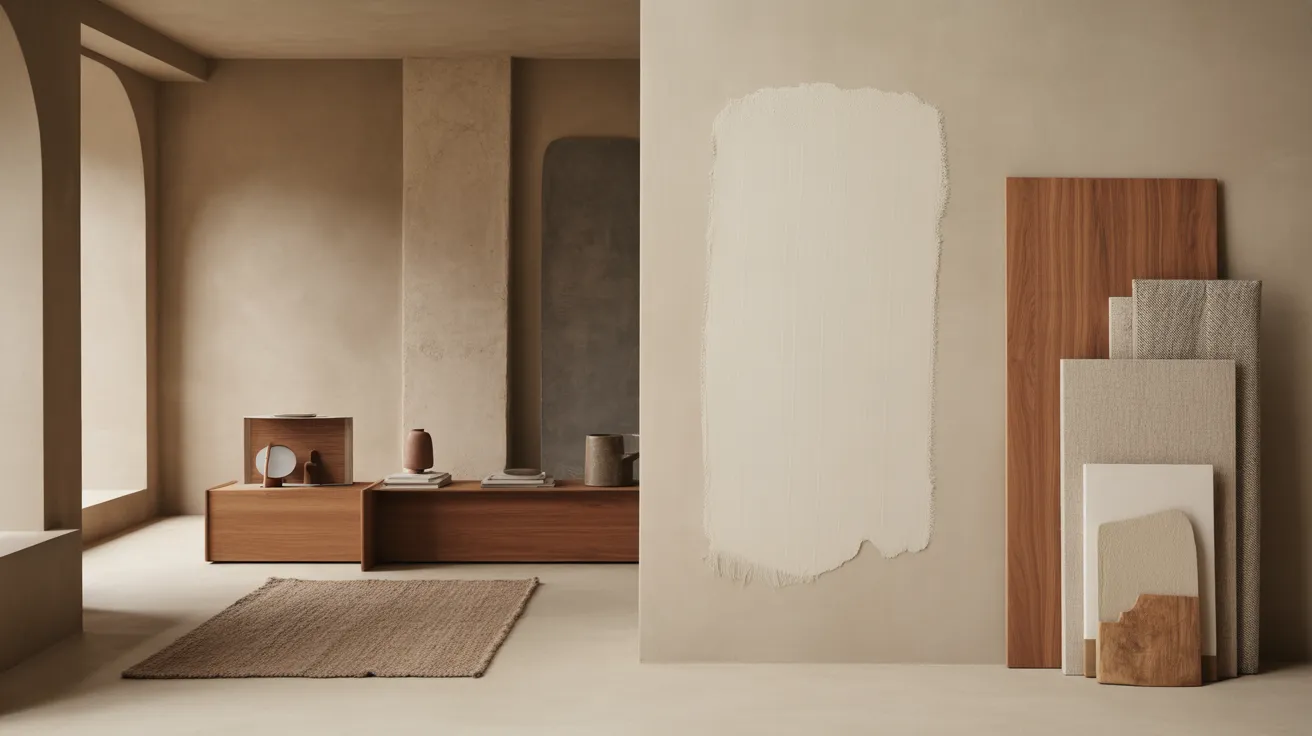
How to choose white paint: the difference between warm and cool whites, how to read undertones, and which white to pick based on your light and your floors.
There's no such thing as a single "white." Every white paint leans either warm (a yellow, red, or brown undertone) or cool (a blue, gray, or green one), and that undertone — invisible on the chip, obvious on the wall — decides whether your room feels like sunlight or like an office. The right choice depends on your light, your floors, and the temperature you want the room to hold. Warm whites suit most homes and most natural light; cool whites suit bright, modern, north-facing or very sunny spaces.
Here's how to read undertones and pick the white that won't disappoint you.
Why Your "White" Room Looked Wrong
Almost everyone has done it: chosen a beautiful white off a chip, painted a whole room, and walked in to find it looks faintly blue, slightly pink, oddly green, or grayer and colder than expected. The paint didn't change. The undertone simply revealed itself at scale, in your light, against your floors.
White paint is mostly white pigment with a tiny amount of color mixed in to give it character. That trace of color is the undertone, and on a two-inch chip you can't see it. Spread across four walls and lit by your actual windows, it takes over. A white with a hint of blue turns a sun-starved room icy. A white with a hint of yellow turns a bright room creamy. Choosing white is really choosing an undertone — once you see that, the whole process gets easier.
Warm Whites vs. Cool Whites
The first and most important split is temperature.
Warm whites carry undertones of yellow, cream, beige, or red. They feel soft, inviting, and a touch golden. They flatter wood tones, warm metals, linen, and earthy palettes, and they make a room feel cozy and lived-in. The trade-off: in very warm or low light they can tip toward cream or ivory rather than reading as crisp white.
Cool whites carry undertones of blue, gray, or green. They feel crisp, clean, and bright, and they reinforce a sleek, modern, gallery-like look. The trade-off: in poor or cold light they can read sterile, clinical, or faintly icy — the dental-office effect.
True or neutral whites sit in the narrow middle with minimal undertone. They're harder to find than they sound and tend to pick up whatever's around them, leaning warm in warm rooms and cool in cool ones.
For warm, modern interiors — wood, texture, soft light — warm whites and the gentlest neutral whites are almost always the safer bet. This is the same logic behind a warm-leaning neutral palette: the undertone has to belong to the room's overall temperature.
How to Read an Undertone Before You Commit
Reading undertones is a skill, and these methods make it reliable.
Compare against a pure white
Hold your white chip next to a sheet of bright printer paper or a white appliance. Your eye, given a true-white reference, will suddenly catch the undertone — the chip will look yellow, pink, gray, or blue by comparison. This single trick reveals more than staring at the chip alone ever will.
Compare whites against each other
Lay three or four white chips side by side. Apart, they all look "white." Together, the warm ones jump out yellow and the cool ones go gray-blue. Contrast is how the eye sees undertone.
Test big, and test in your light
Never commit from a chip. Paint a two-by-two-foot patch — or two large peel-and-stick sample boards — on the actual wall, and look at them at three times of day: morning, midday, and lamplight at night. A white that looks perfect at noon can go gray at dusk. Move the sample to different walls, too, because light bounces differently around a room.
Let Your Light Choose For You
Natural light is the single biggest factor in how a white reads, and the direction your windows face tells you most of what you need to know.
| Light situation | What it does to white | Best white to choose |
|---|---|---|
| North-facing (cool, bluish light) | Pushes whites cooler and grayer | Warm white, to counterbalance the chill |
| South-facing (bright, warm light) | Floods the room; forgives most choices | Cool or neutral white to keep it crisp; warm if you want glow |
| East-facing (warm AM, cool PM) | Shifts through the day | Soft warm or neutral white that stays stable |
| West-facing (cool AM, warm PM) | Golden in late day | Neutral white that won't go orange at sunset |
| Low or artificial light | Exaggerates undertones | Warm white; cool whites read clinical here |
The short rule: cool light wants a warm white to balance it, and abundant warm light can carry a cooler white. Fighting your light usually loses.
Match the White to the Room's Fixed Elements
Your floors, counters, and large furniture aren't moving, so the white has to get along with them.
- Warm wood floors (oak, walnut, honey tones) pair best with warm or neutral whites. A cool white over warm wood creates a jarring temperature clash.
- Gray, cool, or whitewashed floors can take a cooler or neutral white that echoes their tone.
- Warm metals and brass fixtures lean warm — support them with a warm white.
- Black, chrome, and crisp modern finishes can handle a cooler, cleaner white.
When in doubt, pull the white toward the temperature of the wood in the room. Wood is usually the warmest fixed element, and a white that flatters it will flatter the whole space — the same instinct that guides a warm minimalist palette.
How to Choose Without Repainting Three Times
A simple sequence that avoids the costly do-overs:
- Note your light first. Window direction and how much daylight the room gets narrows the field before you look at a single chip.
- Decide warm or cool. Based on your light and your floors, commit to a camp. This eliminates most of the paint aisle instantly.
- Gather three candidates in that camp. Don't cross temperatures — compare three warm whites against each other, not a warm against a cool.
- Sample big, on the wall, across a full day. Two large patches per candidate, viewed morning, noon, and night.
- Decide at the worst-lit time, not the best. If a white still looks good at dusk under lamplight, it'll look good always. Choosing at high noon flatters everything and tells you nothing.
You don't have to decide the whole room's mood from the walls alone. Once the white is right, soft furnishings and wood tones do the rest — a few warm-toned pieces from a considered decor selection or the living room collection keep a cooler white from feeling stark, or deepen the glow of a warm one.
The Short Version
- There's no neutral "white" — every white leans warm (yellow/red) or cool (blue/gray). The undertone decides the room's feeling.
- Warm whites suit most homes, wood tones, and lower or cooler light; cool whites suit bright, modern, sun-filled spaces.
- Read undertones by comparing against pure white or against other whites side by side.
- Let your light lead: cool light wants a warm white; abundant warm light can carry a cooler one.
- Sample large, on the wall, and judge at the worst-lit time of day — not at noon.
Once the walls are right, explore the collection to balance them — warm wood, soft textiles, and the right metals turn a good white into a finished room. For palette-building beyond the walls, the decor collection is where the layering starts.
Frequently asked questions
What's the difference between warm white and cool white paint?
Warm whites have yellow, cream, or red undertones and feel soft and inviting. Cool whites have blue, gray, or green undertones and feel crisp and modern. The undertone is invisible on a chip but obvious across a whole wall.
How do I figure out a white's undertone?
Hold the chip against a sheet of bright white printer paper or compare several white chips side by side. Against a true-white reference, the undertone — yellow, pink, gray, or blue — becomes visible. Then sample it large on the actual wall.
Which white is best for a room with little natural light?
A warm white. Low or cool light exaggerates undertones and pushes whites colder, so a warm white counterbalances the chill and keeps the room from reading clinical or gray.
Should white walls match the floor?
They should agree in temperature. Warm wood floors pair best with warm or neutral whites; cool or gray floors can take a cooler white. A cool white over warm wood creates a temperature clash that feels off.
Why does my white paint look gray or blue?
Either the white has a cool undertone, or your light is cool (north-facing or low light), or both. Cool light amplifies cool undertones. Switching to a warm white usually fixes it.
Do I really need to test paint before committing?
Yes. Whites change dramatically with light and surroundings, so a chip is never enough. Paint a large patch on the actual wall and view it at morning, midday, and night before buying gallons.