Color, Material & Textiles
How to Choose Curtains for Modern Rooms: Fabric, Color, and Fit
7 min read
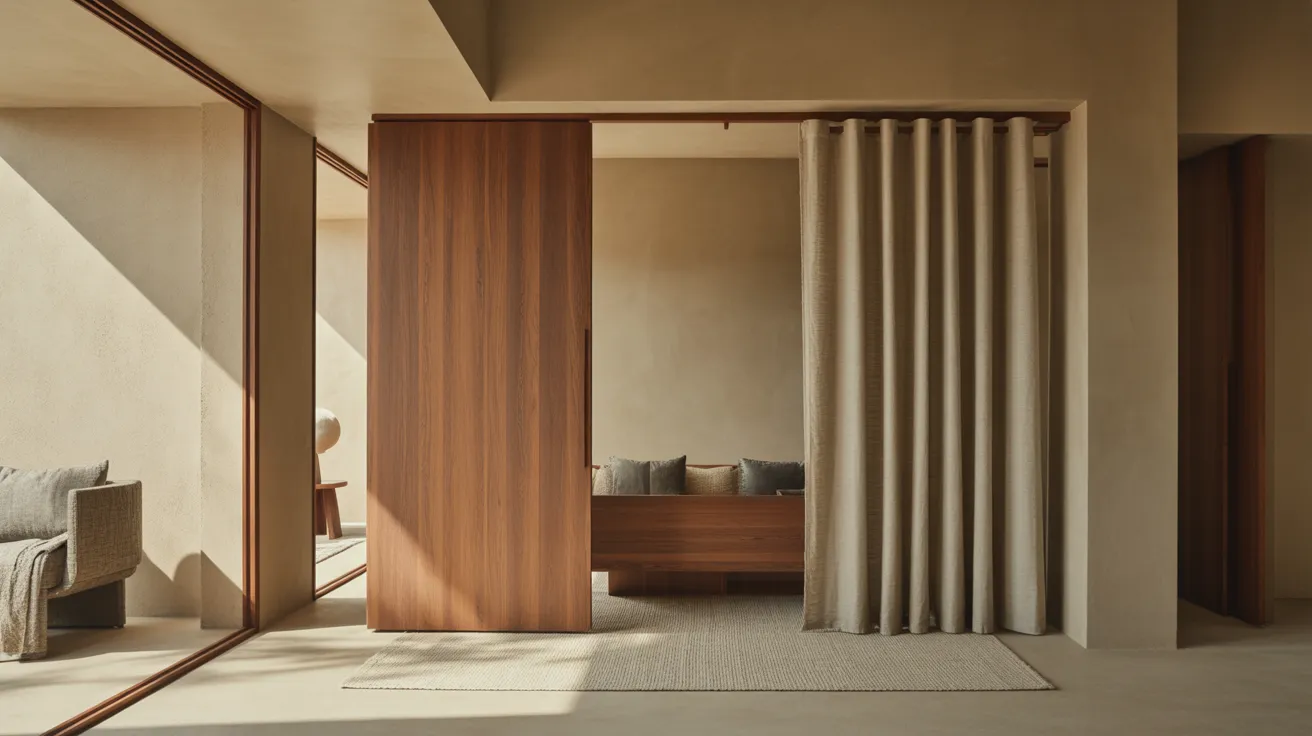
How to choose curtains for modern rooms: which fabric for which job, color and length rules, sheer vs. blackout, and the hardware that makes them look custom.
Choosing curtains comes down to three decisions: what fabric (which sets the mood and the light), what color (which decides whether they recede or stand out), and how they hang (which is what separates custom-looking from off-the-shelf). For modern, warm rooms, the reliable answer is usually a light-filtering natural-fiber drape in a tone close to the wall, hung high and wide. Here's how to land each decision.
A quick note on measurements up front: this guide covers what to choose. For how long, how wide, and how high to hang — the exact numbers — see our companion curtain and drapery size guide, which we'll point back to where it matters.
Start with the job the curtains need to do
Before fabric or color, name the function. It narrows everything.
- Soften and frame — you mainly want the room to feel finished and the window dressed. Light, airy fabrics.
- Filter light — you want daylight diffused, not blocked, plus daytime privacy. Mid-weight light-filtering fabrics.
- Block light and insulate — bedrooms, media rooms, or sun-baked exposures. Blackout or heavyweight lined drapes.
- Privacy without darkness — sheers, often layered with a second heavier panel.
Many rooms want two of these at once, which is why layering — a sheer plus a heavier drape on a double rod — is so common. Decide the job first and the fabric choice nearly makes itself.
Choosing the fabric
Fabric is the biggest single decision: it sets how the curtain drapes, how it filters light, and how formal the room feels. The modern, warm look leans toward natural fibers with a relaxed hand.
| Fabric | Light | Drape & feel | Best for |
|---|---|---|---|
| Linen | Filters softly, glows | Relaxed, slightly textured, modern | Living rooms, bedrooms — the modern default |
| Cotton / cotton blend | Filters, depends on weave | Crisp, easy, versatile | Almost any room, easygoing budget pick |
| Velvet | Blocks well, rich | Heavy, formal, luxe | Bedrooms, cooler rooms, drama |
| Sheer (voile, gauze) | Barely filters | Floaty, airy | Layering, soft privacy, diffusing light |
| Blackout-lined | Blocks fully | Structured, heavier | Bedrooms, media rooms, bright exposures |
Linen is the modern-room workhorse. It filters light into a soft glow, drapes with a relaxed, slightly textured fall, and its quiet wrinkle reads as ease rather than mess — exactly the warm-modern mood. Cotton blends are the easygoing, versatile choice. Velvet brings weight, warmth, and light control where you want richness. Sheers rarely stand alone in a main room but are unbeatable layered under a heavier panel.
If light control is the priority — a bedroom, a screening room, a window that bakes in the afternoon — choose a blackout or thermal lining rather than relying on the fabric alone. A lined linen drape gives you the modern look and the darkness.
Choosing the color
Color decides whether the curtains disappear into the architecture or become a feature. Three approaches:
- Match the wall (recede). Curtains within a shade or two of the wall color make windows read as part of the wall, the room feel taller and calmer, and the whole thing more architectural. This is the safest, most modern choice — and the most forgiving.
- Match the largest soft element (harmonize). Echo the sofa, rug, or bedding tone for a layered, intentional look that's a touch warmer than wall-matching.
- Contrast (feature). A deliberately darker or richer panel turns the window into a focal point. Striking, but commit to it — half-hearted contrast looks like a mistake.
For warm, modern rooms, options 1 and 2 win most of the time. Stay in the warm-neutral family — oatmeal, sand, greige, soft white — and let texture, not color, carry the interest. Avoid pure bright white unless the room is genuinely cool and crisp; it tends to look stark and slightly cheap against warm walls. Cream and natural tones read far softer.
How they hang is half the result
You can buy beautiful fabric and still get a flat, dorm-room result if the hanging is wrong. Three rules do most of the work, and the curtain size guide has the exact measurements:
- Hang high. Mount the rod well above the window — close to the ceiling or molding, not right at the frame. It draws the eye up and makes both the window and the ceiling feel taller. This single move is the most common difference between custom-looking and not.
- Hang wide. Extend the rod several inches past the window on each side so the open panels stack off the glass. You get more light, the window looks bigger, and the fabric frames rather than covers it.
- Hang long. Curtains should reach the floor — either just kissing it or with a slight break. Curtains that float above the floor are the most aging mistake in the room. Measure to the floor, not the sill (sill-length only suits specific spots like over a kitchen sink or a radiator).
For fullness, plan on fabric totaling roughly twice the width of the window so the panels gather into soft folds rather than hanging flat. All the exact numbers — length, width multiplier, and mounting height — live in the size guide; pair it with this article and you've covered both the what and the how much.
Hardware and the finishing details
The small choices that quietly upgrade the look:
- Heading style. A relaxed pleat (pinch, pencil, or a back-tab/rod-pocket for a softer look) suits modern rooms; grommet tops read more casual and contemporary. Avoid stiff, overly formal valances in a clean modern space.
- Rod and finials. Slim metal rods in a warm or matte-black finish suit modern interiors. Keep finials simple — let the fabric be the feature.
- Layering. A double rod with a sheer behind a heavier drape gives you full flexibility: privacy and glow by day, coverage by night.
- One material thread. Tie the rod finish to other metals in the room (lamp, hardware, frames) so it reads intentional.
A few well-chosen decor pieces — the right rod, the right panel, a sheer to layer — turn a bare window into one of the most finished-looking elements in the room.
Shop this guide
The short version
- Decide the job first — soften, filter, block, or privacy — and the fabric choice follows.
- Linen is the modern default; add a blackout lining where you need real darkness.
- Match curtains to the wall (or to your sofa/rug) in the warm-neutral family; skip stark bright white on warm walls.
- Hang high, hang wide, and hang to the floor — it's the difference between custom-looking and flat.
- Choose slim warm-metal or matte-black hardware, and layer a sheer behind a drape for full flexibility.
For the exact measurements behind these rules, pair this with our curtain and drapery size guide. Then shop decor — curtains, rods, and the finishing details that dress a window properly.
Frequently asked questions
What's the best curtain fabric for a modern room?
Linen is the modern default — it filters light into a soft glow, drapes with a relaxed texture, and its slight wrinkle reads as ease. Cotton blends are a versatile, easygoing alternative. For light control, choose a linen or cotton drape with a blackout lining rather than a heavy fabric alone.
What color curtains should I get?
For a calm, modern look, match the wall color within a shade or two so the curtains recede and the room feels taller. To add warmth, echo your sofa or rug tone instead. Save bold contrast for when you genuinely want the window to be a focal point.
How high and wide should curtains be hung?
Hang the rod high — near the ceiling or molding, not at the window frame — and extend it several inches past the window on each side so the panels stack off the glass. Curtains should reach the floor. See our curtain size guide for the exact measurements.
Should curtains touch the floor?
Yes — floor-length curtains that just kiss the floor or break slightly look intentional and modern. Curtains that float above the floor are the most common aging mistake. Sill-length is only right in specific spots like over a sink or a radiator.
Do I need blackout curtains?
In bedrooms, media rooms, and rooms with strong sun or streetlight, blackout or thermal-lined curtains are worth it for sleep and light control. In living spaces where you want daytime light and privacy, light-filtering linen or layered sheers are usually better.