Comparisons
How to Style a Coffee Table: The Tray-Stack-Greenery Method
7 min read
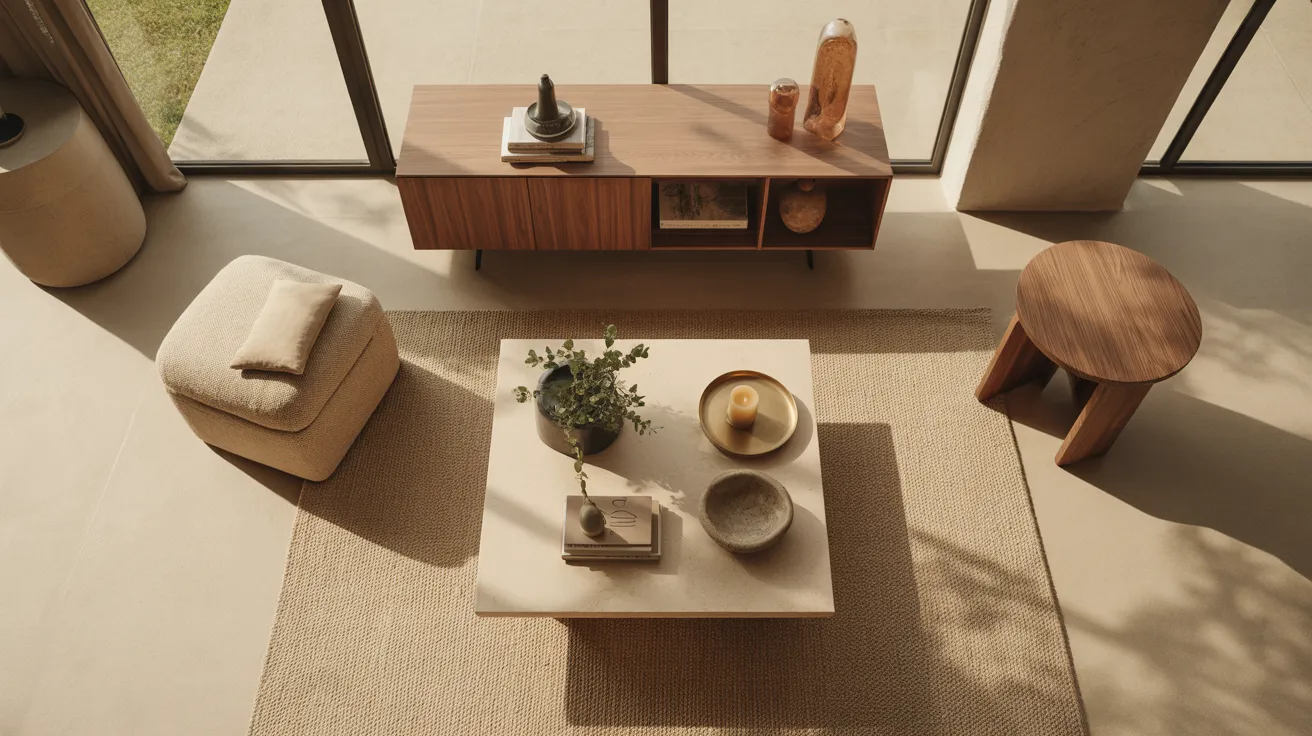
Style a coffee table that looks designed, not cluttered. The tray-stack-greenery method, real height numbers, and a leave-room-for-mugs rule.
A well-styled coffee table looks effortless and is anything but random. The trick most designers use is a simple three-part formula — a tray, a stack of books, and something living — arranged in a loose triangle with breathing room left over. Get those three elements right and you have a surface that looks composed from every angle, with room for a mug and your feet. Here's the method, step by step.
Why coffee tables go wrong
Most cluttered coffee tables share the same problem: too many small objects competing at the same height. A single coaster, a remote, a candle, a stray bowl, three magazines fanned out — none of it relates to anything else, so the eye has nowhere to rest. The fix isn't more decor. It's grouping, height variation, and deliberate empty space.
The other common failure is the opposite extreme: one lonely object marooned in the center of a four-foot surface. That reads as unfinished, not minimal. You're aiming for the middle — a curated cluster that leaves at least half the tabletop clear.
If your table itself feels wrong for the room — too big, too small, too tall — that's a separate problem worth solving first. Our coffee table sizing guide covers the proportions before you start decorating the surface.
The three-part method
Think of styling as building one strong group rather than scattering objects evenly. The three parts do different jobs.
1. The tray — your anchor and corral
A tray defines a zone and instantly makes everything inside it look intentional. It corrals the small stuff — a candle, a matchbox, a tiny dish for rings — so the rest of the table reads as clear. Choose a tray roughly one-third the width of the table: about 14 to 18 inches for most coffee tables. Place it slightly off-center rather than dead middle, leaving the larger open area for drinks and feet.
Wood, woven, marble, or a warm metal finish all work; match the tray's material to something already in the room rather than introducing a new one. A linen-lined tray softens a hard tabletop. A round tray softens a rectangular table.
2. The stack — your height and weight
A short stack of two to four books gives the arrangement visual weight and a base to build on. Large-format design, art, or photography books work best — they're meant to be seen and they have presence. Stack them largest on the bottom, smallest on top, spines facing out or in (out is more colorful, in is more serene and monochrome).
The stack also doubles as a riser. Set a small object — a sculptural piece, a bowl, a candle — on top, and you've created the height variation that makes a tablescape feel layered instead of flat. One stack is usually enough on a standard table; a long rectangular table can take two.
3. The greenery — your softness and life
Something living keeps the table from feeling staged. A low bowl of branches, a small potted plant, a single stem in a bud vase, or a trimmed bunch of eucalyptus all do the job. Keep it low and loose: nothing so tall it blocks the sightline across the sofa, nothing so fussy it needs daily attention. If real plants aren't realistic for your light or schedule, a quality dried stem or a simple branch reads as natural and asks for nothing.
Greenery is the one element worth refreshing seasonally — bare branches in winter, something leafy in spring — to keep the room feeling current with almost no effort.
Arrange in a triangle, not a row
Once you have your three elements, place them in a loose triangle rather than a straight line. Triangular composition is the oldest trick in styling because the eye travels naturally between three points and the grouping reads as a whole. A row, by contrast, looks like objects waiting in line.
Vary the heights across the triangle: the tall stem or branch is one point, the book stack with its topper is another, the low tray is the third. Three different heights, three different footprints, one cohesive cluster.
Height and proportion: the numbers that matter
A few measurements keep a tablescape from looking off. Use these as targets, not laws.
| Element | Target | Why |
|---|---|---|
| Tray width | ~⅓ of the table's length (14–18") | Defines a zone without crowding |
| Tallest object | Below the sofa's seat-back sightline | Keeps the view across the room open |
| Book stack height | 2–4 books, roughly 3–5" total | Enough weight to anchor, not enough to dominate |
| Clear tabletop | At least 50% left open | Room for mugs, snacks, and feet |
| Distance, sofa to table | 14–18" | Reachable seated; not a shin hazard |
| Grouping footprint | Within the table's center two-thirds | Keeps decor off the vulnerable edges |
The tallest-object rule is the one people skip and regret. If a vase or lamp on the table interrupts the line of sight between people sitting across from each other, conversation feels blocked. Keep the tall point under that sightline — usually about 12 to 14 inches above the tabletop — and the room stays open.
Leave room for actual life
A coffee table is furniture you use, not a shelf. The 50-percent-clear rule isn't aesthetic fussiness — it's so there's somewhere to set a mug, a plate, a laptop, a board game. Style toward the back or one side and keep the front edge nearest the sofa clear. If you find yourself moving the decor every evening to make space, you have too much on the table. Edit down until daily life and the styling coexist.
A quick worked example
Picture a 48-inch rectangular table in front of a linen sofa. Off to the right third: a 16-inch round woven tray holding a low candle and a small ceramic dish. Center-left: a stack of three oversized books with a small stone sculpture on top. Behind the stack: a squat vase with three loose branches reaching about 13 inches high. That's it. Three groups, a clear triangle, the left-front quadrant open for mugs. It took four objects and two minutes, and it will photograph well from the doorway, the sofa, and the kitchen.
Most of these pieces — trays, vases, candle holders, bookends — live in one place. Browse decor and accents and pull the colors from what's already in your room rather than buying a matching set.
Shop this guide
- 16" Green Wood Faux Shagreen Serving Tray With Handles
- 10" White And Blue Abstract Ceramic Amphora Jug Vase
- 22" Black Geometric Metal And Glass Lantern Candle Holder
The short version
- Use three parts: a tray to corral, a book stack for height and weight, and greenery for life.
- Arrange them in a loose triangle with three different heights, not a straight row.
- Tray about a third of the table's width; tallest object below the seated sightline.
- Leave at least half the tabletop clear so mugs and feet have somewhere to go.
- Pull colors and materials from the room you already have, and refresh the greenery by season.
Ready to build your cluster? Shop Decor for trays, vases, candle holders, and the small pieces that turn a bare table into a finished one.
Frequently asked questions
What do you put on a coffee table?
A tray to corral small items, a short stack of large books for weight and height, and something living like a plant or branch. Arrange the three in a loose triangle and leave at least half the surface clear for everyday use.
How do you style a coffee table without it looking cluttered?
Group objects instead of spreading them out, vary their heights, and keep half the table empty. Clutter comes from many small items at the same height with no relationship to each other; a single well-built cluster fixes it.
What size tray for a coffee table?
Roughly one-third the table's length — about 14 to 18 inches for a standard coffee table. Place it slightly off-center to leave the larger open zone for drinks.
Should coffee table decor be centered?
No. Centered single objects look stranded, and centered symmetry can feel stiff. Build one off-center grouping and let the rest of the surface stay open; it looks more natural and leaves room to live.
How tall should objects on a coffee table be?
Keep the tallest piece below the sightline between seated people — usually about 12 to 14 inches above the tabletop. Taller than that and a vase or lamp starts blocking conversation across the room.
How many things should be on a coffee table?
Three to five objects in one or two groups is plenty for most tables. A long table can carry two small groupings; a small one is happiest with a single tight cluster.