Comparisons
Leather vs. Fabric Sofas: Pros, Cons, and Real-Life Durability
6 min read
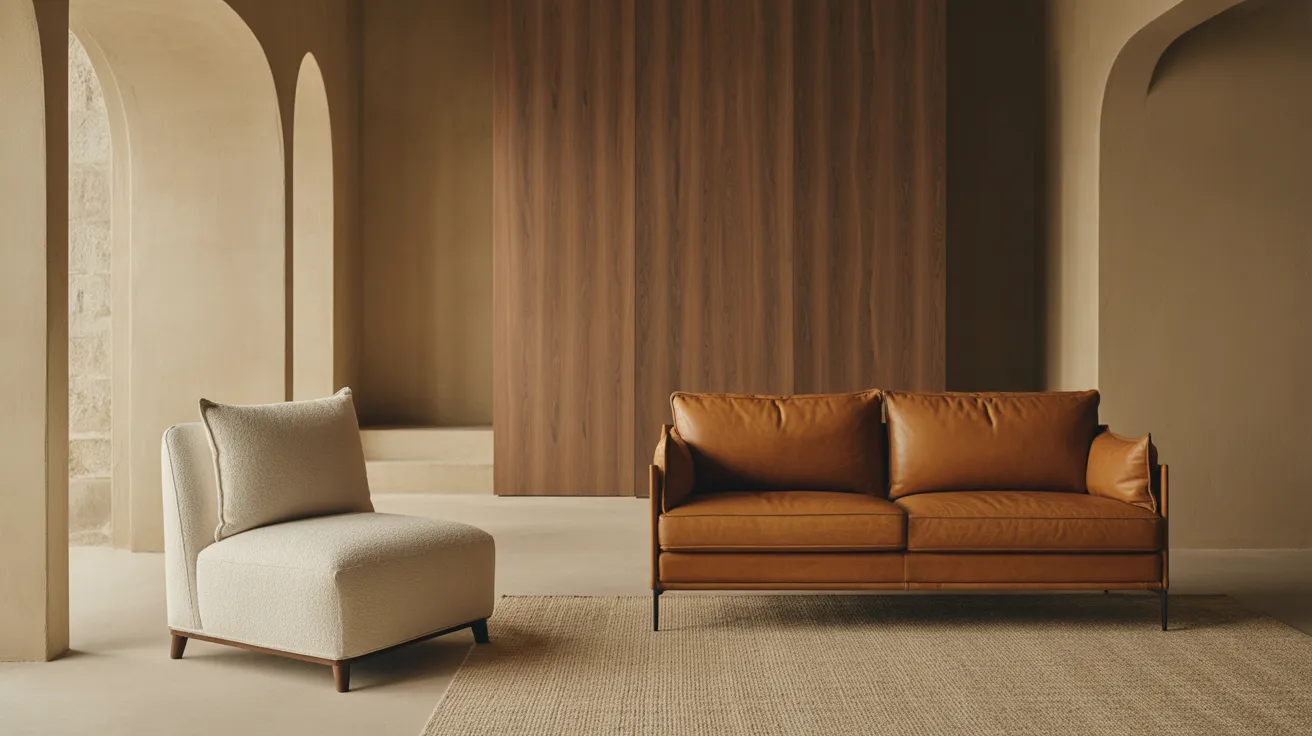
Leather or fabric sofa? An honest comparison of durability, comfort, cleaning, cost, and aging — plus how faux leather really holds up over the years.
The short, honest answer: real leather is the long-game choice — it costs more upfront but can outlast two or three fabric sofas and looks better as it ages. Fabric wins on upfront price, color and texture range, and cozy comfort, and modern performance fabrics close much of the durability gap. Faux leather sits in the middle on price but, candidly, at the bottom on lifespan. Here's how to decide which trade-offs fit your home.
The Decision in One Sentence
If you're buying a sofa for the next 15 years, lean leather. If you're buying for the next 5–8 — or you want a specific color, a softer feel, or a friendlier price — lean fabric. Everything below is the supporting evidence.
Side-by-Side Comparison
| Genuine Leather | Fabric | Faux Leather (PU/Vinyl) | |
|---|---|---|---|
| Typical lifespan | 15–25 years (quality top-grain) | 7–15 years, fabric-dependent | 3–7 years before peeling or cracking risk |
| How it ages | Develops patina; scratches blend in | Pills or fades, wear shows in seats | Surface can crack and peel — doesn't age, it expires |
| Comfort feel | Cool at first touch, warms to you; firmer | Cozy immediately; widest softness range | Can feel sticky in heat, cold in winter |
| Spills & stains | Wipe with a damp cloth | Depends on fiber; performance fabrics excel | Wipes clean easily |
| Pets | Resists hair and odors; claws can scratch (scratches often blend) | Snag and stain risk; performance weaves do best | Claws can puncture; punctures don't heal |
| Allergies | Excellent — no fibers to trap dander or dust | Traps allergens; needs regular vacuuming | Good — wipeable surface |
| Color & texture range | Narrower; mostly naturals | Nearly unlimited | Moderate |
| Maintenance | Condition 1–2x a year; keep out of direct sun | Vacuum weekly; spot-clean | Wipe down; little else possible |
| Upfront cost | Highest | Wide range; generally lower | Lowest for the leather look |
What Leather Really Offers (and Costs)
A quality top-grain leather sofa is one of the few pieces of furniture that genuinely improves with use. The surface develops a patina — a gradual deepening and softening — that makes a 10-year-old leather sofa look intentional rather than worn. Spills wipe off. Pet hair doesn't weave itself in. Odors don't settle the way they can in fabric.
The honest costs: leather is the larger upfront investment, the color palette is mostly naturals (browns, tans, blacks, the occasional deep green), and it asks for small habits — conditioning once or twice a year, and a spot out of all-day direct sunlight, which dries and fades it. It also has a temperature personality: cool when you first sit in winter, warmer in summer, which some people love and some never stop noticing.
Quality grade matters more than the leather-versus-fabric question itself. "Top-grain" and "full-grain" are the durable grades; "bonded leather" — scraps fused to a backing — performs more like faux leather and shouldn't be priced or judged as the real thing.
What Fabric Really Offers (and Costs)
Fabric is where comfort and personality live. It's immediately cozy with none of leather's temperature swings, and it comes in essentially every color, weave, and texture — bouclé, linen, velvet, tweed, performance blends. If your room needs a warm ochre sofa or a soft ivory curve, fabric is the only road there.
Durability is the variable. A loosely woven natural fabric may look tired in five years of daily use; a tight performance weave rated at 50,000+ double rubs can shrug off a decade of family life. The fiber choice is genuinely the bigger decision than leather-versus-fabric for many homes — we break it down in our sofa upholstery comparison.
Fabric's other honest weaknesses: it absorbs (spills, smells, dander) rather than repelling, so it needs weekly vacuuming and prompt spill response. And seat cushions show wear paths in a way leather's patina disguises.
Faux Leather Durability: The Straight Story
Faux leather (usually polyurethane over a fabric backing) delivers the leather look at a fraction of the price, wipes clean beautifully, and is a fair choice for low-use rooms, rentals, or short-horizon furnishing. But durability is its known weakness: the surface layer tends to crack and peel — commonly within 3–7 years on a daily-use sofa, sooner with heat, sun, or body oils. Unlike real leather, damage doesn't blend in; it spreads. Buy faux leather with clear eyes: it's a 5-year look, not a 15-year material.
Choose Leather If / Choose Fabric If
Choose leather if:
- You're furnishing for the long term and the math of 15–25 years justifies the upfront cost.
- Allergies are a factor — leather doesn't harbor dust mites or dander.
- You like furniture that wears in rather than wears out.
- Spilled coffee should be a wipe, not a project.
Choose fabric if:
- A specific color, texture, or softness is central to your room.
- You want maximum comfort from day one, in every season.
- Your budget works harder in fabric — and you'll choose a durable weave.
- Pets share the sofa and you pick a performance fabric (the snag-and-stain answer).
Choose faux leather only if:
- You want the leather look for a low-traffic room or a shorter time horizon, and you accept the 3–7-year reality.
Shop this guide
- 89" Black And Silver Leather Sofa
- 160" Black Linen Blend Modular Sofa
- Tufted Gray Velvet Modular U Shaped Sofa Sectional
The Short Version
Leather is the investment: highest cost, longest life, ages with grace, easiest with allergies and spills. Fabric is the experience: softer, warmer, endlessly customizable, and — in performance weaves — far more durable than its reputation. Faux leather is the shortcut, and shortcuts have expiration dates. Decide on your time horizon first, your texture preferences second, and the right sofa usually names itself.
See how each material lives on a real frame. Shop Sofas — filter by upholstery type to compare leather, fabric, and performance options.
Frequently asked questions
Which lasts longer, leather or fabric sofas?
Quality top-grain leather, by a wide margin: 15–25 years against a typical 7–15 for fabric. But a high-grade performance fabric on a well-built frame narrows that gap, and a cheap bonded "leather" loses to good fabric every time. Grade beats category.
Is a leather sofa good with dogs and cats?
Mixed but workable. Hair wipes off and odors don't sink in — big wins. Claws can scratch, though on top-grain leather light scratches often buff out or blend into the patina. Cats who scratch furniture are the main risk; a throw over their favorite corner solves most of it.
How long does a faux leather sofa actually last?
Plan on 3–7 years of daily use before peeling or cracking becomes likely. Gentle use, low sunlight, and occasional wiping extend that; heat and heavy daily use shorten it.
Are leather sofas uncomfortable in summer?
Leather warms to skin contact, so bare legs in August will notice it more than fabric. Breathable real leather is far better here than faux leather, which can genuinely feel sticky in heat.
Is fabric or leather better for allergies?
Leather, clearly. There's no pile to trap dust mites, pollen, or pet dander — a damp cloth resets the surface. If you choose fabric with allergies in the house, vacuum the sofa weekly and pick a tight weave.
What should I check before buying either online?
The spec sheet: leather grade (top-grain or better) or fabric double rub count (25,000+ for daily use), frame material, and cushion construction. A multi-year warranty is a good signal of how the maker expects materials to hold up — check what's covered before you order.