Comparisons
Platform Bed vs. Box Spring: What Modern Bedrooms Actually Need
6 min read
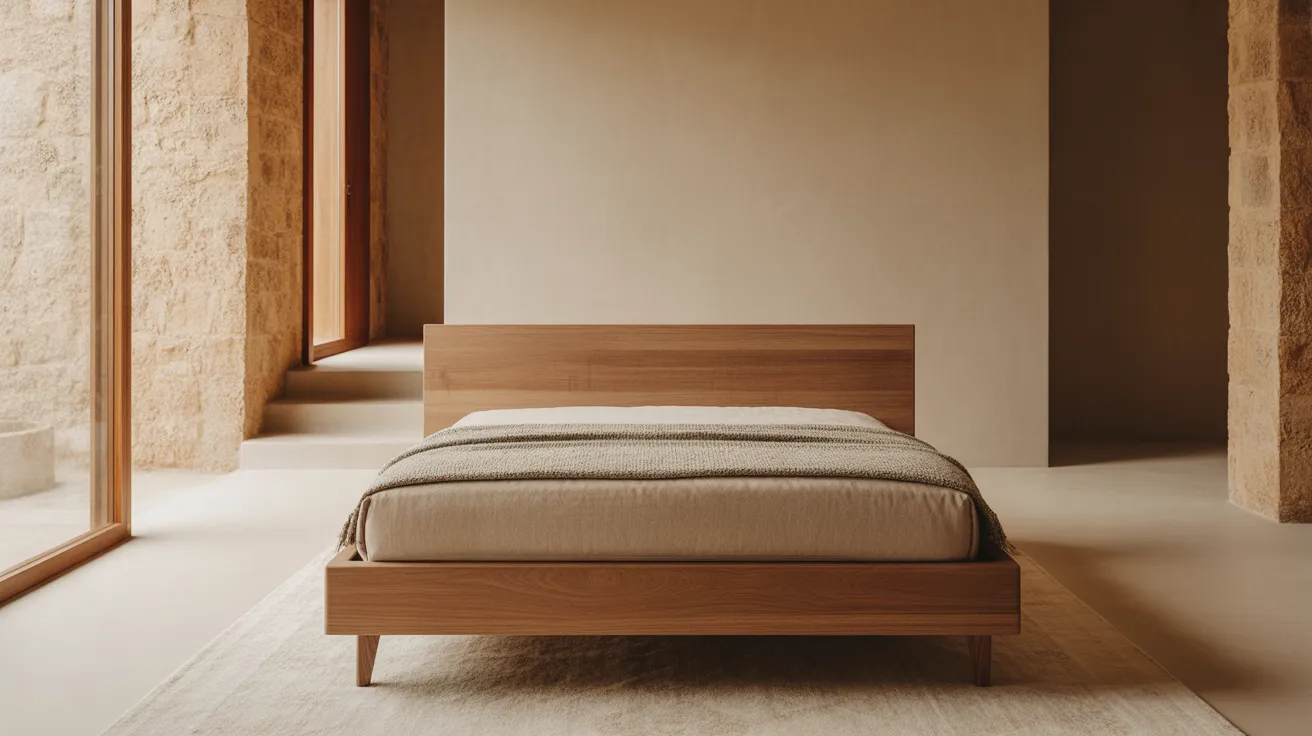
Do you need a box spring with a platform bed? Usually not. Compare support, height, cost, and mattress compatibility before you choose your bed base.
The short answer: most modern bedrooms don't need a box spring. A platform bed supports today's foam, hybrid, and most innerspring mattresses on its own — no extra layer required. Box springs still make sense in two cases: traditional innerspring mattresses whose warranties require one, and sleepers who want a taller, old-school bed height. For everyone else, the platform bed quietly won this debate years ago.
Why This Question Even Exists
For most of the twentieth century, the box spring earned its place. Old innerspring mattresses were thin, flexible, and needed a springy base to absorb shock and extend their life. The bed frame was just a metal rail; the box spring did the structural work.
Then mattresses changed. Memory foam, latex, and hybrid designs are denser and heavier, and they need the opposite of springy: a firm, even, breathable surface. Put modern foam on an aging box spring and it can sag into the gaps. Platform beds — with closely spaced slats or a solid deck — are designed for exactly what modern mattresses want. The question isn't really "which is better" anymore; it's "which does your mattress and your bedroom actually need."
Side-by-Side Comparison
| Platform Bed | Box Spring (+ frame) | |
|---|---|---|
| What it is | Frame with built-in slat or solid-surface support | Fabric-covered support box that sits in a separate frame |
| Works with foam/hybrid mattresses | Yes — ideal (slats spaced 3" or less) | Often no; foam can sag into spring gaps |
| Works with innerspring mattresses | Usually yes — check the mattress warranty | Yes — the traditional pairing |
| Typical mattress-top height | ~18–24" from floor | ~25–30"+ from floor |
| Extra parts to buy | None — the bed is the base | Box spring plus a frame or foundation |
| Under-bed storage | Often built in (drawers) or open clearance | Little to none |
| Visual profile | Low, clean, modern | Taller, traditional, usually needs a bed skirt |
| Moving and setup | One piece system; slats roll or stack | Bulky box that must fit stairs and corners |
| Long-term cost | Lower — nothing extra to replace | Higher — box springs wear out in 8–10 years |
The Case for the Platform Bed
A platform bed is a complete answer: frame, support, and design in one piece. Slats spaced 3 inches or less (the spec most foam mattress warranties require) or a solid deck give modern mattresses the even support they're built for, and the airflow through slats helps foam stay cooler and drier.
The design advantages are just as practical. A platform bed puts the top of your mattress around 18–24 inches from the floor — that lower, calmer profile that defines modern and Japandi-leaning bedrooms. Many designs build in drawers, turning the largest dead zone in a small bedroom into roughly 20+ cubic feet of storage. And there's nothing extra to buy, haul upstairs, or replace in eight years.
The honest drawbacks: that lower height is harder on anyone with knee or hip issues — getting up from 18 inches is a deeper squat than from 28. Solid-deck platforms can also limit airflow under some foam mattresses (slatted designs solve this). And a cheap platform with thin, widely spaced slats can flex or creak; slat quality is the spec to check. Our bed frame guide covers what separates a solid platform from a wobbly one.
The Case for the Box Spring (Smaller Than It Used to Be)
Box springs still have a real constituency:
- Traditional innerspring mattresses. Some are engineered for a flexible base, and some warranties require a box spring or matching foundation. Check yours before tossing the box.
- Height preference. A box spring setup puts the mattress top around 25–30 inches — easier entry and exit for taller sleepers, anyone with joint pain, and anyone who simply likes a stately bed. (Low-profile box springs, around 5 inches instead of the standard 9, split the difference.)
- Existing furniture. If you own a traditional bed with side rails designed around a box spring's height, the box keeps the proportions right.
What box springs no longer do well: support foam. Coil gaps let dense foam sink unevenly, accelerating sagging and often voiding the mattress warranty. If you're moving to a foam or hybrid mattress — see our mattress buying guide for choosing one — the box spring is usually the piece to retire.
Choose a Platform Bed If / Choose a Box Spring If
Choose a platform bed if:
- Your mattress is foam, latex, or hybrid (or you're buying one soon).
- You want a lower, cleaner, modern silhouette.
- Under-bed storage would genuinely help — small bedrooms, this is your move.
- You'd rather buy one good piece than two adequate ones.
Choose a box spring (or foundation) if:
- Your innerspring mattress's warranty requires one.
- You want a bed height of 25 inches or more for easy entry and exit.
- You're keeping a traditional frame built around box spring proportions.
A useful middle path: a platform bed plus, if you need height, a taller-leg design or a thicker mattress. Modern mattresses run 10–14 inches thick; on a 12-inch-tall platform deck, a 12-inch mattress gives you a 24-inch sleeping height — no box required.
Shop this guide
The Short Version
Start with your mattress: foam or hybrid wants a platform; a warranty-bound innerspring may still want its box. Then check your knees: if rising from 18–24 inches sounds unwelcome, build in height. For most people buying a modern mattress today, the platform bed is the simpler, smarter, better-looking answer — one piece, no box, and storage where a dust zone used to be. And if a new bed arrives and the height feels wrong in person, a 30-day return window keeps the decision reversible.
Ready to pick your base? Shop Bedroom — platform beds, storage beds, and everything that goes around them.
Frequently asked questions
Do I need a box spring with a platform bed?
No — that's the point of a platform bed. The slats or solid deck are the support. Adding a box spring on top usually makes the bed too tall and adds nothing structurally.
Will a foam or hybrid mattress work on a box spring?
Generally not well. Foam needs even, rigid support; spring gaps cause uneven sinking and can void the warranty. If you love your new mattress, give it slats 3 inches apart or closer, or a solid deck.
Does a platform bed ruin an innerspring mattress?
For most modern innersprings, no — a slatted platform supports them fine. The exception is older or specifically flexible-base designs. The warranty page of your mattress is the final word.
What's the height difference in practice?
Platform setups typically put the mattress top at 18–24 inches from the floor; box spring setups at 25–30 inches or more. As a comfort reference, standard chair seat height is about 18 inches — beds below that feel distinctly low to rise from.
Can a platform bed squeak or sag?
A poorly made one can. Look for slats at least 2.5–3 inches wide spaced no more than 3 inches apart, a center support rail on queen and king sizes, and solid corner joinery. Weight ratings are published for a reason — check them.
Are box springs becoming obsolete?
For foam and hybrid mattresses — the majority of what's sold online today — effectively yes. They survive where traditional innersprings and taller bed heights are still preferred.