Style & Authority
Japandi Style at Home: Principles, Palette, and Pieces
7 min read
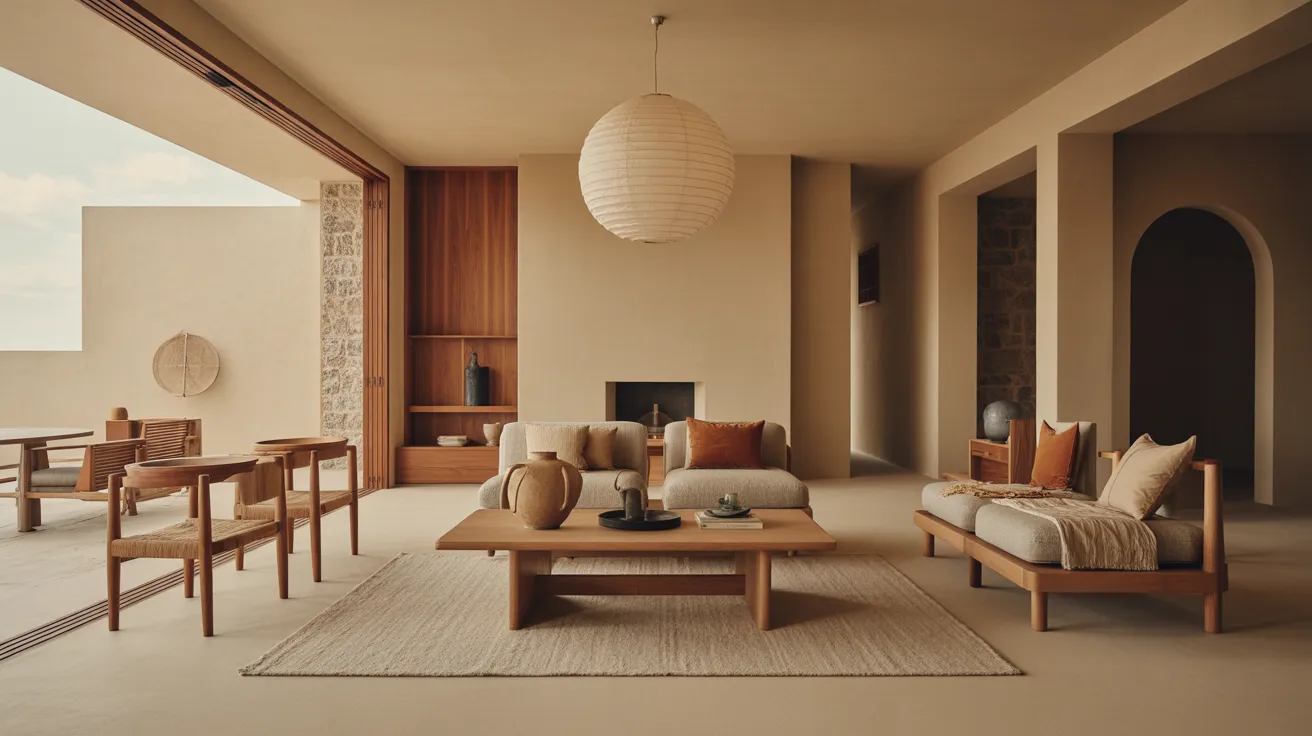
What japandi style really means: Japanese-Scandinavian principles, a quiet natural palette, and the furniture choices that make it work in real homes.
Japandi is a hybrid interior style that merges Japanese minimalism with Scandinavian functionality: low, simple furniture, natural materials, muted earth tones, and a deliberate lack of clutter. Both traditions value craftsmanship and calm, which is why the blend feels seamless rather than forced. The result is a home that looks quiet at first glance and reveals its detail slowly — the grain in a tabletop, the weave of a cushion, the shadow under a low bed.
What Is Japandi, Really?
It's tempting to dismiss japandi as a portmanteau invented for mood boards. The truth is more interesting: Japan and Scandinavia have been trading design ideas since the late 1800s, when Danish and Swedish designers first encountered Japanese craft at world exhibitions. Both cultures arrived independently at the same conclusions — that simple things made well are better than ornate things made quickly, that natural materials age more gracefully than artificial ones, and that a home should restore the people in it.
Where the two traditions differ is exactly where the blend gets useful. Japanese interiors run darker, lower, and more austere: stained woods, floor-level seating, deliberate asymmetry, empty space treated as a feature (the concept of ma). Scandinavian interiors run lighter and more social: pale woods, soft textiles, daylight maximized against long winters, comfort treated as a right (hygge). Japandi takes the Japanese discipline and the Scandinavian friendliness. The room is restrained, but you're allowed to be cozy in it.
The Principles of Japandi
Simplicity with intention
Every piece earns its place by being used or genuinely loved — ideally both. Japandi rooms typically hold a third fewer objects than the average Western room. What stays is chosen, not accumulated.
Craft you can see
Visible joinery, honest wood grain, hand-thrown ceramics, fabric with texture you can read from across the room. In a style this quiet, the quality of each surface carries the interest. This is also why japandi punishes shortcuts: one glossy plastic piece in a japandi room is like a phone ringing in a library.
Low horizon lines
Furniture sits closer to the floor than in most Western rooms — platform-style beds, low-profile sofas, coffee tables at shin height. Lower furniture makes ceilings feel higher and rooms feel calmer, and it's the fastest visual cue that a space is japandi rather than generically minimalist.
Imperfection as character
Wabi-sabi, the Japanese acceptance of imperfection, shows up as live-edge wood, unevenly glazed pottery, linen that wrinkles. A japandi room shouldn't look new. It should look settled.
Contrast, used sparingly
Unlike all-pale Scandinavian rooms, japandi keeps a dark register: a black-stained oak bench, espresso-toned shelving, charcoal ceramics. One or two dark anchors per room, no more — enough to give the pale tones something to stand against.
The Japandi Palette and Materials
| Element | Japanese influence | Scandinavian influence | How it shows up at home |
|---|---|---|---|
| Woods | Dark-stained oak, walnut tones, bamboo | Pale ash, beech, white oak | Mix one dark wood with one light wood — not five of each |
| Textiles | Cotton, paper-like weaves, indigo accents | Wool, sheepskin, chunky linen | Linen bedding, a wool throw, flat-weave cushions |
| Colors | Charcoal, ink, deep brown, moss | Warm white, oat, soft gray-beige | Roughly 80% pale and earthen, 20% dark anchor tones |
| Surfaces | Stone, unglazed ceramic, matte lacquer | Matte paint, light plaster | Stoneware vases, a stone or ceramic table lamp |
| Forms | Low, rectilinear, asymmetric | Rounded, organic, friendly | Low bed frame, curved-edge dining table, bench seating |
Skip anything high-shine: chrome, glass-heavy furniture, lacquered brights. Japandi metals are blackened steel and muted brass, used in small doses. If you want a deeper dive into combining these surfaces, our texture pairing guide covers the wood-linen-stone-metal logic in detail.
Japandi, Room by Room
Living room
Choose a low-profile sofa in a nubby neutral weave and resist the matching armchair — use a bench, a floor cushion, or a single chair in a contrasting wood instead. Keep the coffee table low and wooden, with at most three objects on it. Lighting should be warm (2700K bulbs) and placed low: a paper or linen-shaded floor lamp gives exactly the diffused glow the style wants. Leave real empty space; in japandi, the bare corner is doing work.
Bedroom
This is japandi's home turf. A low platform bed — frame close to the floor, headboard simple or absent — instantly establishes the style. Dress it in washed linen (white or oat), add one wool layer for winter, and stop there. Nightstands hold a small lamp and a single object. If you hang art, hang one piece, slightly lower than gallery height, and let the rest of the wall breathe. Our bedroom collection leans naturally in this direction: low lines, warm woods, quiet textiles.
Dining room
A solid wood table with visible grain is the centerpiece — light ash-toned wood if your floors are dark, walnut-toned if your floors are pale. Mix seating: chairs on one side, a bench on the other, a combination both traditions use. Hang one pendant with a paper, linen, or rattan shade about 30 to 36 inches above the table. Tableware in stoneware rather than bright china finishes the picture; explore the dining collection with that mix-don't-match mindset.
Entry and hallway
A low wooden bench, a place for shoes (the Japanese habit worth borrowing), one hook rail, one mirror. Japandi entries are almost empty, and that's the point — the home starts with an exhale, not a pile.
How to Get the Japandi Look Without Overbuying
- Subtract to 70 percent. Remove roughly a third of the visible objects in the room. Japandi begins with negative space, which is free.
- Establish one low anchor. A platform bed or a low sofa does more to signal the style than any quantity of accessories. Make this the single considered purchase.
- Pick your two woods. One light, one dark. Move pieces between rooms until each room contains both, then stop buying wood furniture.
- Switch textiles, not furniture. Washed linen bedding, a flat-weave cushion or two, one wool throw. Natural fiber, visible texture, muted tone.
- Add one imperfect object. A handmade ceramic vessel or an aged wooden bowl gives the room its wabi-sabi note. One is enough; five is a collection, and collections are clutter in this style.
Japandi rewards patience. A room assembled over six months almost always beats a room ordered in one afternoon, because the style's core promise — that everything present was chosen — can't be faked with a single cart.
The Short Version
- Japandi = Japanese restraint + Scandinavian warmth: low furniture, two wood tones, muted earth colors, honest materials.
- Edit first. Remove about a third of what's visible before buying anything.
- Pair one light wood with one dark wood, dress the room in linen and wool, and allow one or two charcoal-dark anchors.
- Keep furniture low, lighting warm and diffused, and surfaces nearly bare.
- Buy slowly. The style's whole point is that everything present was chosen.
When a piece does earn its place, choose it the japandi way — once, and well. Explore the collection for low-lined, material-first furniture that fits the brief.
Frequently asked questions
What is japandi style in simple terms?
Japandi blends Japanese minimalism with Scandinavian comfort: low natural-wood furniture, muted earth tones, visible craftsmanship, and very little clutter. It's calm, warm, and deliberately imperfect.
What's the difference between japandi and Scandinavian style?
Scandinavian style is lighter and softer — pale woods, white walls, generous textiles. Japandi adds Japanese elements: darker wood contrast, lower furniture, asymmetry, and stricter editing. A Scandi room invites you in; a japandi room also asks you to leave some things at the door.
Is japandi the same as warm minimalism?
Japandi is one specific path to warm minimalism — the broader trend of softening minimalist rooms with natural warmth. If you like the temperature of japandi but want fewer rules, start with our warm minimalism guide.
What colors are in a japandi palette?
Warm whites, oat, soft beige, and gray-green as the base, with charcoal, ink, espresso, and moss as accents. Keep the ratio around 80 percent pale and earthen, 20 percent dark.
Can I do japandi with the furniture I already own?
Mostly, yes. Edit hard, lower what you can (a bed frame matters most), keep one light and one dark wood, and swap shiny or brightly colored textiles for linen and wool in muted tones. The style is more about subtraction and material than about specific pieces.
Does japandi allow color?
In small, muted doses — moss green, clay, indigo, ochre. The test is whether the color could plausibly occur in wood, stone, or plant matter. Saturated brights and cool pastels fall outside the palette.