Care & Maintenance
Rug Care 101: Keeping Handwoven Rugs Looking New
5 min read
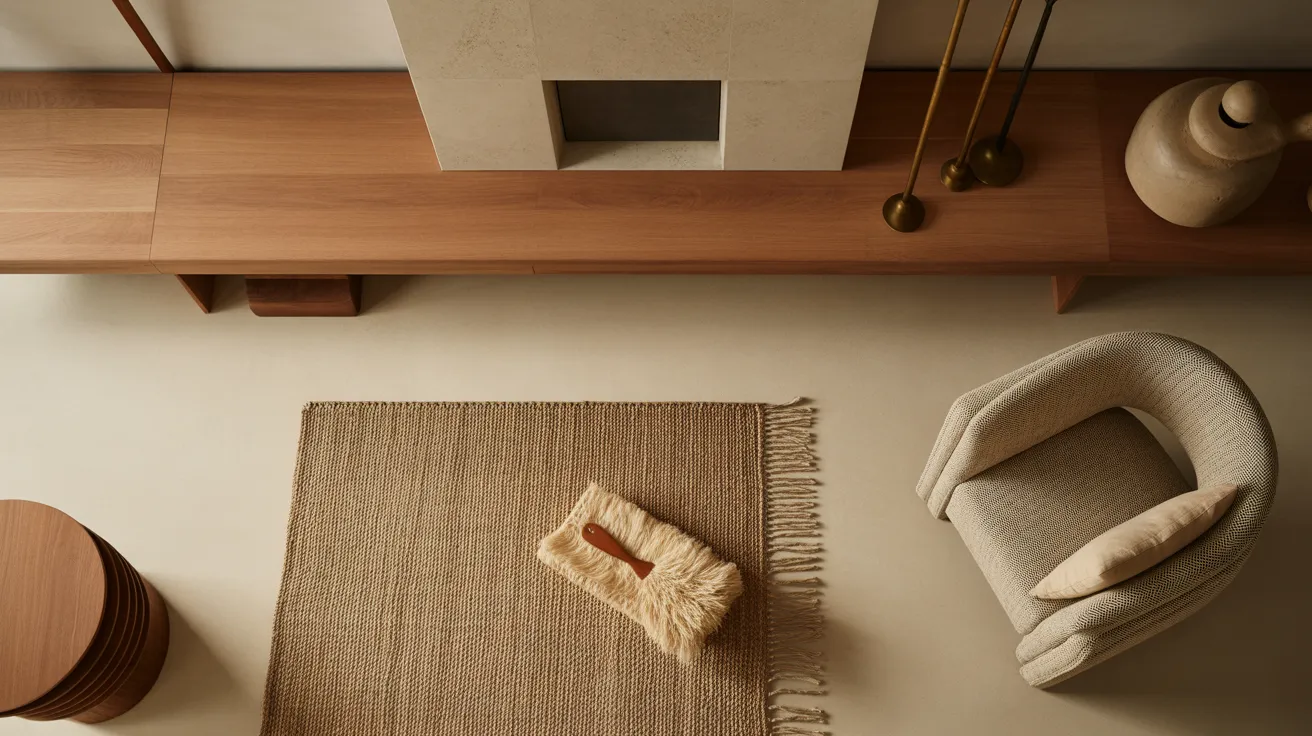
A practical guide to area rug care: weekly vacuuming, safe spot cleaning, shedding fixes, and a simple seasonal routine to keep wool rugs looking new.
Caring for an area rug comes down to three habits: vacuum gently and often, act fast when spills happen, and rotate the rug a couple of times a year so sunlight and foot traffic wear it evenly. New wool rugs shed — that's normal, and it tapers off within a few months. Here's the full routine, fiber by fiber.
Know your fiber first
The right care depends on what the rug is made of, so check the label or care tag before anything else.
- Wool is naturally resilient and stain-resistant thanks to lanolin in the fiber, but it dislikes harsh chemicals, hot water, and aggressive agitation.
- Cotton is easygoing and sometimes machine-washable in smaller sizes — the tag will say.
- Jute and sisal are beautiful and textural, but water is their enemy. Plan on dry care methods.
- Synthetics (polypropylene, polyester, nylon) tolerate the most cleaning power and moisture of the group.
If you're choosing between materials — or wondering why your wool rug behaves differently from the synthetic one in the hallway — our honest comparison of wool, jute, and synthetic rugs breaks down how each fiber lives.
Routine care: small habits, long life
- Vacuum once or twice a week in walkways, less often in quiet rooms. For handwoven and wool rugs, use suction only — turn the beater bar off or raise it to its highest setting so it skims rather than digs.
- Leave the fringe alone. Vacuum around it, never over it. To tidy fringe, flick it straight with your fingers or the edge of a broom.
- Use a rug pad. It keeps the rug from creeping, cushions the pile against grinding wear, and protects the floor beneath.
- Rotate 180 degrees every three to six months so sun-fade and traffic patterns spread evenly instead of carving a path.
- Flip the schedule with the seasons. A few times a year, vacuum the underside too — grit migrates downward and works like sandpaper between rug and floor.
- Watch the light. Strong daily sun will soften any dyed fiber over time; sheer curtains or a seasonal rotation keep the change even and gentle.
Getting the placement right also reduces wear in the first place — a rug that's properly sized for the seating area takes traffic on the pile, not the edges. Our rug size guide covers the rules room by room.
Spot cleaning, step by step
For wool and most synthetics:
- Act now. Scoop solids with a spoon, then blot liquids with a dry white cloth. Press straight down and lift — rubbing pushes the spill deeper and frays the pile.
- Mix a mild solution: a few drops of clear, gentle dish soap in two cups of cool water. Never hot — heat can set stains and felt wool.
- Dab from the outside of the spot inward with a cloth wrung nearly dry, so the stain doesn't spread.
- Rinse-blot with a second cloth dampened in plain cool water. Leftover soap residue attracts dirt and creates a shadow later.
- Dry thoroughly. Press with dry towels, then prop the damp section up — over a stool, a railing, anything — so air reaches both sides. A fan speeds things along.
- Groom the pile with your fingers or a soft brush once it's fully dry.
A few special cases: for pet accidents, follow the steps above, then use an enzyme cleaner labeled safe for your fiber (test a hidden corner first). For mud, do nothing — let it dry completely, then vacuum; you'll remove far more than you would wet. For jute and sisal, blot with as little moisture as possible and dry fast; for anything beyond a small spot, go straight to a professional.
Shedding and sprouting: usually not a problem
Shedding is the loose fiber a new wool rug releases in its first weeks and months. It's a byproduct of how spun wool works, not a defect. Vacuum regularly on low power and it will steadily taper off.
Sprouting is a single yarn standing taller than its neighbors. Don't pull it — that can unravel the weave. Snip it level with the surrounding pile using sharp scissors, and the rug will never tell.
What to avoid
- A beater bar at full power on handwoven or looped pile — it chews fiber and accelerates shedding.
- Pulling loose threads or fringe. Trim, never tug.
- Bleach, oxygen boosters, and harsh spot removers on wool and natural fibers.
- Soaking the rug. Trapped moisture under a rug invites mildew and can damage floors.
- Steam cleaning or carpet shampooers on wool unless the care label explicitly approves.
- Dragging furniture across the pile — lift it, or use felt sliders.
- Waiting. Almost every permanent stain was once a removable spill.
A simple seasonal schedule
- Every 3–6 months: rotate the rug 180 degrees.
- Twice a year: vacuum the underside, sweep or mop beneath, and check the rug pad for wear.
- Once a year (busy rooms) to every two years (quiet ones): professional cleaning for wool and handwoven rugs.
- After long humid stretches: lift a corner and check underneath for trapped moisture, especially over hardwood.
The short version
Vacuum gently and often, with the beater bar off. Blot spills the moment they happen, clean with cool water and mild soap, and dry thoroughly. Trim sprouts, never pull threads, and rotate the rug twice a year. With that small rhythm of attention, a handwoven rug doesn't just survive daily life — it gets better-looking as it settles in.
Ready to find a rug worth caring for? Browse our area rugs to see the collection.
Frequently asked questions
How often should I vacuum an area rug?
Once or twice a week in high-traffic rooms, every week or two elsewhere. Frequency matters less than gentleness — suction-only beats an aggressive weekly scrub.
My new wool rug is shedding. Is something wrong?
Almost certainly not. New wool rugs release loose fiber for the first few months; regular low-power vacuuming clears it, and the shedding tapers off on its own.
Can I use a carpet shampooer or steam cleaner on a wool rug?
Not unless the care label specifically allows it. Heat, moisture, and agitation can shrink, felt, or distort wool. Professional cleaning is the safer route for anything beyond a small spot.
How do I remove furniture dents from a rug?
Lay a clean, damp cloth over the dent and gently lift the pile with your fingers or a spoon's edge as it relaxes. Let it dry fully, then groom. An ice cube melting slowly in the dent works the same way.
Can a jute rug be cleaned with water?
Only barely. Blot small spots with a nearly dry cloth and dry the area quickly and completely — saturation causes browning and weakens the fiber. For anything larger, use dry methods or a professional.