Materials & Quality
Drawer Construction and Hardware Quality, Explained
6 min read
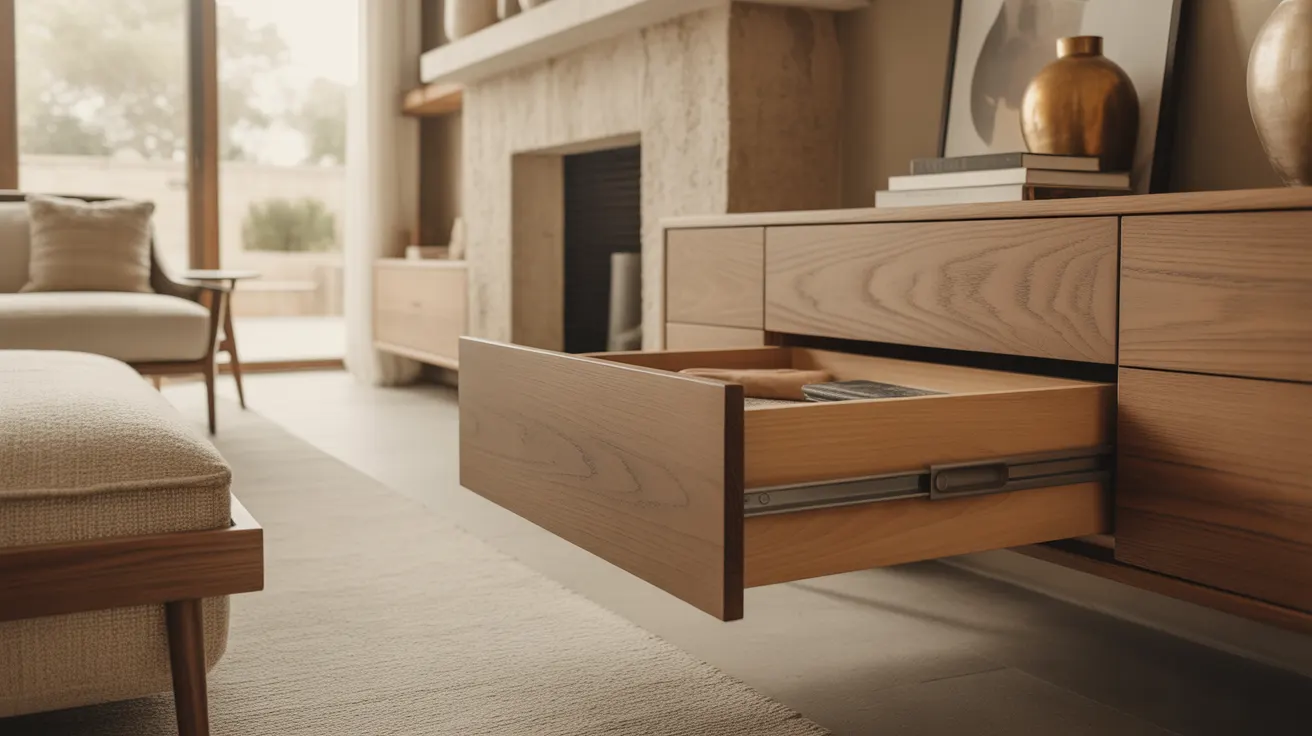
How to judge drawer construction and hardware quality: joinery, drawer boxes, glides, and slides, so you can spot a well-built dresser before you buy.
A drawer is one of the most honest tests of furniture quality, because it's used hard and inspected easily. The signs of a well-made drawer are consistent: a solid-wood box joined with dovetails or another mechanical joint, a bottom that sits in a groove rather than stapled on, and smooth, full-extension slides with a soft-close action. Open a drawer, pull it all the way out, and look inside, and you'll learn more about a dresser than any sales tag will tell you.
Why the drawer reveals the whole piece
Manufacturers cut corners where buyers don't look. The outside of a dresser, the finish, the front, the handles, is what sells it, so that's where money goes. The drawer box, hidden once the drawer is closed, is where shortcuts hide. That's exactly why it's so revealing: a maker who builds the unseen parts well almost always built the rest well, too. Pulling a drawer out and turning it over is the single fastest quality check in furniture.
This applies across case goods, dressers, nightstands, sideboards, desks, and kitchen-style cabinets, so the same checks serve you whether you're buying for the bedroom or anywhere else.
The drawer box: joinery and materials
The drawer box is the four sides plus the bottom. How those pieces are joined, and what they're made of, separates a drawer that lasts decades from one that loosens in a year.
| Joint type | How it's made | Strength & longevity |
|---|---|---|
| Dovetail (English or French) | Interlocking wedge-shaped joints | Strongest; the hallmark of quality |
| Dowel | Wooden pegs in drilled holes | Good when well executed |
| Stapled / nailed butt joint | Sides simply stapled or nailed together | Weakest; works loose over time |
| Glued + stapled | Glue plus staples | Common in budget pieces; modest |
Dovetail joints, where the sides interlock like fingers, are the gold standard. They resist the constant pulling force of opening a loaded drawer, the exact stress that pops apart stapled joints. If you see dovetails (front and back is best), you're looking at care. For a fuller picture of why mechanical joints outperform glue-and-fastener construction across furniture, our guide to wood joinery types goes deeper.
The drawer bottom matters too. On a quality drawer, the bottom panel is solid wood or plywood set into a groove (a dado) routed around the inside, so it floats in place and supports weight without sagging. On a cheap drawer, a thin sheet of hardboard is simply stapled to the underside, which sags and pulls free under load.
Box material. Solid wood (often maple, birch, or poplar) or quality plywood makes a durable box. Thin particleboard or low-grade MDF sides are heavier, swell if they get damp, and don't hold fasteners as well over time.
Drawer slides and glides: the part you feel every day
Hardware is where smoothness and longevity live, and it's improved enormously in recent years. There are three broad tiers.
- Wood-on-wood runners. Traditional and quiet, often found on antiques and some solid-wood pieces. They can be smooth when waxed but offer no full extension and can stick in humid weather.
- Side-mounted ball-bearing slides. The modern standard for quality. Steel slides with ball bearings glide smoothly, carry more weight, and typically allow full extension so you can reach the very back of the drawer. Look for these on better pieces.
- Center-mount or bottom roller glides. Common on budget furniture. A single plastic roller under the drawer is inexpensive and works at first, but it wobbles, doesn't fully extend, and wears out faster.
Two features signal real quality:
- Full extension. The drawer pulls out completely, so the back third isn't a black hole. Three-quarter-extension slides leave part of the drawer permanently buried.
- Soft-close. A damped mechanism that catches the drawer in the last inch and eases it shut silently. It's a comfort feature, but it also signals better hardware overall and reduces slamming wear.
Check the slides' rated weight if it's listed, and feel the action yourself: a good drawer glides with one finger and stops without slamming.
The pulls and handles
Hardware quality extends to the bits you grip. Solid metal pulls, knobs, and handles feel substantial, are tightly mounted with machine screws through the drawer front, and don't loosen or spin. Hollow, lightweight, or plated-plastic hardware feels tinny, can corrode or chip, and tends to work loose. You can usually feel the difference instantly: heft and a snug, rattle-free fit are good signs. Hardware is also one of the easier things to upgrade later, so it's not a dealbreaker on an otherwise excellent piece, but it's a useful tell about the maker's standards.
A 60-second drawer inspection checklist
When you can see a piece in person, or when you have detailed photos and specs:
- Pull a drawer fully out. Does it extend completely? Does it glide or stick?
- Look at the corners. Dovetails or dowels (good) versus staples (less good)?
- Check the bottom. Set into a groove (good) or stapled on and sagging (not good)?
- Press the closed drawer shut. Does it soft-close, or slam and bounce?
- Feel the hardware. Solid and tight, or hollow and loose?
- Look at the box material. Solid wood or plywood sides, or thin particleboard?
- Open and close several times. Smooth and even, or wobbly and tilting?
Two minutes of this tells you whether a dresser will still feel good in ten years. Because construction varies by product, confirm the specifics rather than assuming: where the supplier states drawer and hardware details, they're in the product description. For storage pieces and the bedroom more broadly, our bedroom storage and dresser guidance pairs well with these checks.
In stock now: two dressers whose product details list dovetail drawer joints and soft-close glides, and a nightstand whose details list ball-bearing glides.
Shop this guide
- 63" Merlot Solid and Manufactured Wood Six Drawer Double Dresser
- 70" Gray Wood Four Drawer Double Dresser
- 26" Black Solid Wood Two Drawer Nightstand
The short version
A well-built drawer has a solid-wood box joined with dovetails (or solid dowels), a bottom set into a groove rather than stapled on, and smooth side-mounted ball-bearing slides with full extension and ideally soft-close. The drawer is the most honest test of a dresser because it's the hidden part, so makers who build it well built everything well. Pull a drawer out, check the joints, the bottom, the slides, and the hardware, and you'll know in a minute whether a piece is worth keeping for a decade.
Looking for storage that's built to last? Shop Bedroom and check the drawer and hardware details on each piece before you decide.
Frequently asked questions
Are dovetail drawers really better?
Yes. Dovetail joints interlock to resist the pulling force of opening a loaded drawer, which is exactly the stress that loosens stapled or nailed joints over time. Dovetails (especially front and back) are a reliable hallmark of a well-built drawer and usually signal quality throughout the piece.
What's the difference between drawer slides and glides?
The terms are often used interchangeably, but in practice "ball-bearing slides" are the steel, side-mounted hardware on quality pieces, smooth, weight-bearing, and usually full-extension. Cheaper "glides" are typically a single plastic roller (center-mount or bottom-mount) that wobbles, doesn't fully extend, and wears faster.
Is soft-close worth it on drawers?
For comfort, yes, soft-close drawers shut silently and never slam, which is pleasant daily and reduces wear from impact. Just as useful, soft-close hardware almost always accompanies better-quality slides overall, so its presence is a good signal even beyond the convenience.
How can I tell if a dresser is well made?
Pull a drawer all the way out and inspect it: look for dovetail or dowel joints, a bottom panel set into a groove, solid-wood or plywood sides, and smooth full-extension slides. Then feel the hardware for heft and a tight fit. A drawer that extends fully, glides easily, and soft-closes points to a well-built piece.
Does particleboard always mean low quality?
Not always, dense, high-grade engineered panels are used in plenty of decent furniture and resist warping. But thin, low-density particleboard drawer sides are a warning sign: they're heavy, swell if damp, and don't hold fasteners well. For drawer boxes specifically, solid wood or quality plywood is meaningfully better.