Frequently Asked
How to Choose a Dresser or Chest of Drawers: Sizing, Types, and Fit
7 min read
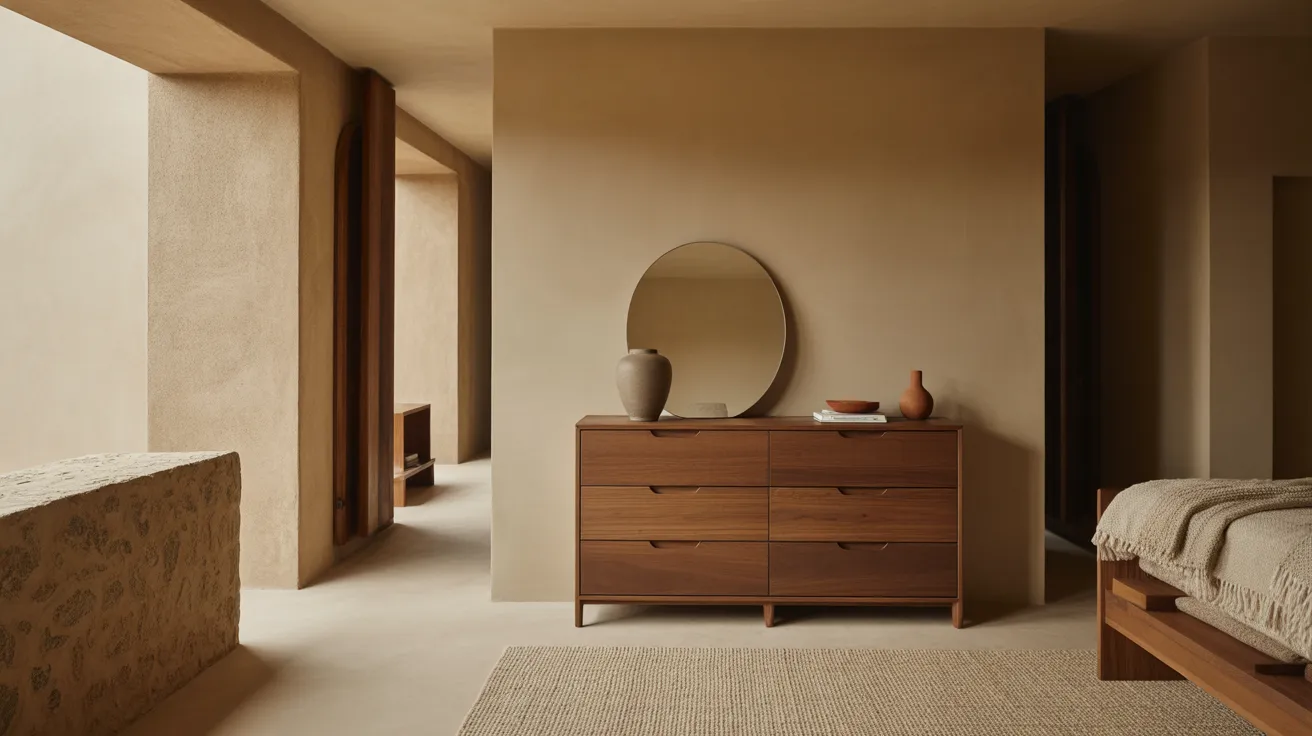
Dresser vs. chest, the dimensions that fit your room, drawer counts, and the construction details worth checking before you buy bedroom storage.
Choose bedroom storage in this order: measure the wall and the clearance a drawer needs to open (about 24 to 30 inches in front), decide whether your floor plan wants a wide dresser or a tall chest, then count the drawers you actually need. A wide dresser doubles as a dresser-top surface and pairs naturally under a mirror or TV; a tall chest stores the same volume in a narrower footprint. The piece that fits is the one whose drawers can fully open in the space you have.
Storage is the easiest bedroom purchase to oversize or undersize. Here are the numbers and the construction checks that keep you from doing either.
Dresser vs. chest: what's the actual difference?
The two words get used loosely, so define them by shape:
- A dresser (or double dresser) is wide and low — typically two columns of drawers. It offers a long top surface for a lamp, tray, or mirror, and it reads horizontal, which calms a busy wall.
- A chest of drawers is tall and narrow — a single column stacked higher. It stores comparable volume in roughly half the floor width, which is why it earns its place in small rooms and beside the bed.
- A tallboy or lingerie chest is the narrowest of all, with many shallow drawers — useful for socks, accessories, and tight gaps.
Same clothes, different geometry. Choose the shape that fits the wall you have.
Standard dimensions, by type
These are typical ranges in inches. Use them to sanity-check a listing before it arrives.
| Type | Width | Height | Depth |
|---|---|---|---|
| Tall chest of drawers | 30–38 in. | 40–54 in. | 16–20 in. |
| Tallboy / lingerie chest | 18–30 in. | 44–60 in. | 16–18 in. |
| Standard dresser | 36–48 in. | 30–36 in. | 18–20 in. |
| Wide / double dresser | 52–66 in. | 30–36 in. | 18–20 in. |
| Long / triple dresser | 66–80 in. | 28–34 in. | 18–20 in. |
Depth is the spec people forget, and it's the one that walks into a doorway. Most dressers run 18 to 20 inches deep — add a couple inches for hardware and the path to clear it. A dresser that fits the wall but blocks the closet door isn't a fit.
Match height to what sits above it
A dresser's height should relate to whatever shares its wall:
- Under a wall-mounted TV: aim for a dresser top at 24 to 30 inches and mount the screen so its center lands near seated eye level from the bed.
- Under a mirror: a 30-to-34-inch dresser top puts a mirror at a usable height for getting ready standing up.
- As a nightstand alternative: a tall chest at 28 to 32 inches works beside a bed, since the comfortable nightstand range tracks the mattress top, usually 24 to 28 inches.
Tall chests over 50 inches command a wall on their own and can feel imposing in a low-ceilinged room — keep them for rooms with breathing height or balance them against a tall headboard.
Clearance: leave room for the drawer, not just the box
The footprint on the floor is only half the planning. A drawer needs to fully extend.
- 24 to 30 inches of clear floor in front of the dresser so the bottom drawer opens completely and you can stand to use it. A dresser facing the foot of the bed needs that gap to the mattress.
- A few inches of side clearance if a drawer or door is near a wall or another piece — full-extension drawers don't need it, but you do, to stand at the corner.
- The delivery path. Dressers are heavy and rigid; measure doorways, stair turns, and the bedroom door against the dresser's depth and width. Unlike a bed frame, a dresser doesn't disassemble.
Planning a tight room? The clearance and layout logic carries straight over to our small bedroom ideas, where storage often has to fight for floor space.
How many drawers do you actually need?
Drawer count matters less than usable drawer volume. A few principles:
- Deep bottom drawers hold bulky items — sweaters, denim, extra bedding. Two deep drawers beat four shallow ones for a folded-clothes wardrobe.
- Shallow top drawers organize small items — socks, underwear, accessories — and keep them from sliding into a deep-drawer void.
- A six-to-eight-drawer dresser suits one person's everyday clothes; couples sharing a room usually want a wide dresser plus a tall chest, or two pieces, rather than cramming everything into one.
Count what you fold versus hang. If most of your wardrobe lives on hangers, a modest dresser plus the closet is plenty; if you fold a lot, prioritize drawer depth over drawer count.
Construction: what separates a 15-year dresser from a 3-year one
Drawers are the hardest-working joints in your bedroom — pulled thousands of times. Check these before color or finish:
- Drawer glides. Full-extension metal glides on ball bearings let you reach the back of the drawer and carry weight smoothly. Wooden runners and bottom-mount glides cost less and wear faster. This is the single best predictor of how a dresser ages.
- Drawer-box joinery. Dovetail joints (the interlocking fingers at the corners) signal a drawer built to take load. Stapled butt joints are where cheap drawers come apart.
- Solid drawer bottoms. A thin panel that flexes under folded sweaters will eventually bow or pop out. A thicker, captured bottom holds up.
- Anti-tip hardware. A tall chest or a dresser in a home with young children should ship with — and be secured by — an anti-tip strap or bracket. This is a safety item, not an upgrade.
- A back panel that's attached, not just nailed. A solid, screwed-in back keeps the case square so drawers keep gliding straight over the years.
On material, the same hierarchy that applies to a bed frame holds here: solid wood for longevity and weight, quality engineered wood for value (check the drawer hardware, which carries the real strain), and avoid pieces where the case flexes when you nudge a corner.
Styling notes for a calm bedroom
A dresser is a large horizontal plane, so it sets a lot of the room's tone:
- Keep the top edited. A lamp, a tray for small things, and one or two objects read calmer than a crowded surface. Negative space is part of the look.
- Coordinate hardware, don't match it. Pulls in a finish that echoes the bed or lighting tie the room together without feeling like a matched set.
- Let a low, wide dresser anchor a long wall and a tall chest fill a narrow gap — using each shape where its proportions belong is what makes storage look intentional rather than added-on.
Shop this guide
- Black And Gold Faux Crystal Bling Six Drawer Double Dresser
- 60" Light Gray And Walnut Wood Six Drawer Double Dresser
- 38" Gray Wood Five Drawer Dresser
The short version
Decide between a wide, low dresser (long top surface, calms a wall) and a tall, narrow chest (same storage, half the floor width) based on the wall you have. Standard depth is 18 to 20 inches, so measure your doorway. Leave 24 to 30 inches of clearance in front for the bottom drawer, match the top height to whatever sits above it, and prioritize drawer depth over drawer count. Then check the things that decide longevity: full-extension glides, dovetailed drawers, a solid back, and anti-tip hardware.
When you've measured the wall and the path in, Shop Bedroom for dressers and chests built around real bedroom proportions.
Frequently asked questions
What's the difference between a dresser and a chest of drawers?
A dresser is wide and low, usually with two columns of drawers and a long top surface. A chest of drawers is tall and narrow, stacking a single column higher to store similar volume in less floor width. Choose by the wall space and footprint you have.
How deep is a standard dresser?
Most dressers and chests are 18 to 20 inches deep. Add a couple inches for hardware and the path to move it in — depth is the dimension most likely to catch on a doorway during delivery.
How much space do you need in front of a dresser?
Leave 24 to 30 inches of clear floor so the bottom drawer fully opens and you can stand to use it. If the dresser faces the foot of the bed, that gap should fall between the dresser and the mattress.
How tall should a dresser be?
For a usable top surface under a mirror, aim for 30 to 34 inches. Under a wall-mounted TV, 24 to 30 inches works well. A tall chest used beside a bed should land around 28 to 32 inches to track the mattress top.
Is a tall chest or a wide dresser better for a small bedroom?
A tall chest, usually. It stores comparable volume in roughly half the floor width, freeing space for walkways. Just confirm you have the ceiling height to keep it from feeling top-heavy, and secure it with anti-tip hardware.
What construction details should I check on a dresser?
Full-extension metal drawer glides, dovetailed drawer boxes, solid drawer bottoms, an attached back panel, and included anti-tip hardware. The glides and joinery matter most — they determine whether the dresser still works smoothly in ten years.