Comparisons
Small Bedroom Ideas: Layout, Storage, and Calm That Works
6 min read
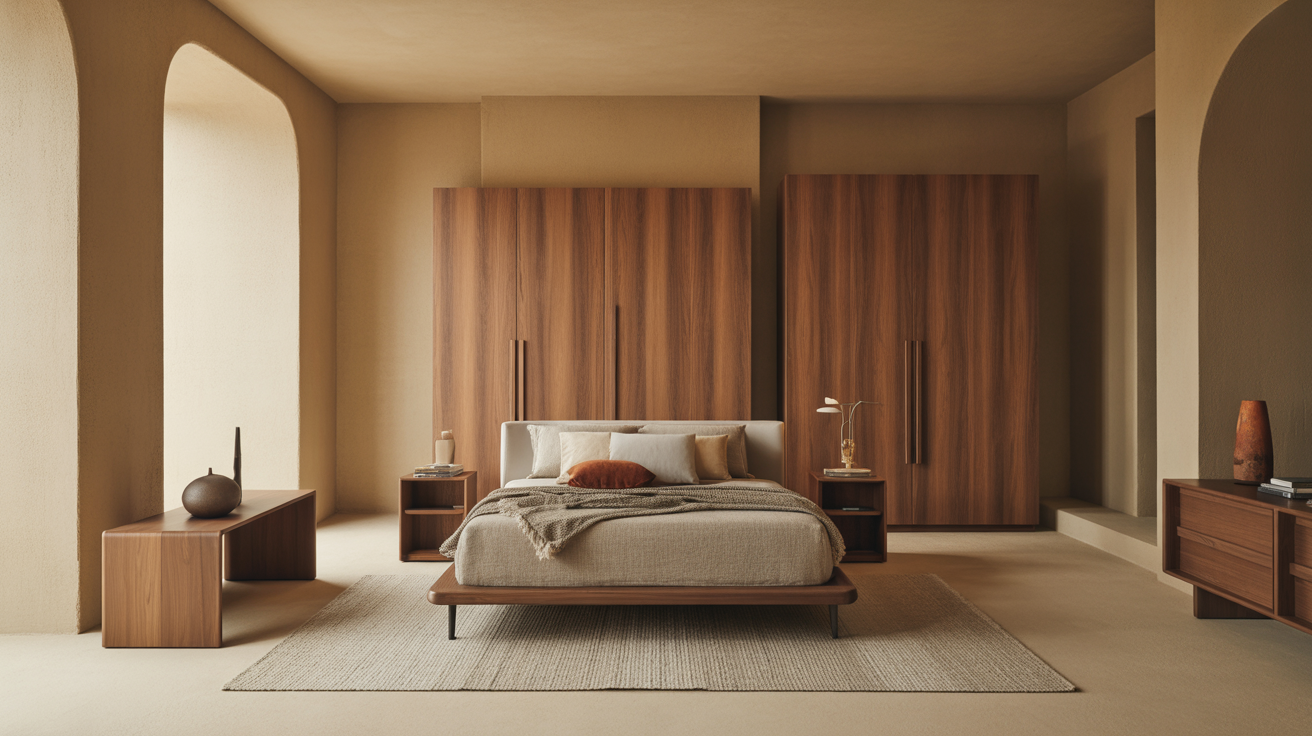
Small bedroom ideas that actually work: real clearance numbers for beds and nightstands, smart storage, and a calm palette that makes a tight room feel bigger.
A small bedroom doesn't have to feel small. The trick is treating it like a problem of clearances and storage rather than square footage — get the bed placed right, give yourself the few inches you actually need to walk and open drawers, and lean into a calm, quiet palette. Do those three things and a 10x10 room reads as restful instead of crowded.
This guide gives you the numbers, the layouts, and the storage moves that make a tight bedroom work.
Start with the bed, then protect your clearances
In almost every small bedroom, the bed is the largest object by a wide margin, so it decides everything else. Place it first — usually centered on the longest unbroken wall, or in the corner if the room is very tight — and then check that the space left over still lets you move.
These are the clearances designers plan around. You can shave a little, but go much below the minimums and the room starts to feel like an obstacle course.
| Clearance | Comfortable | Tight but workable |
|---|---|---|
| Walkway on each open side of the bed | 24–30" | 18" |
| Space at the foot of the bed (if it's a walkway) | 30–36" | 24" |
| Clearance in front of a dresser (drawers open) | 36" | 30" |
| Clearance in front of a closet door/swing | 30–36" | 24" |
| Nightstand to bed edge | flush–2" gap | flush |
| Door swing into the room | full arc clear | — |
Two numbers do most of the work here. The first is the 18" minimum walkway beside the bed — below that, you're squeezing past furniture every morning, and the room feels it. The second is the 30–36" in front of any dresser, because a drawer you can't fully open is a drawer you stop using.
A practical move for very small rooms: if you can only get a generous walkway on one side of the bed, push the bed against the opposite wall and put your energy into making that one side excellent. One good path beats two cramped ones.
Three layouts that work in tight bedrooms
1. Bed centered on the long wall
The default, and usually the best. Center the bed on the longest wall, nightstands on each side, and you get balanced walkways and a calm, symmetrical look. This works when the room is wide enough to keep at least 18" on both sides — roughly a 10-foot wall for a queen.
2. Bed in the corner
When the room is narrow, float the bed into a corner with the headboard and one long side against the walls. You lose a nightstand on the wall side (a wall-mounted shelf or sconce fills in), but you gain a single wide, usable walkway and open floor — which reads as more space than two pinched paths ever will.
3. Bed under the window
If the wall layout fights you, putting the bed under the window is fine — it's a myth that you can't. A low headboard or none at all keeps the sightline open, and the window becomes a soft backdrop. Just leave room to operate the window and any curtains.
Whatever the layout, scale the bed frame to the room. A low-profile bed frame with slim legs lets light travel under it, and that bit of visible floor genuinely makes the room feel larger. Bulky storage beds can work, but only if you've confirmed the foot-of-bed clearance survives.
Storage that climbs the walls
The single biggest mistake in a small bedroom is storing everything at floor level. Floor space is what makes a room feel open; vertical space is nearly free. Move storage up.
- Go tall, not wide. One tall, narrow dresser or chest of drawers holds as much as two low ones while covering a third of the floor. A 30–36" wide chest that's 48"+ tall is the small-bedroom workhorse.
- Use the wall above the nightstand. Floating shelves or a slim wall-mounted ledge replace a bulky bedside table and free the floor underneath. Pair with a sconce so the nightstand surface stays clear.
- Claim the space under the bed. Flat rolling bins or a frame with built-in drawers turn dead air into off-season storage. Keep it tidy — visible clutter under the bed undoes the trick.
- Hang a mirror. A large mirror, especially opposite the window, bounces daylight and adds visual depth. It's storage-adjacent: it does the spaciousness job that an extra piece of furniture can't.
- Pick a nightstand with a drawer. Even a small one earns its footprint twice. (Our nightstand height guide covers getting the height right — roughly level with the top of the mattress.)
One discipline matters more than any product: edit. A small bedroom punishes excess. Every surface you keep clear is space the room gets to breathe in.
A calm palette makes a small room feel bigger
Color does real work in a tight room. You don't need stark white — warm, light neutrals open a space while staying cozy. The goal is low contrast: when walls, bedding, and curtains live in the same quiet family, your eye glides instead of stopping at every edge, and the room reads as larger and more restful.
A few practical moves:
- Keep the walls and main textiles in one warm-neutral family — soft sand, oatmeal, greige, warm white. Low contrast = more apparent space.
- Add depth with texture, not loud color. A linen duvet, a wool throw, a nubby rug — these layer richness without visual noise.
- Let curtains read as part of the wall. Hanging drapery close to the wall color and high above the window (toward the ceiling) makes the wall feel taller. If you're shopping for them, our curtain guides cover sizing and fabric.
- Save bold color for one small thing — a single piece of art, a lamp, one cushion. In a small room, one accent is plenty.
This quiet approach is also just calmer to sleep in, which is the whole point of a bedroom.
Shop this guide
- Brown Wood Geometric Inlay One Drawer Floating Nightstand
- Set Of 3 Black Metal Triangle Wall Mounted Accent Shelves
- 67" Black Solid Wood Framed Full Length Mirror
The short version
- Place the bed first; protect an 18" minimum walkway and 30–36" in front of any dresser.
- Three reliable layouts: centered on the long wall, tucked into a corner, or under the window with a low headboard.
- Store vertically — one tall narrow dresser, wall shelves, under-bed bins — to keep the floor open.
- Use a calm, low-contrast warm-neutral palette and add depth with texture, not loud color.
- Edit ruthlessly; clear surfaces are what let a small room breathe.
A small bedroom rewards the right pieces sized for the room. Shop bedroom — low-profile beds, tall narrow dressers, and nightstands scaled for compact spaces.
Frequently asked questions
How do you make a small bedroom feel bigger?
Keep the floor as open as possible: place the bed against one wall, store vertically with a tall narrow dresser, hang a large mirror, and use a low-contrast warm-neutral palette. Visible floor and bounced light do more than any single piece of furniture.
What size bed fits in a small bedroom?
A queen needs roughly a 10x10 room to keep walkways on both sides; a full or twin suits anything smaller. Measure first and confirm you can keep at least an 18" walkway on the side you use most before committing to a larger frame.
Where should the bed go in a small bedroom?
Usually centered on the longest unbroken wall for balanced walkways. In a narrow room, push it into a corner to create one wide path instead of two cramped ones. Placing it under a window is perfectly fine if you keep the headboard low.
How do you store clothes in a small bedroom without a closet?
Go vertical: a tall narrow chest of drawers, an open clothing rail, shelves above eye level, and under-bed bins for off-season items. A single tall piece beats several short ones because it frees the floor.
Do dark colors make a small bedroom look smaller?
Not always — a dark, enveloping bedroom can feel intimate and restful. But for the sense of more space, light, low-contrast warm neutrals read as larger because they reflect light and soften edges.