Frequently Asked
Nightstand Guide: Height, Width, and How to Pair Them
6 min read
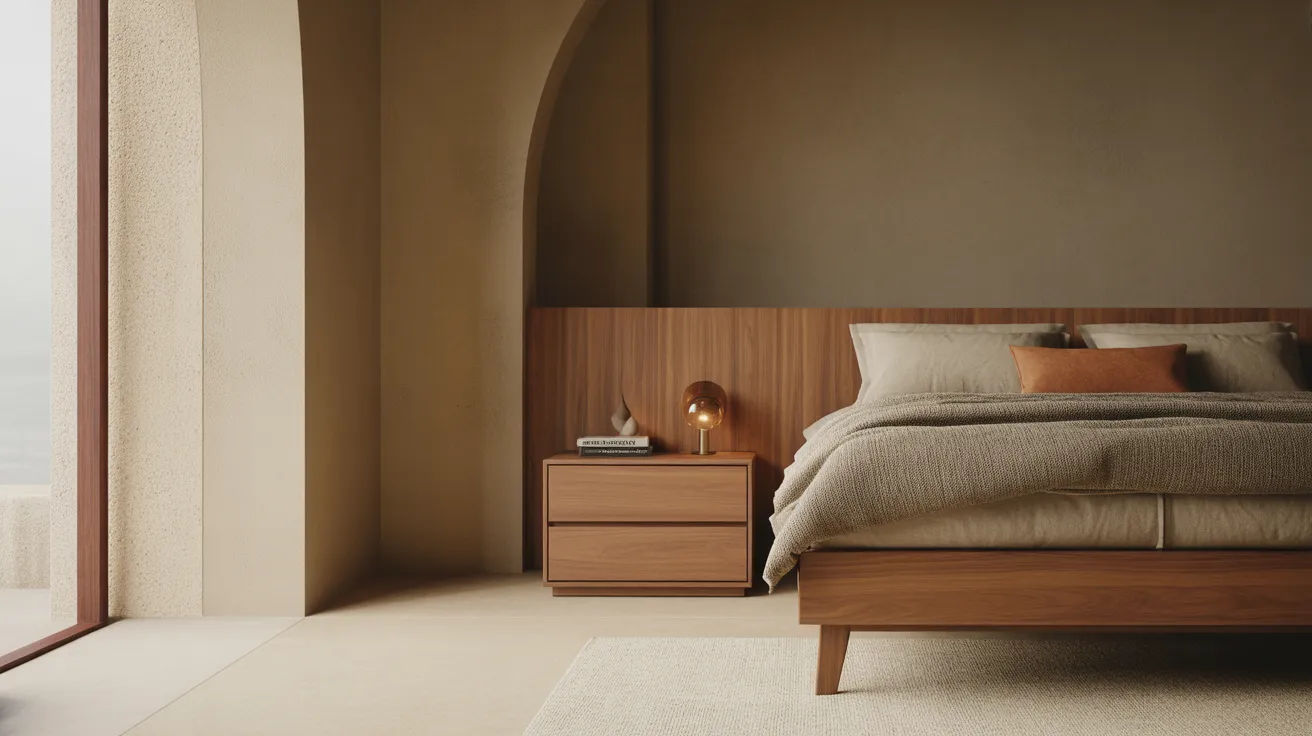
How tall a nightstand should be relative to your bed, how wide to go, and how to pair one or two. A practical bedroom sizing guide with numbers in inches.
A nightstand should sit level with the top of your mattress, give or take a couple of inches — so for most beds, that's a nightstand around 24 to 28 inches tall. Match the height to your bed first, then size the width and depth to your space, then decide whether you want one nightstand or a balanced pair. Height is the number that makes a nightstand feel right; everything else is fit and function.
Here is how to size and pair one, with the measurements that matter.
The one rule that matters most: match the mattress height
The whole point of a nightstand is reaching things in the dark — a glass of water, a phone, a lamp switch. That works best when the surface is level with the top of your mattress, or within an inch or two of it.
- Aim for the nightstand top to land within 2 inches of the mattress top (above or below).
- Reaching down slightly is fine; reaching up over a too-tall nightstand is awkward and tip-prone.
Because finished bed heights vary so much, you have to measure your own bed. A low platform bed and a tall panel bed with a thick mattress can differ by a foot. Measure from the floor to the top of your mattress, then shop within a couple of inches of that number.
| Bed setup | Approx. mattress-top height | Target nightstand height |
|---|---|---|
| Low platform bed | 18–22 in. | 18–22 in. |
| Standard platform + mattress | 22–25 in. | 22–26 in. |
| Panel bed + box spring + mattress | 25–30 in. | 25–28 in. |
| Tall/storage bed + thick mattress | 28–34 in. | 26–28 in. (taller designs as available) |
If your bed sits high, you may not find a nightstand that reaches all the way up — that's fine. Get as close as you can; within two inches reads right, and slightly below the mattress is better than well above it.
Width and depth: size it to the space, not just the bed
Once height is settled, the footprint comes down to how much room you have beside the bed and how much surface you need.
- Width: 16 to 24 inches suits most bedrooms. A wider nightstand (24 to 30 inches) reads more substantial beside a king bed and holds more; a narrower one (14 to 18 inches) saves space in a tight room.
- Depth: 14 to 20 inches is typical. Match it roughly to the bed frame's side so the nightstand doesn't jut out past the mattress or get lost behind a thick headboard.
- Walkway: keep at least 24 inches of clear path between the nightstand and a wall or dresser so you can get in and out of bed and open a drawer without squeezing.
A quick proportion check: the nightstand shouldn't overwhelm the bed or vanish next to it. Beside a queen or king, a nightstand of 20 to 28 inches wide holds its own. Beside a twin or in a small room, 14 to 18 inches keeps things from feeling crowded.
One nightstand or a pair?
Both are valid; it depends on the bed and the room.
- A matched pair flanking the bed is the classic, balanced look — best for queen and king beds and for anyone sharing the bed, since each side gets its own surface and lamp.
- A single nightstand works for a twin, a bed pushed into a corner, or a small room where two won't fit. Place it on the side you use most.
- A mismatched pair — two nightstands of similar height but different design — can look intentional and collected, as long as the heights are close so the lamps and the lines stay level.
If you go with a pair, prioritize matching height over matching everything else. Two nightstands at the same height read as a set even if the styles differ slightly; two at different heights look off no matter how alike they are.
Storage: open, drawer, or closed?
Pick by what lives beside your bed.
- Open shelf or tier: airy and budget-friendly, good for books and a basket — but clutter shows.
- One or two drawers: hide chargers, medications, and the bedside miscellany; the most popular choice for a tidy look.
- Closed cabinet: maximum hiding for a minimal surface, at a slightly bulkier footprint.
A useful detail to look for: a cable pass-through or a back cutout so a lamp cord and phone charger can run cleanly down behind the nightstand instead of across the surface.
Pairing the nightstand with the rest of the bedroom
The nightstand is a supporting piece, so let the bed lead.
- Relate the finish to the bed and dresser without matching exactly — a wood nightstand near a wood frame, a softer tone if the bed is upholstered.
- Scale the lamp to the nightstand: the lamp's bottom edge of the shade should sit near eye level when you're propped up reading, and the lamp base shouldn't crowd more than about a third of the surface.
- In a small bedroom, a wall-mounted nightstand or a slim floating shelf frees the floor and keeps the room calm. Our small bedroom ideas guide covers more space-saving moves.
Because the nightstand height keys off the bed, it helps to choose the frame and the nightstand together — our bed frame guide walks through finished heights so the two pieces line up. Browse both in Bedroom.
Shop this guide
- 18" Chestnut Solid Wood One Drawer Floating Nightstand
- 18" Brown Solid Wood Carved Geometric Floating Nightstand
- 24" Chestnut Solid Wood Square Carved Geometric Two Drawer Nightstand
The short version
Match the nightstand height to your mattress top — within two inches, usually 24 to 28 inches, but measure your own bed since heights vary widely. Size the width to the space (16 to 24 inches, wider beside a king), keep depth near the frame's side, and leave 24 inches of walkway. Choose drawers if you want a tidy surface, and look for a cable pass-through for the lamp. Pair two nightstands at matching heights for balance, or use one in a small or single-side room — and let the finish relate to the bed without matching it exactly.
Ready to pair them with your bed? Shop Bedroom and match the nightstand height to your mattress top.
Frequently asked questions
How tall should a nightstand be?
Level with the top of your mattress, within about two inches. For most beds that's 24 to 28 inches, but it depends entirely on your bed's finished height — measure from the floor to the mattress top and match it.
Should a nightstand be higher or lower than the bed?
Even with the mattress top is ideal. If you can't match it exactly, slightly lower is better than higher — reaching down a touch is easier and safer than reaching up over a too-tall surface.
How wide should a nightstand be?
16 to 24 inches suits most bedrooms. Go wider (24 to 30 inches) beside a king bed for balance and storage; go narrower (14 to 18 inches) in a small room or beside a twin.
Do nightstands have to match?
No. They should be close in height so lamps and lines stay level, but the styles can differ. A matched pair reads classic; two similar-height pieces in different designs can look collected and intentional.
How much space should be between the bed and the nightstand?
Set the nightstand right beside the bed, roughly flush with the mattress side, and keep at least 24 inches of clear walkway between the nightstand and the nearest wall or dresser so you can get in and out and open drawers.
Can I use one nightstand instead of two?
Yes, especially for a twin, a corner bed, or a small room. Place it on the side you use most. For shared queen and king beds, a pair is more practical so each sleeper has a surface and a light.