Frequently Asked
Console Table Guide: Placement, Sizing, and Uses
7 min read
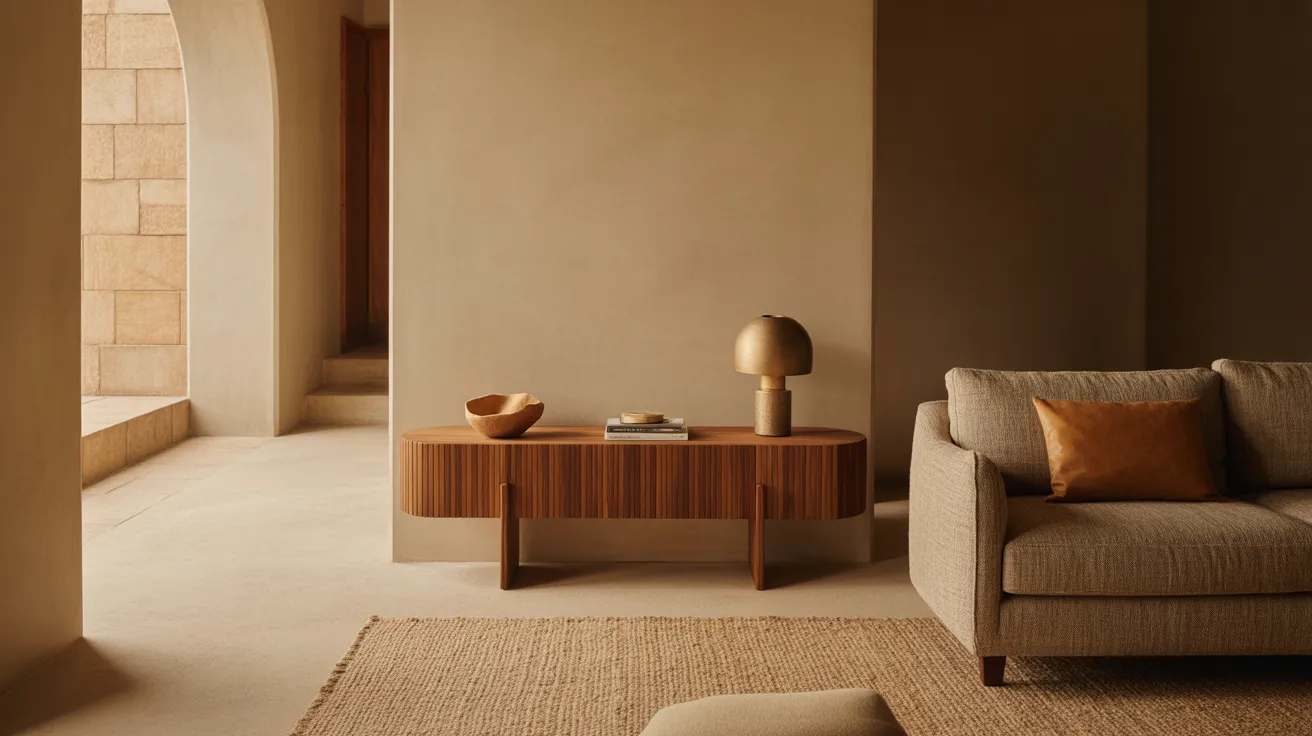
Where to put a console table, how to size it for an entryway or behind a sofa, and the right height and depth in inches. A practical placement-first guide.
A console table is a narrow, tall, hardworking surface — usually 28 to 36 inches high and only 10 to 18 inches deep — that fits where a normal table can't: against an entry wall, behind a sofa, along a hallway, or under a wall-mounted TV. Size it by where it goes. Behind a sofa, match the sofa's back height and keep it a touch shorter than the sofa is long. In an entryway, keep it shallow enough to walk past with 30 inches of clear path. Get the height and depth right for the spot, and the rest is styling.
Here is where consoles work, and exactly how to size one for each job.
What a console table is for
A console is defined by its proportions: long and low-depth, built to hug a wall or a sofa back rather than sit in the open. That shape makes it one of the most flexible pieces in the home. Common jobs:
- Entryway landing zone — keys, mail, a lamp, a tray, a mirror above.
- Behind a sofa in an open-plan room — a divider, a drink ledge, a lamp perch.
- Hallway surface — a slim table that adds function without blocking the path.
- Under a wall-mounted TV — a low media-style console for components and storage.
- Dining room sideboard stand-in — drinks, serveware, or a buffet surface for hosting.
Because the use varies so much, the right size does too. Start with the location.
Console sizing at a glance
| Use | Height | Depth | Length | Clearance to leave |
|---|---|---|---|---|
| Entryway | 30–34 in. | 10–15 in. | 36–48 in. | 30+ in. walkway |
| Behind a sofa | Even with or just below sofa back (32–36 in.) | 12–16 in. | ⅔ to nearly full sofa length | Reachable from the seat |
| Hallway | 30–34 in. | 10–12 in. | Fits wall, leaves 36 in. path | 36 in. clear hall |
| Under a wall TV | 24–30 in. | 16–20 in. | Wider than the TV | Cord reach to outlet |
| Dining/buffet | 34–38 in. | 15–20 in. | Fits the wall | Room to serve |
Two numbers do most of the work everywhere: height sets how the console relates to whatever it's near, and depth sets whether you can comfortably walk past it.
Height: match it to its neighbor
A console almost always sits next to something with its own height, and the trick is to relate the two.
- Behind a sofa: aim for the console top to sit level with — or an inch or two below — the top of the sofa back. Most sofa backs land at 32 to 36 inches, so a console in that range looks intentional. A console taller than the sofa back looms; much shorter and it disappears.
- In an entryway: 30 to 34 inches is comfortable counter-height for dropping keys and mail. If a mirror hangs above, leave roughly 6 to 12 inches between the console top and the bottom of the mirror.
- Under a wall-mounted TV: go lower, 24 to 30 inches, so the screen sits at a comfortable seated viewing height — the center of the screen near eye level when you're on the sofa.
- As a buffet or bar: 34 to 38 inches puts the surface at near-counter height for serving while standing.
Depth: the number that keeps a path open
Depth is where consoles earn their keep. A console is shallow on purpose, so it can live in spaces a normal table would block.
- Tight entryways and hallways: 10 to 12 inches deep lets people pass without turning sideways. Keep a 30-inch walkway in an entry and a 36-inch clear path in a hall.
- Behind a sofa: 12 to 16 inches is plenty to hold a lamp and a tray while staying reachable from the seat.
- Under a TV or as a media console: go deeper, 16 to 20 inches, to hold components and allow airflow and cable room behind.
When in doubt, choose shallower. An extra two inches of depth you don't need is two inches off your walkway every day.
Length: relate it to the wall or the sofa
Behind a sofa, the console reads best at two-thirds to nearly the full length of the sofa — long enough to look anchored, not so long it overhangs awkwardly. Against a wall, let the wall and the doorway swing decide: the console should leave breathing room on each side and never block a door's arc.
A quick example: behind an 84-inch sofa, a console of about 56 to 78 inches looks balanced. In an entry with a 60-inch wall, a 40-to-48-inch console leaves margin on both sides and room for a stool or basket beneath.
Console placement, room by room
Entryway. This is the console's signature role. Pair it with a mirror above and a basket or tray below to make a true landing zone — somewhere keys, mail, and a lamp live by habit. Our entryway styling guide walks through the console-mirror-landing-zone combination in detail.
Behind a sofa in an open-plan room. A behind-sofa console quietly divides the living zone from the rest of the room and gives you a ledge for a lamp or a drink. Keep it level with the sofa back and reachable from the seat. It pairs naturally with the coffee table out front; for sizing that table, see our coffee table guide.
Hallway. A slim console turns a pass-through into a styled moment — a lamp, a small stack of books, a piece of art above. Stay shallow to protect the path.
Under a wall-mounted TV. A low, deeper console handles components, hides cables, and adds storage without the bulk of a full media unit.
Storage and styling notes
- Drawers or a lower shelf turn a console into real storage — handy in entryways for gloves, chargers, and clutter that needs a home.
- Open-leg consoles feel lighter and suit small spaces; closed-cabinet consoles hide more and read more substantial.
- Cable management matters under a TV or behind a sofa with a lamp — look for a back cutout or route cords down a leg.
- Style in a low triangle: a lamp or vase on one side, a stack or tray, and a piece of art or mirror above, leaving open surface. Resist filling the whole top.
Browse the range in Living and filter by depth first — that's the number your walkway cares about most.
Shop this guide
- 47" Brown Wood Block Console Table
- Black and Brown Genuine Marble Solid Console Table
- 56" Natural Solid Wood Distressed Console Table With Shelf
The short version
A console is a narrow, tall surface that fits where other tables can't. Size it by location: behind a sofa, match the sofa-back height (32 to 36 inches) and run it two-thirds to nearly the sofa's length; in an entry or hallway, keep it 10 to 15 inches deep and 30 to 34 inches tall, protecting a 30-to-36-inch walkway; under a wall TV, go lower and deeper. Choose depth conservatively, add drawers or a shelf if you need storage, and style the top in a loose triangle with open surface left over.
Found your spot? Shop Living and filter by depth to match your walkway.
Frequently asked questions
How tall should a console table be?
It depends on the spot. Behind a sofa, match the sofa-back height (usually 32 to 36 inches). In an entryway, 30 to 34 inches is comfortable. Under a wall-mounted TV, go lower, 24 to 30 inches, for a good seated viewing angle.
How deep should a console table be?
For entryways and hallways, 10 to 15 inches keeps the walkway clear. Behind a sofa, 12 to 16 inches works. As a media console under a TV, 16 to 20 inches gives room for components and cables.
How long should a console table be behind a sofa?
Two-thirds to nearly the full length of the sofa. Behind an 84-inch sofa, a console of roughly 56 to 78 inches looks balanced and anchored without overhanging.
Can I use a console table as a TV stand?
Yes, for a wall-mounted TV. Choose a lower console (24 to 30 inches) that's wider than the screen, with enough depth (16 to 20 inches) for components and cable management. For a freestanding TV, a proper media console is sturdier and the right height.
What's the difference between a console table and a sofa table?
They're often the same piece — a sofa table is simply a console placed behind a sofa. The behind-sofa role just asks you to match the height to the sofa back and keep it reachable from the seat.
How much space should I leave around a console table?
Keep 30 inches of clear walkway in an entry and 36 inches in a hallway. Never let a console block a door's swing, and leave margin on each side rather than running it wall-to-wall.