Frequently Asked
Sofa Questions, Answered: 15 Things Shoppers Ask Before Buying
6 min read
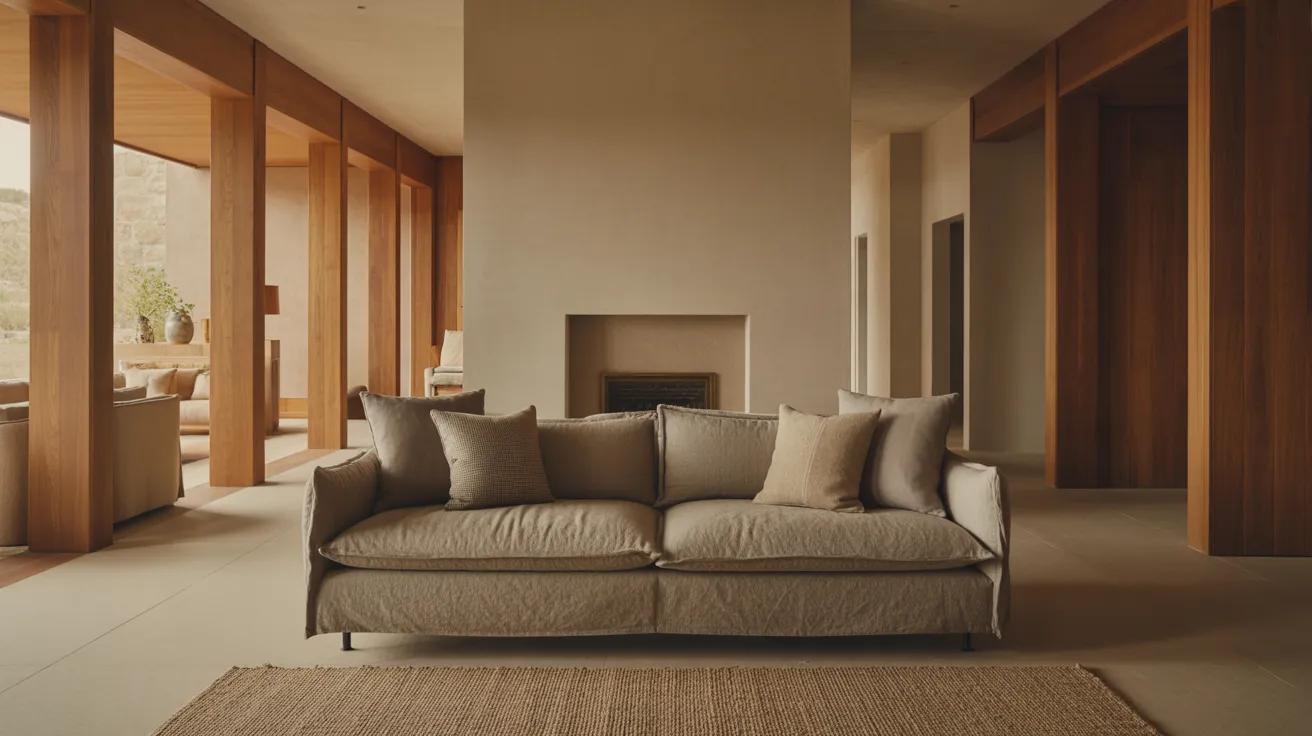
How long should a sofa last? What does seat depth mean? Fifteen real questions sofa shoppers ask before buying — answered plainly, with numbers.
Buying a sofa raises the same fifteen questions for almost everyone — about sizing, fabric, durability, care, and whether ordering one online is really wise. Rather than make you hunt through a dozen articles, here are all fifteen, answered plainly and with actual numbers. Skim the headings, take what you need.
Sizing
What do sofa dimensions actually mean?
Three numbers describe every sofa. Width is arm to arm — the space it claims on your wall. Depth is front edge to back — how far it projects into the room, typically 35 to 40 inches. Height is floor to the top of the back, usually 30 to 36 inches. Two more matter for comfort: seat depth (front of cushion to backrest) and seat height (floor to cushion top, usually 17 to 19 inches). Our guide to measuring before you buy shows how to map each one onto your room.
What size sofa do I need for my living room?
A reliable rule: the sofa should span about two-thirds of the wall it sits on. A 10-foot wall takes a sofa around 80 inches; a 12-foot wall handles 90 to 96 inches. Leave 30 inches of clearance for walkways and 14 to 18 inches between the sofa and the coffee table.
What does seat depth mean, and what should I choose?
Seat depth is the distance from the cushion's front edge to the backrest — the number that decides how the sofa feels. Choose 21 to 23 inches if you sit upright with feet on the floor; 24 inches or more if you curl up or nap. Taller people generally prefer deeper seats; under about 5'4", deep seats leave feet dangling.
Will my sofa fit through the door?
Measure your narrowest doorway (most are 32 to 36 inches) and compare it to the sofa's depth and height. If the sofa's depth — or its diagonal depth, listed by many retailers — is at least an inch less than the door width, it will typically pass through tilted. Tight stairs and elevator cabs deserve the same check. Removable legs and low arms add valuable margin.
Materials and comfort
Which sofa fabric is the most durable?
For sheer wear resistance: performance fabrics (solution-dyed acrylic, olefin, treated polyester) rated 30,000+ double rubs, followed by tight-weave synthetics and top-grain leather, which lasts decades but ages differently — it patinas rather than pills. Natural linen and bouclé are durable in calm households but more vulnerable to snags, spills, and sun. The trade-offs are laid out in our comparison of bouclé, linen, and performance fabric.
What makes a sofa comfortable, beyond the cushions?
Three structural choices. Seat depth matched to your sitting style (see above). Cushion fill: high-resilience foam (1.8+ pounds per cubic foot) for support that holds; foam wrapped in down or fiber for softness with structure. Suspension: sinuous springs or eight-way hand-tied coils give the seat its responsiveness — webbing alone tends to feel dead and slacken early.
Is bouclé practical, or just pretty?
Both, conditionally. Bouclé's looped texture is soft, warm, and forgiving of wrinkles — but loops can snag on pet claws and rough use, and its texture holds dust. In a household without cats or claw-happy dogs, bouclé wears well; with them, choose a flat performance weave and save the bouclé for a less-trafficked chair.
Durability
How long should a sofa last?
A well-built sofa lasts 7 to 15 years of daily use; exceptional frames last beyond 20 with reupholstery. Budget construction — softwood frames, low-density foam — commonly sags within 2 to 4 years. The lifespan is decided at purchase, not in use: frame, suspension, and cushion density set the ceiling.
What should I look for in a quality frame?
Kiln-dried hardwood (oak, beech, maple, or hardwood plywood), joined with dowels, screws, and corner blocks rather than staples and glue alone. Kiln-drying removes moisture so joints don't loosen as the wood settles. If a retailer doesn't state the frame material, ask — it's the single best predictor of how the sofa holds up.
Are modular sofas as durable as fixed ones?
Good modular sofas are built to the same standards — each module is effectively a small sofa. The honest differences: connection hardware can loosen with frequent reconfiguring, and seams between modules show more with age. In exchange, you get pieces that fit through any door and adapt to your next floor plan. If you move every few years, that trade usually favors modular; we weigh the full sofa-versus-sectional question in Sectional vs. Sofa.
Care
How do I clean my sofa — and what are those letter codes?
Every sofa carries a cleaning code on its tag. W: water-based cleaners — the easiest. S: solvent-based only; water can ring or stain. W/S: either. X: vacuum only — professional cleaning for anything more. Whatever the code, the universal rules are: blot, never rub; act within minutes; test any cleaner on a hidden spot first.
How do I keep cushions from sagging?
Rotate and flip reversible cushions every two to four weeks so wear spreads evenly, and plump fiber- or down-wrapped cushions weekly to redistribute the fill. Avoid always sitting in the same spot — the "favorite seat" dent is the most common form of premature aging, and rotation is its only real cure.
Do I need to apply fabric protection?
If your sofa came in performance fabric, no — protection is built into the fiber. For untreated natural fibers in busy households, an after-market repellent can help, but test it on a hidden area and check that it doesn't void your fabric warranty. The cheaper insurance is behavioral: a throw where the dog sleeps and a no-red-wine-over-the-cream-sofa house rule.
Buying online
Is it safe to buy a sofa online without sitting on it?
Yes, if you do three things. First, compare the spec sheet — seat depth, seat height, back height — against a sofa you already know you find comfortable; comfort is mostly geometry. Second, order fabric swatches and view them in your room's light. Third, confirm the return window before you order. The most common online-buying mistakes are the same as in-store ones — we catalog them in 7 Sofa-Buying Mistakes Designers See All the Time.
What should I check before clicking "order" — and what if I don't like it when it arrives?
Run a five-point check: delivery path measured (door, hallway, stairs); room clearances confirmed (30-inch walkways); frame and cushion specs reviewed; fabric swatch seen in person; return policy read. Then give the sofa a fair trial — new cushions take two to four weeks of regular use to soften and settle, so don't judge day-one firmness as final. If it's still not right, LoftLoom offers 30-day returns, and free shipping applies to orders over $120.
The short version
Size the sofa to two-thirds of its wall and match seat depth to how you sit (21–23 inches upright, 24+ for lounging). Choose fabric for your household's actual life, and judge quality by frame, suspension, and foam density — that's what decides whether it lasts 4 years or 15. Clean by the letter code, rotate the cushions, and buy online with specs, swatches, and the return policy read in advance.
All measured up? Shop Sofas — every piece lists the dimensions and fabric details these fifteen answers taught you to read.
Frequently asked questions
What do sofa dimensions actually mean?
Three numbers describe every sofa. Width is arm to arm — the space it claims on your wall. Depth is front edge to back — how far it projects into the room, typically 35 to 40 inches. Height is floor to the top of the back, usually 30 to 36 inches. Two more matter for comfort: seat depth (front of cushion to backrest) and seat height (floor to cushion top, usually 17 to 19 inches). Our guide to measuring before you buy shows how to map each one onto your room.
What size sofa do I need for my living room?
A reliable rule: the sofa should span about two-thirds of the wall it sits on. A 10-foot wall takes a sofa around 80 inches; a 12-foot wall handles 90 to 96 inches. Leave 30 inches of clearance for walkways and 14 to 18 inches between the sofa and the coffee table.
What does seat depth mean, and what should I choose?
Seat depth is the distance from the cushion's front edge to the backrest — the number that decides how the sofa feels. Choose 21 to 23 inches if you sit upright with feet on the floor; 24 inches or more if you curl up or nap. Taller people generally prefer deeper seats; under about 5'4", deep seats leave feet dangling.
Will my sofa fit through the door?
Measure your narrowest doorway (most are 32 to 36 inches) and compare it to the sofa's depth and height. If the sofa's depth — or its diagonal depth, listed by many retailers — is at least an inch less than the door width, it will typically pass through tilted. Tight stairs and elevator cabs deserve the same check. Removable legs and low arms add valuable margin.
Which sofa fabric is the most durable?
For sheer wear resistance: performance fabrics (solution-dyed acrylic, olefin, treated polyester) rated 30,000+ double rubs, followed by tight-weave synthetics and top-grain leather, which lasts decades but ages differently — it patinas rather than pills. Natural linen and bouclé are durable in calm households but more vulnerable to snags, spills, and sun. The trade-offs are laid out in our comparison of bouclé, linen, and performance fabric.
What makes a sofa comfortable, beyond the cushions?
Three structural choices. Seat depth matched to your sitting style (see above). Cushion fill: high-resilience foam (1.8+ pounds per cubic foot) for support that holds; foam wrapped in down or fiber for softness with structure. Suspension: sinuous springs or eight-way hand-tied coils give the seat its responsiveness — webbing alone tends to feel dead and slacken early.
Is bouclé practical, or just pretty?
Both, conditionally. Bouclé's looped texture is soft, warm, and forgiving of wrinkles — but loops can snag on pet claws and rough use, and its texture holds dust. In a household without cats or claw-happy dogs, bouclé wears well; with them, choose a flat performance weave and save the bouclé for a less-trafficked chair.
How long should a sofa last?
A well-built sofa lasts 7 to 15 years of daily use; exceptional frames last beyond 20 with reupholstery. Budget construction — softwood frames, low-density foam — commonly sags within 2 to 4 years. The lifespan is decided at purchase, not in use: frame, suspension, and cushion density set the ceiling.
What should I look for in a quality frame?
Kiln-dried hardwood (oak, beech, maple, or hardwood plywood), joined with dowels, screws, and corner blocks rather than staples and glue alone. Kiln-drying removes moisture so joints don't loosen as the wood settles. If a retailer doesn't state the frame material, ask — it's the single best predictor of how the sofa holds up.
Are modular sofas as durable as fixed ones?
Good modular sofas are built to the same standards — each module is effectively a small sofa. The honest differences: connection hardware can loosen with frequent reconfiguring, and seams between modules show more with age. In exchange, you get pieces that fit through any door and adapt to your next floor plan. If you move every few years, that trade usually favors modular; we weigh the full sofa-versus-sectional question in Sectional vs. Sofa.
How do I clean my sofa — and what are those letter codes?
Every sofa carries a cleaning code on its tag. W: water-based cleaners — the easiest. S: solvent-based only; water can ring or stain. W/S: either. X: vacuum only — professional cleaning for anything more. Whatever the code, the universal rules are: blot, never rub; act within minutes; test any cleaner on a hidden spot first.
How do I keep cushions from sagging?
Rotate and flip reversible cushions every two to four weeks so wear spreads evenly, and plump fiber- or down-wrapped cushions weekly to redistribute the fill. Avoid always sitting in the same spot — the "favorite seat" dent is the most common form of premature aging, and rotation is its only real cure.
Do I need to apply fabric protection?
If your sofa came in performance fabric, no — protection is built into the fiber. For untreated natural fibers in busy households, an after-market repellent can help, but test it on a hidden area and check that it doesn't void your fabric warranty. The cheaper insurance is behavioral: a throw where the dog sleeps and a no-red-wine-over-the-cream-sofa house rule.
Is it safe to buy a sofa online without sitting on it?
Yes, if you do three things. First, compare the spec sheet — seat depth, seat height, back height — against a sofa you already know you find comfortable; comfort is mostly geometry. Second, order fabric swatches and view them in your room's light. Third, confirm the return window before you order. The most common online-buying mistakes are the same as in-store ones — we catalog them in 7 Sofa-Buying Mistakes Designers See All the Time.
What should I check before clicking "order" — and what if I don't like it when it arrives?
Run a five-point check: delivery path measured (door, hallway, stairs); room clearances confirmed (30-inch walkways); frame and cushion specs reviewed; fabric swatch seen in person; return policy read. Then give the sofa a fair trial — new cushions take two to four weeks of regular use to soften and settle, so don't judge day-one firmness as final. If it's still not right, LoftLoom offers 30-day returns, and free shipping applies to orders over $120.