Common Mistakes
7 Sofa-Buying Mistakes Designers See All the Time (and How to Avoid Every One)
6 min read
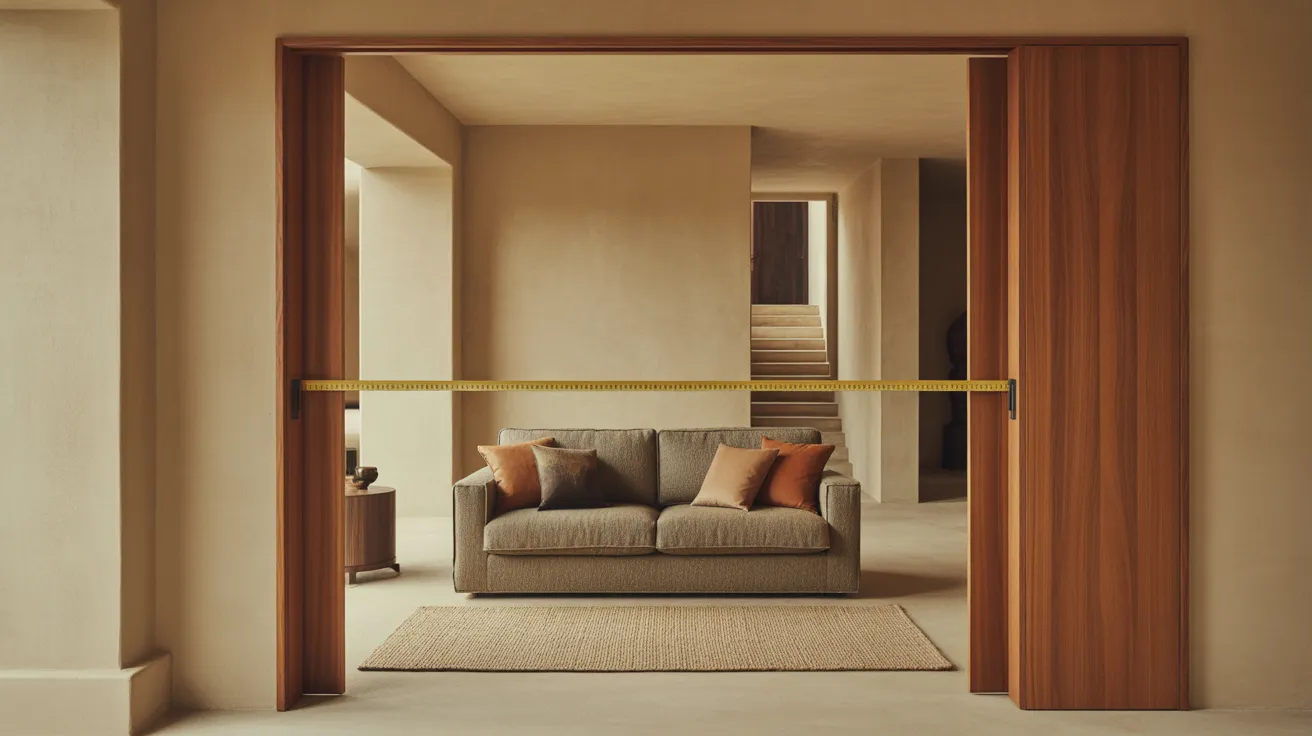
A sofa is the biggest seat in the house and the easiest one to get wrong. Seven mistakes designers see constantly — and the simple fixes for each.
You'll sit on your sofa more than any other piece of furniture you own — and you'll probably buy it in under an hour of actual decision-making. That mismatch is where most regrets come from. The good news: nearly every sofa mistake designers encounter falls into one of seven patterns, and each has a fix you can apply before you ever click "add to cart."
Mistake 1: Buying by eye instead of by tape measure
The mistake. Falling for a sofa online or in a showroom and trusting your gut that it will fit.
Why it happens. Showrooms have 14-foot ceilings and no walls. Product photos are shot in rooms larger than most living rooms. A 96-inch sofa looks modest in both — and enormous in a 12-by-14-foot space.
The fix. Measure three things before you shop: the wall where the sofa will sit, the walkways around it (leave at least 30 inches for major paths, 18 inches between sofa and coffee table), and every doorway, hallway turn, and stairwell on the delivery route. Most standard doorways are 32 to 36 inches wide; a sofa deeper than about 38 inches with fixed arms can get tight fast. Our full guide to measuring before you buy walks through each step, including the diagonal trick for tight corners.
Mistake 2: Ignoring seat depth
The mistake. Shopping by overall width and never checking the one number that determines how the sofa actually feels: seat depth.
Why it happens. Seat depth is buried in spec sheets, and most people don't know their own preference until they've lived with the wrong one.
The fix. Decide how you sit. If you like sitting upright with your feet on the floor — reading, hosting, working — look for a seat depth of 21 to 23 inches. If you curl up, sprawl, or nap, go 24 inches or deeper. If you're under 5'4", deep seats can leave your feet dangling; over 6 feet, shallow seats can feel like perching. There is no universally correct depth, only the right one for your body and habits.
Mistake 3: Choosing fabric for the photo, not for your life
The mistake. Ordering the crisp white linen because it looks beautiful — while owning a golden retriever and two kids under six.
Why it happens. We buy the life we want, not the one we have. And fabric swatches don't come with a toddler attached.
The fix. Be honest about traffic. Pets, kids, red wine, and daily use point toward performance fabrics or tight weaves in mid-tone colors. Quiet households can enjoy linen's relaxed texture or bouclé's softness with less risk. The trade-offs are real — texture, feel, cleanability — so it's worth ten minutes with our comparison of bouclé, linen, and performance fabric before you commit. Order swatches whenever you can, and look at them in your room's light, not your phone screen.
Mistake 4: Getting the scale wrong for the room
The mistake. A sofa that's technically "fits" but visually overwhelms — or one so small the room looks unfurnished.
Why it happens. People shop the sofa in isolation instead of as a proportion of the room.
The fix. A useful rule: your sofa should span roughly two-thirds of the wall it sits against. On a 10-foot wall, that's a sofa around 80 inches. Leave breathing room — 6 to 12 inches between the sofa's arm and any adjacent wall or window frame keeps the piece from looking wedged in. Low-profile silhouettes (back heights around 30 to 32 inches) help in rooms with lower ceilings or big windows.
Mistake 5: Never asking what's inside
The mistake. Comparing two sofas by price and color while ignoring frame, suspension, and cushion fill — the three things that determine whether it lasts four years or fifteen.
Why it happens. The inside of a sofa is invisible, and retailers don't always volunteer the details.
The fix. Look for (or ask about) three specs. Frame: kiln-dried hardwood holds its joints far longer than soft pine or particleboard. Suspension: sinuous springs are the durable standard; webbing alone tends to slacken. Cushions: high-resilience foam with a density of 1.8 pounds per cubic foot or higher keeps its shape; lower densities can flatten within a couple of years. If a listing mentions none of this, that silence is information too.
Mistake 6: Defaulting to a sectional (or refusing one) without thinking it through
The mistake. Assuming a sectional is automatically the cozier choice — or that a small room can't handle one.
Why it happens. Sectionals photograph beautifully, and "more seat" feels like more value. But an L-shape locks your layout into one configuration, and in some rooms a generous sofa plus a chair seats just as many people with far more flexibility.
The fix. Count your real seating needs and map your traffic flow before deciding. A compact chaise sectional can be brilliant in a loft; a 110-inch L can strangle a 12-foot room. We break down the decision scenario by scenario in Sectional vs. Sofa: Which Is Right for Your Space?
Mistake 7: Buying for this apartment instead of the next five years
The mistake. Choosing a trend-heavy color or an oversized piece that won't survive your next move.
Why it happens. It's easy to design for the room you're standing in today.
The fix. A well-made sofa should serve you 7 to 15 years — likely across more than one address. Neutral upholstery with personality in the silhouette ages better than a statement color you may tire of by year three. If you move often, consider modular designs that break into door-friendly pieces, or at minimum check that the legs are removable. When you're ready to look, browse our sofa collection with your measurements in hand.
Shop this guide
- 87" Sky Blue Leather Sofa With Black Legs
- 70" Espresso Faux Leather And Black Nailhead Love Seat
- 92" Blue Polyester Blend Convertible Futon Sleeper Sofa
The short version
Measure the room, the walkways, and the delivery path. Match seat depth to how you actually sit. Choose fabric for your real household, not your ideal one. Scale the sofa to about two-thirds of its wall. Ask what's inside the frame and cushions. Decide sofa vs. sectional based on layout, not instinct. And buy for the next decade, not just this room.
Ready when you are: Shop Sofas — and bring your tape measurements with you.
Frequently asked questions
What is the single most common sofa-buying mistake?
Skipping measurements. Designers report it more than any other error — both the room measurements (wall length, walkway clearance) and the delivery path (doorways, stair turns, elevators). It takes ten minutes with a tape measure and prevents the most expensive category of regret.
How do I know if a sofa will fit through my door?
Compare the sofa's depth and height to your narrowest doorway. As a rule of thumb, if the sofa's depth or its diagonal depth is at least an inch less than the door's width, it will usually pass through upright or tilted. Removable legs and low arms add margin.
What seat depth should I choose?
For upright sitting, 21 to 23 inches. For lounging and napping, 24 inches or more. Your height matters: shorter sitters are usually happier on the shallower end, taller sitters on the deeper end.
How long should a good sofa last?
A quality sofa — kiln-dried hardwood frame, sinuous-spring suspension, high-density foam — typically lasts 7 to 15 years with normal use. Budget construction often shows sagging within 2 to 4 years.
Is it risky to buy a sofa online without sitting on it?
Less than it used to be. Check the seat depth, seat height, and back height against a sofa you already find comfortable, order fabric swatches, and read the return policy before you buy. LoftLoom offers 30-day returns, which gives you a real trial period at home.