Common Mistakes
The Rug Mistakes That Make Rooms Feel Smaller (and How to Fix Each One)
5 min read
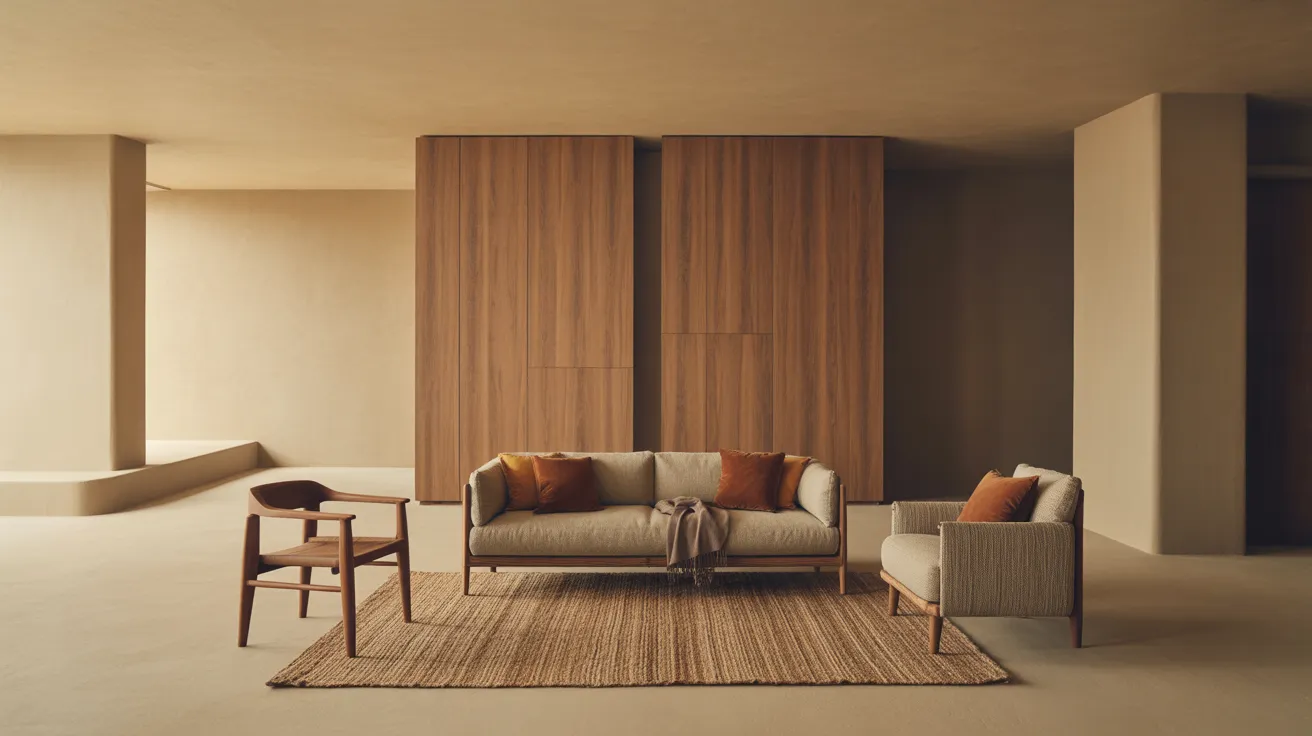
The wrong rug can shrink a room by feet, not inches. Learn the five most common rug mistakes — size, placement, layering — and how to fix each one.
A rug is the one purchase that can visibly change the size of a room — in either direction. Get it right and the space reads larger, calmer, more finished. Get it wrong and even a generous living room starts to feel chopped up and cramped. If your room feels smaller than its square footage says it should, one of these five mistakes is usually the reason.
Mistake 1: The postage-stamp rug
The mistake. A 5×8 rug floating in front of the sofa, touching nothing, with a wide moat of bare floor on every side.
Why it happens. Small rugs cost less, and a 5×8 looks big in the store — or rolled up in your trunk. It's the single most common rug error in American living rooms, and it visually shrinks the seating area to the size of the rug instead of the size of the room.
The fix. In most living rooms, the right size is an 8×10 or 9×12 — almost always one size up from your first instinct. The test: at minimum, the front legs of every seating piece should rest on the rug, ideally 6 to 8 inches in. When the rug connects the furniture, the eye reads the whole seating zone as one large area. Our complete rug size guide has room-by-room dimensions if you want exact numbers for your layout.
Mistake 2: The floating island
The mistake. A rug that's centered in the open floor but doesn't relate to any furniture — anchored to nothing, defining nothing.
Why it happens. It feels intuitive to center the rug in the room rather than under the furniture grouping. But a rug's job is to anchor a zone, and a rug touching nothing creates a small island of pattern that fragments the floor.
The fix. Place the rug in relation to the furniture, not the walls. Slide it under the front legs of the sofa and chairs so the seating arrangement sits on the rug as a unified group. In open-plan spaces, this is also how you zone: one rug under the seating, another under the dining table, each tied to its furniture. The floor between them stays clear, and both zones read as intentional rooms.
Mistake 3: Wall-to-wall by accident
The mistake. Going so large that the rug runs within a few inches of every wall, reading like cheap carpeting rather than a deliberate layer.
Why it happens. After hearing "bigger is better" once, some shoppers overcorrect. But a rug needs a visible border of floor to work as a frame.
The fix. Leave 12 to 18 inches of bare floor between the rug's edge and the walls — slightly less (8 to 12 inches) is acceptable in small rooms. That exposed perimeter is what makes the rug look like a choice. It also lets the floor itself, especially good wood, contribute warmth instead of disappearing.
Mistake 4: Under-sizing in the dining room and bedroom
The mistake. A dining rug that ends at the table's edge, so chairs catch and tip every time someone scoots back. Or a bedroom rug that stops at the bed frame, giving your feet cold floor every morning.
Why it happens. People size these rugs to the furniture's footprint instead of the furniture's use — and a table or bed in use is bigger than its footprint.
The fix. Two numbers to remember. Dining: the rug should extend at least 24 inches beyond the table on all sides, so chairs stay on the rug even when pulled out — for a standard 36-by-72-inch table, that means a rug around 8×10. Bedroom: the rug should extend 18 to 24 inches beyond the sides and foot of the bed. A 9×12 under a king, an 8×10 under a queen, with the rug starting just below the nightstands, is the classic formula.
Mistake 5: Layering without a plan
The mistake. Stacking rugs at random — similar sizes, competing patterns, edges almost aligned — which makes the floor look cluttered and the room busier and smaller.
Why it happens. Layering looks effortless in photos, so it gets attempted without the underlying logic: contrast in scale and texture.
The fix. Layer with a clear hierarchy. The base rug should be large and quiet — flatwoven jute or a low-pile neutral, sized as if it were the only rug. The top rug should be noticeably smaller (roughly half to two-thirds the base's width), softer or more patterned, and placed off-center or angled with intent. Texture contrast does the heavy lifting; if you're choosing between fibers for each layer, our honest comparison of wool, jute, and synthetic rugs covers which materials hold up where. For full technique, see Area Rug vs. Runner vs. Layered Rugs.
A note on rug pads (the invisible mistake)
Not a sizing issue, but worth thirty seconds: a rug without a pad slides, wrinkles, and wears faster — and a wrinkled rug instantly reads as too small for its job. A quality pad cut about one inch short of the rug's edge on each side keeps it flat, quiet, and planted.
Shop this guide
- 9' X 12' Black And Graphite Abstract Washable Indoor Outdoor Area Rug
- 8' X 10' Chocolate Gray And Terra Cotta Oriental Washable Indoor Outdoor Area Rug
- 9' X 12' Teal Blue And Gray Southwestern Washable Indoor Outdoor Area Rug
The short version
Size up: front legs on the rug, 6 to 8 inches in. Anchor the rug to furniture, never float it. Leave a 12-to-18-inch border of bare floor. In dining rooms add 24 inches past the table; in bedrooms run 18 to 24 inches past the bed. Layer only with deliberate contrast in size and texture — and always use a pad.
Once you know your numbers, Browse Area Rugs to find the size and texture your room has been missing.
Frequently asked questions
What rug size do I need for a typical living room?
For a 12-by-15-foot living room, start with an 8×10 and consider a 9×12 if your seating floats away from the walls. The front legs of all seating should rest on the rug. When in doubt between two sizes, choose the larger one.
Is it better for a rug to be too big or too small?
Too big — within reason. An oversized rug with at least 8 inches of visible floor at the borders still unifies the room. A too-small rug fragments it. The only true failure mode for "too big" is running tight to every wall.
How much rug should show around a dining table?
At least 24 inches beyond the table edge on all sides. That keeps chair legs on the rug even when guests slide back, which protects floors and keeps the zone visually intact.
Can a dark rug make a room feel smaller?
A dark rug lowers the room's visual center of gravity, which can feel cozy rather than cramped — if the rug is properly sized. An undersized dark rug, though, doubles the shrinking effect: a small dark patch on a light floor draws the eye to its limits.
Do small rooms need small rugs?
The opposite, usually. In a small room, a rug that reaches nearly all the furniture — leaving just 8 to 12 inches of border — makes the floor plane read as one continuous surface and the room feel bigger.