Common Mistakes
6 Lighting Mistakes That Flatten Your Room (and the Easy Fixes)
5 min read
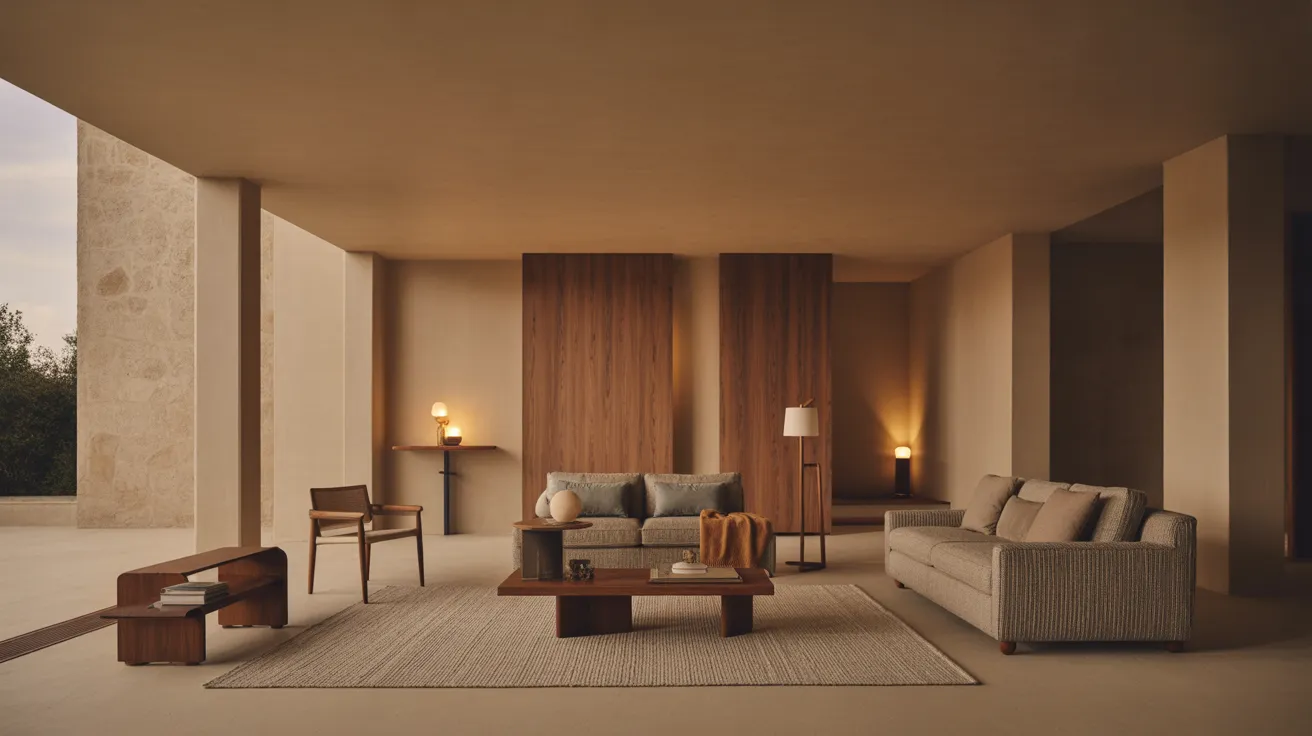
One overhead bulb makes any room feel flat. Six common lighting mistakes — and the simple fixes that add depth, warmth, and dimension to your home.
You've chosen the furniture carefully, the rug is the right size, the palette is calm — and the room still feels flat, like a photograph taken with the flash on. Nine times out of ten, the furniture isn't the problem. The light is. Here are the six lighting mistakes that flatten otherwise good rooms, and the fixes, none of which require an electrician.
Mistake 1: Relying on "the big light"
The mistake. One ceiling fixture doing all the work — a single overhead source casting even, shadowless light across the entire room.
Why it happens. It's what the room came with, and the switch is right by the door. But a single overhead source flattens everything under it: no shadows means no depth, and faces, textures, and corners all lose dimension.
The fix. Think in layers, not fixtures. A living room wants at least three sources at different heights: something overhead (ambient), something at reading height (task), and something low or directional (accent). Even two table lamps added to an overhead fixture transform the geometry of a room. We unpack the system fully in Layered Lighting 101 — it's simpler than the terminology suggests.
Mistake 2: Buying bulbs by brightness alone
The mistake. Grabbing whatever bulb is brightest, and ending up with cold blue-white light that makes a warm room feel like a waiting area.
Why it happens. Bulb packaging leads with watts and lumens; color temperature hides in the fine print.
The fix. Check the Kelvin number. For living spaces and bedrooms, 2700K ("warm white") is the sweet spot — it flatters wood, textiles, and skin. 3000K works in kitchens and bathrooms. Anything 4000K and above reads clinical at home. Keep all the bulbs in one room within the same temperature; mixed Kelvins is its own subtle flattener. For brightness, a living room generally wants 1,500 to 3,000 lumens total, spread across several sources, not concentrated in one.
Mistake 3: No dimmers, no moods
The mistake. Every light in the house operating at one intensity: full.
Why it happens. Dimmers feel like a renovation decision, so they never get made.
The fix. You don't need wiring. Plug-in dimmer switches work with most lamps and cost less than a takeout dinner; smart bulbs dim from your phone. The goal is at least two intensity settings per room — bright for tasks and cleaning, low for evenings. A room that can shift from 100 percent to 30 percent effectively becomes two rooms.
Mistake 4: Lamps at the wrong height
The mistake. A floor lamp towering over the sofa with its bulb glaring at eye level, or a table lamp so short it lights nothing but its own base.
Why it happens. Lamps get bought for their looks — fair enough — without checking the one measurement that governs comfort: where the bottom of the shade lands.
The fix. Seated eye level is roughly 38 to 42 inches from the floor. The bottom of a lampshade should sit at about that height — just below eye level when you're on the sofa — so you get light on your book, not in your eyes. For floor lamps beside seating, that usually means an overall height of 58 to 64 inches; for table lamps, lamp plus table should land in the same zone. Placement, arc lamps, and reading angles are covered in our floor lamp buying guide.
Mistake 5: Lighting the room but not the life in it
The mistake. Even, general light everywhere — and no dedicated light where you actually read, work, or cook.
Why it happens. General light looks sufficient until you try to do something under it. Then you find yourself tilting a book toward the window at 7 p.m.
The fix. Walk the room and name its tasks: reading chair, desk, kitchen counter, vanity. Each task deserves its own source, positioned between the light and your work — beside or slightly behind your shoulder for reading, never directly behind your head. A task light can be small; what matters is that it's placed, not just present.
Mistake 6: Forgetting the corners
The mistake. Lighting the center of the room and letting the perimeter fall into gloom. Dark corners visually contract a room — the eye reads the lit area as the room's full size.
Why it happens. Outlets and habit cluster lamps around the seating area, and the edges get nothing.
The fix. Put one quiet light source at the room's far edge: a slim floor lamp in a dead corner, a picture light over art, a small lamp on a bookshelf. Uplights behind plants cost little and cast the kind of layered shadow that makes a room feel deeper than its walls. Aim for a triangle of light sources around the room rather than a cluster in the middle — our layered lighting guide shows what this looks like room by room.
Shop this guide
- 63" Antiqued Brass Metal Reading Floor Lamp
- 16" Natural Geometric Table Lamp With Dome Shade
- Black And Clear Metal and Glass Vanity Flush Mounted Sconce
The short version
Retire the single overhead light and build three layers: ambient, task, accent. Choose 2700K bulbs and keep one temperature per room. Add dimmers — plug-in versions count. Set lampshades just below seated eye level (bottom of shade at 38 to 42 inches). Give every task its own light, and put at least one source in a far corner so the room reads its full size.
When you're ready to add a layer or two, Shop Lighting — floor lamps, table lamps, and pendants chosen for warm, dimensional light.
Frequently asked questions
How many light sources should a living room have?
At least three, at different heights: one ambient (overhead or large floor lamp), one task (reading lamp), one accent (corner lamp, picture light, or shelf light). Medium and large living rooms are often best with four to five smaller sources rather than two powerful ones.
What color temperature is best for living rooms?
2700K, sold as "warm white." It's close to the warmth of traditional incandescent light and flatters wood tones and textiles. Save 3000K for kitchens and baths, and avoid 4000K+ in lounging spaces.
Why does my room feel dark even with the lights on?
Usually because the light is concentrated in one place, leaving the perimeter dim — the eye judges a room by its darkest visible zones. Adding one or two sources at the edges of the room often helps more than a brighter center bulb.
Are dimmers worth it in a rental?
Yes, and you don't need to rewire anything. Plug-in dimmers and smart bulbs install in seconds, move out with you, and give every lamp two or three useful settings instead of one.
How tall should a floor lamp be next to a sofa?
Generally 58 to 64 inches overall, so the bottom of the shade sits around 38 to 42 inches — just below seated eye level. Taller is fine if the shade directs light downward or the lamp stands behind the seating.