Comparisons
Area Rug vs. Runner vs. Layered Rugs: A Placement Guide
8 min read
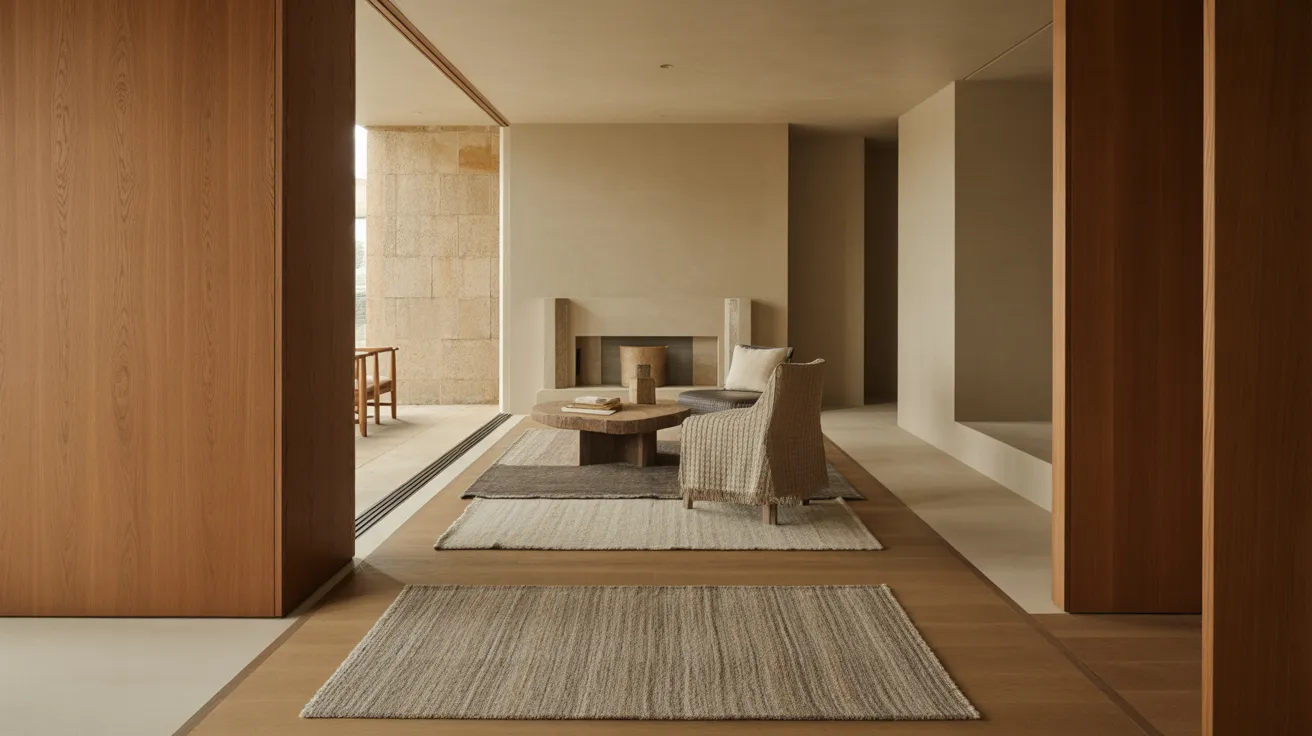
Area rug, runner, or layered rugs? A placement guide to where each type belongs, by room and goal, so your rugs ground a space instead of fighting it.
The honest short answer: use an area rug to ground and define a main living zone, use a runner to lead through long narrow spaces like hallways, entries, and galley kitchens, and layer rugs when you want texture, warmth, or to make a too-small or too-plain rug work harder. These aren't rival products so much as different placements for different jobs — and the most common rug regret isn't the wrong style, it's the wrong type or size for the spot. This guide is about where each belongs, not what it's made of.
Placement Is the Decision Most People Skip
People agonize over rug color and material, then put the rug in the wrong place at the wrong size — and the room never looks right. (Sizing and placement mistakes are common enough that we devoted a whole piece to the rug mistakes that make rooms feel smaller.) Type and placement come first; pattern and fiber come second.
Three quick questions point you to the right type:
- What shape is the space? A broad open zone wants an area rug; a long narrow path wants a runner.
- What's the rug's job? Define a seating area, guide foot traffic, or add a layer of warmth and texture?
- Are you starting fresh or fixing a rug you already own? Layering often rescues a rug that's too small, too plain, or not quite enough on its own.
For getting the dimensions right once you've chosen a type, our rug size guide has the room-by-room numbers. Here we focus on choosing and placing the type itself.
Side-by-Side Comparison
| Area Rug | Runner | Layered Rugs | |
|---|---|---|---|
| Shape | Large rectangle, square, or round | Long and narrow | Two (or more) rugs stacked |
| Primary job | Define and anchor a zone | Guide traffic through a path | Add texture, warmth, or size |
| Best spaces | Living room, dining, bedroom, open plan | Hallway, entry, galley kitchen, bedside | Living room, bedroom, under dining |
| Defines a seating area | Yes — its main strength | No | The top rug can |
| Handles narrow spaces | Awkward; too wide | Made for them | Possible but fussy |
| Adds visual interest | Through the rug itself | Adds rhythm to a long run | High — pattern, texture, depth |
| Difficulty | Easy — just size it right | Easy — size to the path | Trickier — needs balance and a flat base |
| Common mistake | Too small, floating in the room | Too short or too wide for the run | Top rug too small; clashing or bulky |
| Best for | Grounding the main rooms | Long, high-traffic, narrow areas | Texture lovers and rescuing a small rug |
Area Rugs: Grounding the Room
An area rug is the workhorse of rug placement — a large rectangle (or square, or round) that defines and anchors a zone. In a living room it draws the seating together; in a dining room it sits the table and chairs on a shared island; in a bedroom it grounds the bed; in an open-plan space it carves one big room into purposeful areas. When people picture "a rug," this is usually it, and it's the right call for any main room that needs grounding.
The make-or-break factor is size, and it's where most area rugs go wrong. A rug that's too small floats like an undersized stamp in the middle of the floor, making the whole room feel smaller — the single most common rug error there is. Aim for the rug to reach under the front legs of your seating at minimum (better, all the legs), so furniture sits on the rug rather than marooned around it. In a dining room, it should extend far enough that chairs stay on it even when pulled out. Get that principle right — furniture connected to the rug — and an area rug instantly makes a room feel composed.
Area rugs suit living rooms, dining rooms, bedrooms, and zoning open-plan spaces — anywhere you need to define and ground a seating or gathering area.
Runners: Guiding the Path
A runner is a long, narrow rug built for the spaces an area rug can't serve: hallways, entryways, galley kitchens, and alongside a bed or kitchen island. Its job isn't to define a zone but to lead the eye and foot through a passage, adding warmth, softening footsteps, and protecting flooring in the busiest walkways. A long hallway with a runner instantly feels more finished and less like a corridor.
Placement is mostly about proportion. Leave a margin of bare floor on each side — a runner that stretches wall to wall looks like ill-fitting carpet, while a few inches of floor showing frames it properly. Lengthwise, it should run most of the hall without crowding the ends; very long halls can take two runners with a small gap. Runners also shine in pairs: one on each side of a bed, or one tracing a galley kitchen's working aisle. Because they live in high-traffic zones, a low-pile, easy-to-clean rug earns its keep here.
Runners suit hallways, entryways, galley kitchens, bedsides, and any long narrow stretch that needs softening and a sense of direction.
Layered Rugs: Texture and Rescue
Layering means placing a smaller rug on top of a larger one — and it solves two very different problems. The first is style: stacking a textured or patterned rug over a larger neutral base adds depth, warmth, and a collected, lived-in look that a single rug can't. The second is practical rescue: a too-small rug you already own, or a flat-but-plain one, can be salvaged by floating it over a big, inexpensive natural-fiber base (jute and sisal are the classic foundations) — suddenly it reads intentional instead of undersized.
The keys to making it look deliberate: the base should be larger and flatter, ideally a simple low-pile or natural-fiber rug that grounds the arrangement; the top rug should be smaller and bring the personality — texture, pattern, or color. Keep some of the base visible as a border on at least two sides so the layering reads on purpose. Avoid stacking two thick high-pile rugs (it gets bulky and trips people), and pair one busy pattern with one calm one. A non-slip pad between layers keeps the top rug from sliding.
Layered rugs suit texture-driven living rooms and bedrooms, anyone wanting depth and warmth, and the very practical job of making a small or plain rug finally work in its room.
Choose an Area Rug If / Choose a Runner If / Layer Rugs If
Choose an area rug if:
- You need to define and anchor a main room — living, dining, or bedroom.
- The space is broad and open rather than long and narrow.
- You want furniture to sit on or connect to the rug for a composed look.
- You're zoning an open-plan space into purposeful areas.
Choose a runner if:
- The space is long and narrow — hallway, entry, galley kitchen, bedside.
- You want to guide traffic, soften footsteps, and protect flooring.
- An area rug would be awkwardly wide for the path.
- You can leave a margin of bare floor on each side.
Layer rugs if:
- You want added texture, warmth, and a collected, lived-in look.
- You have a too-small or too-plain rug you'd like to rescue.
- You can pair a larger, flatter base with a smaller, more interesting top rug.
- You'll keep the stack from getting too thick or visually busy.
Shop this guide
- 10' Green And Cream Geometric Indoor Outdoor Runner Rug
- 5' X 8' Denim Blue And Blue Floral Washable Indoor Outdoor Area Rug
- 8' X 10' Sky Blue And Mauve Abstract Washable Indoor Outdoor Area Rug
The Short Version
Choose the type by the shape and job of the space, then get the size right. Use an area rug to ground and define your main rooms, making sure furniture actually sits on or connects to it. Use a runner for long narrow paths — halls, entries, galley kitchens, bedsides — with a margin of floor on each side. Layer rugs when you want extra texture and warmth, or when a too-small or too-plain rug needs rescuing, pairing a flat larger base with a smaller, livelier top. Placement and proportion decide whether a rug grounds the room or quietly fights it.
Ready to place yours? Browse Area Rugs and runners sized for every room and pathway in your home.
Frequently asked questions
When should I use a runner instead of an area rug?
Whenever the space is long and narrow — hallways, entryways, galley kitchens, or alongside a bed or island. An area rug in a hallway looks awkward and wall-to-wall; a runner is shaped for the path. Use an area rug for broad, open zones you need to define instead.
What size rug should furniture sit on?
At minimum, an area rug should reach under the front legs of your seating so the pieces connect to the rug; ideally all the legs sit on it. In a dining room, the rug should extend far enough that chairs stay on it when pulled out. A rug too small to touch any furniture floats and makes the room feel smaller — see our rug size guide for exact dimensions.
How do you layer rugs without it looking messy?
Use a larger, flatter base rug (natural fiber like jute works well) and a smaller, more interesting rug on top, keeping some of the base visible as a border on at least two sides. Pair one busy pattern with one calm one, avoid stacking two thick high-pile rugs, and add a non-slip pad so the top layer doesn't slide.
Can layering fix a rug that's too small?
Yes — that's one of its best uses. Float the small rug over a larger, inexpensive base rug and it reads as an intentional layer instead of an undersized one. It's often cheaper and more stylish than replacing the small rug outright.
Do runners need space on the sides?
Yes. Leave a few inches of bare floor showing on each side so the runner frames the path rather than looking like wall-to-wall carpet. The same margin principle applies at the ends — don't crowd the runner right up to the walls.