Sizing Guides
How to Choose an Office Chair You Can Actually Sit In All Day
6 min read
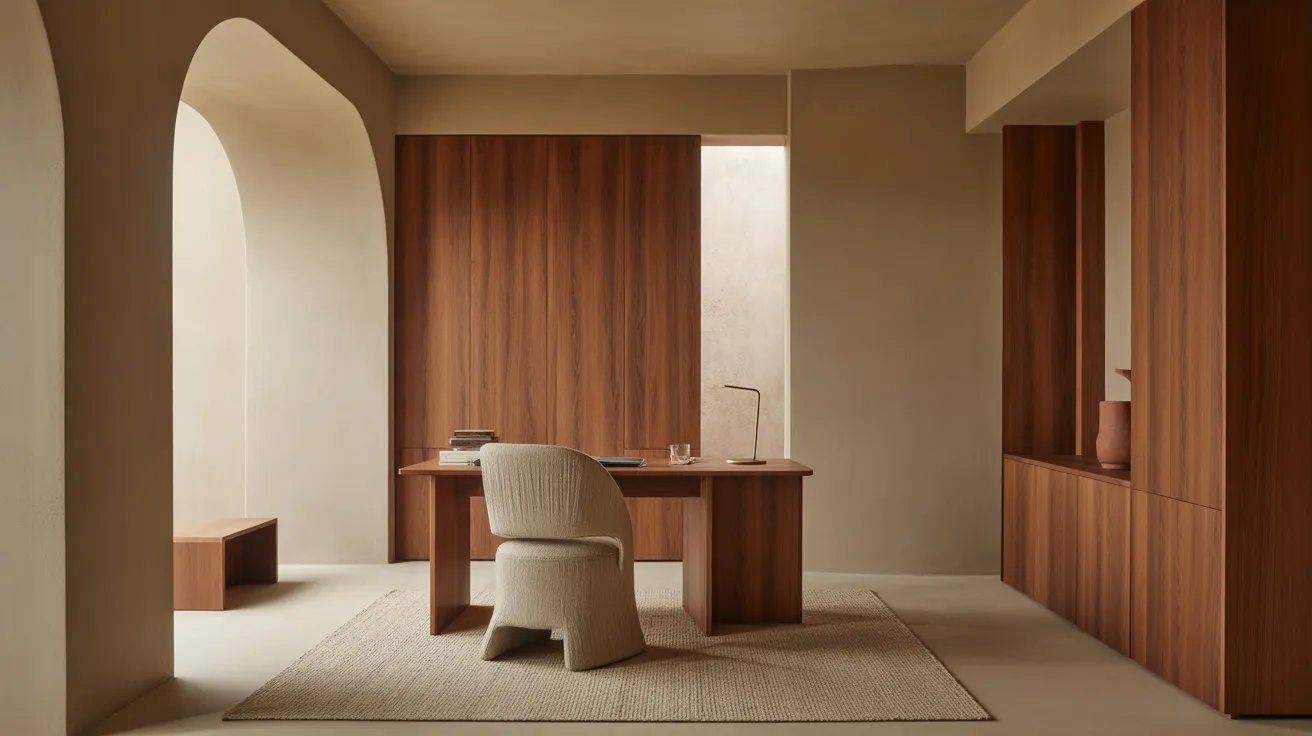
Learn how to choose an office chair you can sit in all day: seat height, depth, lumbar support, and the measurements that matter for home offices.
The right office chair fits your body, not the other way around. That means a seat height that adjusts between roughly 16 and 21 inches, a seat deep enough to support your thighs without pressing into the backs of your knees, and lumbar support that meets the natural curve of your lower back. Get those three things right and almost everything else — fabric, color, silhouette — becomes a matter of taste.
This guide walks through each measurement, what it should be for your body, and the details that separate a chair you tolerate from a chair you forget you're sitting in.
Start with fit, not looks
It's tempting to choose a chair the way you'd choose a lounge chair: by how it looks in the room. But an office chair is closer to a pair of shoes. You'll spend six to nine hours a day in it, and a half-inch of bad geometry adds up fast — in your shoulders, your lower back, your wrists.
So before you fall for a silhouette, take two measurements at home:
- Your desk height. Most desks sit at 29 to 30 inches. Note yours.
- Your seated knee height. Sit on a firm surface with feet flat and measure from the floor to the crease behind your knee. This is your ideal seat height, give or take half an inch.
If those two numbers are far apart — say, a 30-inch desk and a 16-inch knee height — you'll want a chair with a generous adjustment range, and possibly a footrest. Plenty of well-designed chairs in our office chairs collection cover the full range.
The measurements that matter
Here's what to check on any spec sheet before you buy. Every dimension below is doing a specific job.
| Feature | Target range | Why it matters |
|---|---|---|
| Seat height (adjustable) | 16–21 in. from floor | Feet flat, knees at roughly 90 degrees, thighs parallel to the floor |
| Seat depth | 16–20 in. | Leave 2–4 finger-widths between the seat edge and the back of your knees |
| Seat width | 17–20 in. | Room to shift position without armrests digging into your hips |
| Backrest height | 12–19 in. above the seat | Supports the lumbar curve; taller backs add shoulder support |
| Armrest height | 7–10 in. above the seat | Elbows at 90 degrees, shoulders relaxed, wrists level with the keyboard |
| Recline / tilt range | 95–110 degrees | Lets you change posture through the day instead of holding one position |
A note on seat depth, because it's the spec people skip: if the seat is too deep, you'll either perch forward (losing back support entirely) or press the seat edge into your calves (cutting circulation). If you're petite, look for a seat depth at the shallow end of the range, or a chair with an adjustable seat slider.
Lumbar support, explained simply
Your spine curves inward at the lower back. A good chair fills that curve so your muscles don't have to hold it all day.
There are three common approaches:
- Fixed lumbar curve. The backrest is shaped with a built-in bump. Simple and effective if the curve happens to land at your height — usually best for people of average torso length.
- Adjustable lumbar. A pad or band you can move up and down (and sometimes in and out). Worth it if you're notably tall or short, or if you share the chair with a partner.
- Dynamic or flexible backs. Mesh or sprung backs that flex with you. These feel less like "support" and more like the chair simply staying out of the way.
The test is simple: sit all the way back. If you feel gentle, even pressure at your beltline — not at your shoulder blades, not at your tailbone — the lumbar is in the right place.
Mesh, fabric, or leather-look: what actually feels good at hour six
- Mesh backs breathe. If your office runs warm or you tend to overheat in the afternoon, mesh is the practical choice. The trade-off is a more technical look.
- Upholstered fabric feels warmer and quieter visually — easier to live with in a bedroom corner or an open-plan loft where the chair is always in view. Look for tight, dense weaves that resist pilling.
- Leather-look and leather finishes wipe clean and read more formal. They can feel warm in summer, so they're best in climate-controlled rooms.
There's no wrong answer here — only a wrong answer for your room and your body temperature.
The details people skip (and regret)
Casters. Hard floors want soft-tread casters; carpet wants hard ones. Rolling resistance you fight 200 times a day is real friction.
Tilt tension. A recline that's too loose throws you backward; too stiff and you'll never use it. Look for an adjustable tension knob.
Base footprint. A five-star base typically spans 25 to 28 inches. In a tight workspace, measure the clear floor area — you want at least 36 inches behind the desk edge to roll back and stand comfortably.
Quiet height adjustment. If you share a wall or a partner's Zoom calls, a smooth gas lift matters more than you'd think.
And one adjacent detail: light. A chair can't fix a dim desk. If your workspace relies on a single overhead fixture, a well-placed task lamp earns its keep — our floor lamp buying guide covers heights and placement.
Buying an office chair online: how to get it right
You can't sit in a chair through a screen, but you can come close:
- Match the spec sheet to your two home measurements (desk height and knee height) before anything else.
- Check the adjustment ranges, not just the defaults. A chair that's perfect at its middle setting may not reach your setting.
- Read the weight rating and warranty terms. They tell you what the maker actually expects the chair to endure.
- Confirm the return window. It takes about a week of real workdays to know if a chair fits. A 30-day return policy gives you room to find out properly.
If you're outfitting a whole workspace — desk, chair, storage, lighting — it's worth browsing the full office collection so the pieces share a height logic and a material story.
Shop this guide
- Gray and White Adjustable Height Swivel Rolling Office Chair
- Beige Adjustable Height Swivel Rolling Office Chair
- Black Rosewood Adjustable Height Swivel Rolling Office Chair
The short version
Measure your desk height and your seated knee height first. Choose a chair with a 16–21 inch adjustable seat, a seat depth that leaves 2–4 finger-widths behind your knees, armrests that bring your elbows level with the desk, and lumbar support that lands at your beltline. Pick mesh if you run warm, upholstery if the chair lives in view. Then give it a full week of workdays before you decide it's the one.
Ready to sit better? Shop Office Chairs — built for long days and rooms you actually live in.
Frequently asked questions
What's the most important feature in an ergonomic office chair?
Adjustable seat height, by a wide margin. If your feet aren't flat and your knees aren't near 90 degrees, no amount of lumbar engineering will save your posture. After that: seat depth and lumbar position.
How high should my office chair be?
High enough that your feet rest flat and your thighs sit parallel to the floor — for most adults, somewhere between 16 and 21 inches. Your elbows should land at desk height with shoulders relaxed.
Do I need a headrest?
Only if you recline often for calls or reading. For upright typing work, a headrest goes mostly unused. If you do want one, make sure it's height-adjustable; a fixed headrest in the wrong spot pushes your head forward.
Is a mesh chair better than a cushioned one?
Better at staying cool, yes. Better overall depends on you: mesh suits warm rooms and people who run hot; dense foam cushioning offers a more grounded, furniture-like feel and tends to look softer in a home setting.
How long should an office chair last?
A well-made chair should give you 7 to 10 years of daily use. Gas lifts and casters are usually the first parts to tire, and both are often replaceable — check whether parts are available before you buy.
Are armrests necessary?
For full workdays, yes — they take real load off your shoulders and neck. Aim for armrests that adjust to 7–10 inches above the seat so your forearms rest level with the desk.