Materials & Quality
How to Mix High and Low: The Designer Look on a Budget
6 min read
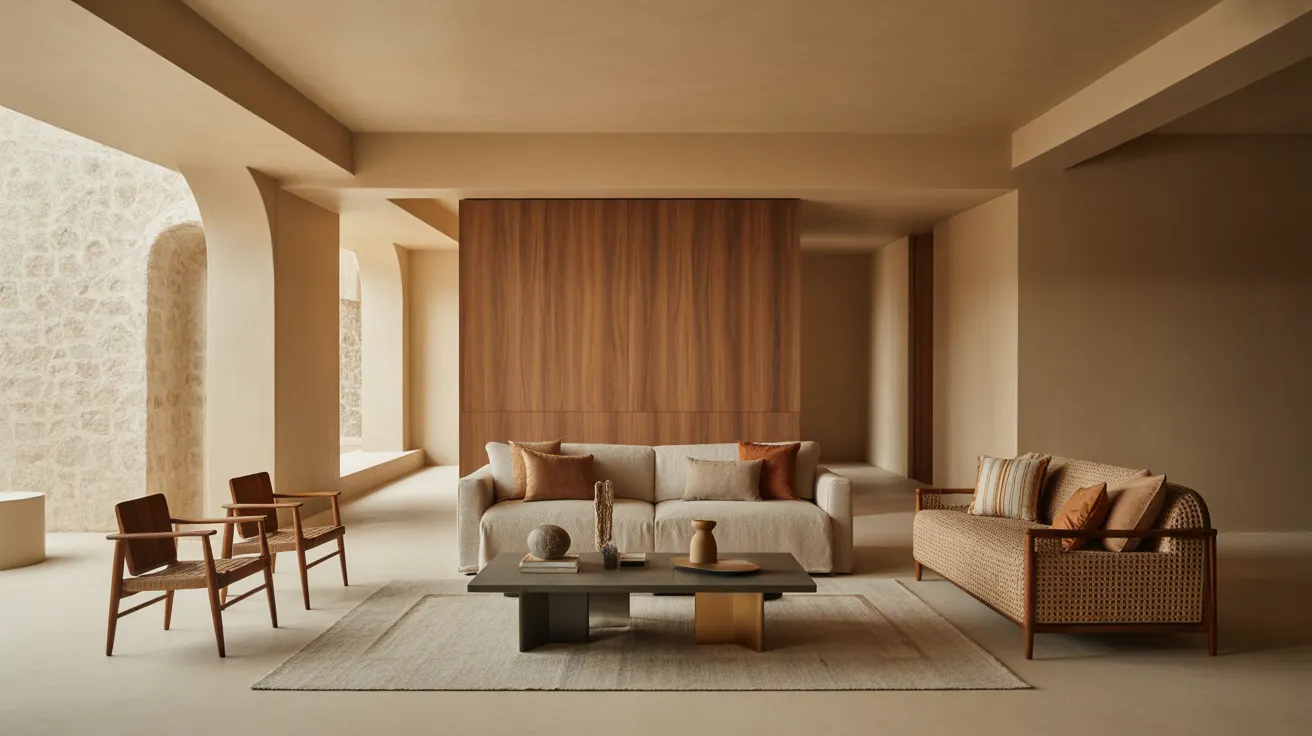
How to mix high and low for a designer look on a budget: where to splurge, where to save, and the styling rules that make a cheap room read as expensive.
The rooms in design magazines almost never cost what they look like. The trick professionals use is high-low: invest in a few pieces that carry the room, save on everything else, and style it all so the eye can't tell which is which. Done well, a thrifted basket next to an heirloom-quality sofa reads as confident and collected — not cheap. The whole game is knowing which pieces deserve the money and how to make the budget pieces hold their own. Here's the method.
Why high-low works (and "all-low" doesn't)
A room furnished entirely from the bargain aisle tends to announce itself: everything is the same lightweight scale, the same thin materials, the same just-okay finish. A room that's all-high is rare and rarely necessary. The expensive-looking rooms sit in between — a couple of anchor pieces with real presence, surrounded by humble pieces styled with care.
It works because the eye judges a room by its highest and lowest notes, not its average. One genuinely good piece raises the perceived quality of everything around it. And one or two budget pieces, styled well, cost you nothing in perceived quality — nobody can price a side table from across the room. The skill is putting the money where it shows and the savings where it doesn't.
Where to splurge: the pieces that carry the room
Spend on the things that are large, that you touch daily, and that are hard to fake. These set the room's tone:
- The sofa. The biggest object in most rooms and the one your body knows. A good frame, good cushions, and a quality weave read as expensive from across the room and last for years. If you splurge on one thing, splurge here.
- The dining table or main wood piece. Solid wood, good joinery, and honest materials look and feel different from a thin veneer. This is a slow-changing, decades-long piece.
- Lighting that's a focal point. One sculptural pendant, a real statement floor lamp, or a quality chandelier instantly elevates a room. Lighting is jewelry — a single good piece does outsized work.
- The rug, if it's the room's foundation. A large, well-made rug grounds everything and shows wear less. Going up one size in a quality rug often does more than any other single move.
You don't need all of these to be high-end — pick one or two anchors per room. For deciding the exact split room by room, the splurge-vs-save logic is worth its own read, but the short rule is: spend where it's big, daily, or structural.
Where to save: the pieces nobody can price
Save on the things that are small, decorative, or easily swapped. These are where budget shopping is invisible — or even an advantage:
- Decorative objects, vases, trays, books, bowls. No one can tell a $12 vase from a $200 one once it's styled on a shelf. The decor collection is full of pieces that punch above their price here.
- Throw pillows and throws. The fastest, cheapest way to refresh a room. Splurge on the insert quality, save on the cover.
- Side tables and accent stools. Small footprint, low scrutiny. A simple, clean-lined budget piece disappears into a well-styled room.
- Art, via prints and framing. An affordable print in a good frame, hung at the right height, beats expensive art hung badly.
- Plants and greenery. A large plant adds life and height for very little. One of the highest returns in decorating.
- Curtains, with one caveat. Save on the panels, but hang them high and wide — the placement matters far more than the price.
The styling rules that make low look high
This is the part most budget rooms skip, and it's where the designer look actually lives. Even inexpensive pieces read as expensive when you follow a few rules:
1. Commit to a tight, cohesive palette
Nothing makes a room look thrown-together like a jumble of colors and finishes. A restrained, mostly-neutral palette is the great equalizer — it makes mismatched-price pieces look intentional and collected. (Our neutral palette guide walks through building one with depth.) Cohesion costs nothing and instantly raises the room.
2. Get the scale right
The biggest tell of a budget room is wrong scale — undersized rugs, a too-small coffee table, art hung too high and too small. Larger pieces and correctly sized rugs read as confident and expensive. Measure, and when in doubt, size up.
3. Layer textures
Expensive-looking rooms are rich in texture even when the palette is quiet: linen against wood, a nubby weave against smooth ceramic, matte against a little warm-metal sheen. Texture is the depth that makes a low-cost neutral scheme look layered rather than flat.
4. Edit ruthlessly
Clutter reads as cheap; negative space reads as luxury. Fewer, better-placed objects beat a crowded surface every time. Style in odd-numbered groupings, leave breathing room, and remove anything that's just filling space.
5. Upgrade the small details
Swapping builder-grade pulls and knobs for quality hardware, replacing thin pillow inserts with full ones, and steaming wrinkles out of upholstery and curtains are tiny, cheap moves that quietly raise the whole room.
A quick high-low room formula
To put it together in one living room, on a budget:
- Anchor: one quality sofa (splurge).
- Foundation: one large, well-made rug (splurge or mid).
- Statement: one sculptural light (splurge or mid).
- Fill: budget coffee table, side tables, and storage (save).
- Layer: affordable pillows, throws, vases, art, and a large plant (save).
- Unify: a tight neutral palette, correct scale, layered texture, and a ruthless edit (free).
Two real splurges, a cohesive palette, and disciplined styling will out-class a roomful of mid-priced everything. That's the entire high-low playbook.
The short version
- High-low means a few high-impact splurges surrounded by affordable pieces, styled to look intentional.
- Splurge on big, daily, or structural pieces: sofa, main wood furniture, statement light, rug.
- Save on small, decorative, swappable pieces: vases, pillows, side tables, prints, plants.
- The designer look lives in styling, not price: tight palette, correct scale, layered texture, ruthless editing, upgraded details.
- The eye judges a room by its best notes — two real anchors beat a roomful of mid-priced everything.
A handful of well-chosen pieces does the heavy lifting. Explore the collection for the kind of quietly elevated decor that makes a budget room read as designed.
Frequently asked questions
What does mixing high and low mean in decorating?
It means combining a few expensive, high-impact pieces with affordable ones in the same room, styled so the mix reads as intentional rather than budget. The high pieces raise the room's perceived quality; the low pieces save money invisibly.
Where should I splurge and where should I save?
Splurge on large, daily-use, or structural pieces — the sofa, the main wood furniture, a statement light, the rug. Save on small, decorative, easily swapped pieces — vases, pillows, side tables, art prints, and plants. Spend where it's big or you touch it; save where no one can price it.
How do I make a cheap room look expensive?
Commit to a tight neutral palette, get the scale right (especially the rug and art), layer textures, edit out clutter, and upgrade small details like hardware and pillow inserts. These styling moves cost little and matter more than the price of individual pieces.
Can a budget room really look high-end?
Yes. The eye judges a room by its best pieces and its styling, not its average price. One or two quality anchors plus cohesive, well-scaled, well-edited styling can make an affordable room read as designed.
What's the most common mistake in budget decorating?
Wrong scale — undersized rugs, too-small coffee tables, and art hung too high and too small. The second is a cluttered, mismatched palette. Both are free to fix and undo more "expensive" furniture than people realize.