Materials & Quality
Mattress Materials and Certifications (CertiPUR-US Guide)
7 min read
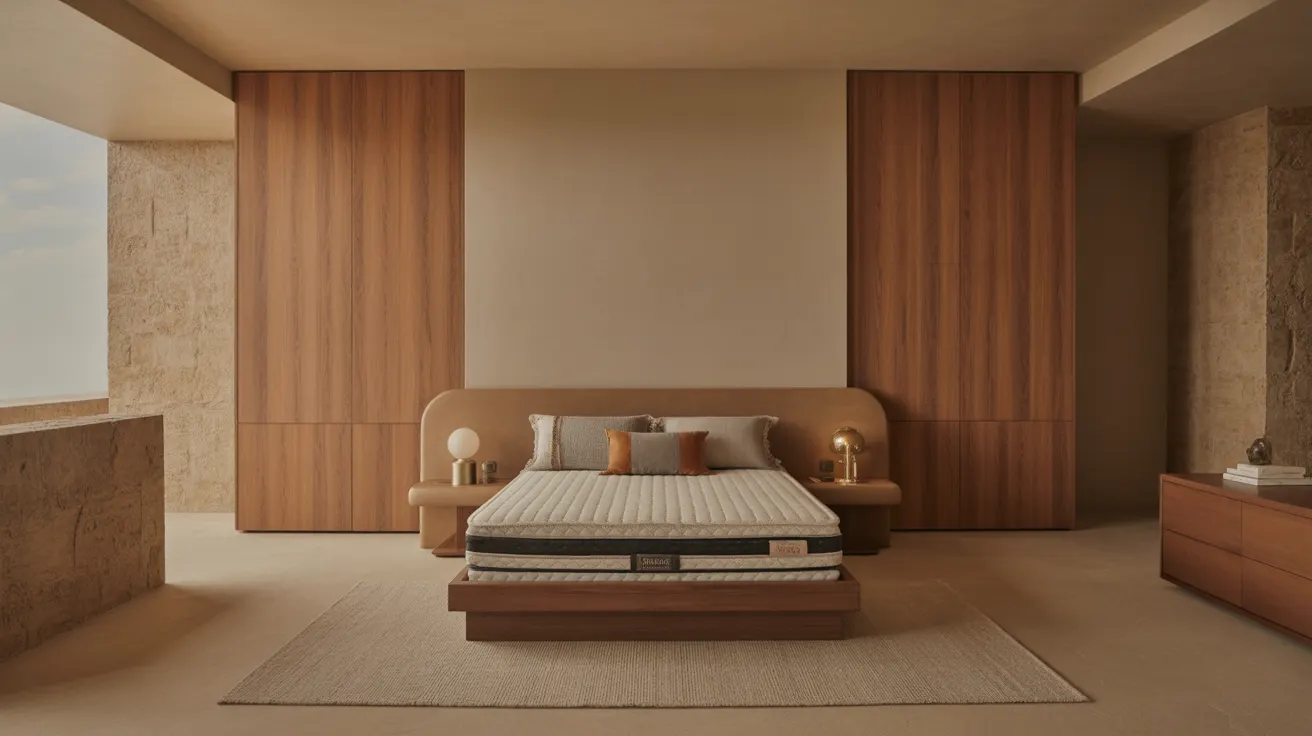
A clear guide to mattress materials, foam, latex, innerspring, hybrid, and the certifications like CertiPUR-US and OEKO-TEX that tell you what's inside.
A mattress is mostly its materials, the foams, fibers, springs, and covers stacked inside, and certifications are the third-party labels that verify what those materials are and aren't. The four main constructions are foam, latex, innerspring, and hybrid, each with a distinct feel and lifespan. The certifications that matter most, CertiPUR-US, OEKO-TEX, and a few others, confirm specifics like low emissions and the absence of certain chemicals. Understanding both helps you compare honestly instead of by marketing.
The four mattress constructions
Almost every mattress is a variation on four core types. The right one depends on how you sleep, not on which is "best."
| Type | What's inside | Feel | Strengths | Trade-offs |
|---|---|---|---|---|
| Memory foam | Layers of viscoelastic + support foam | Contouring, cradling | Pressure relief, motion isolation | Can sleep warm, less "bounce" |
| Latex | Natural or synthetic latex layers | Responsive, buoyant | Durable, cooler, springy | Heavier, often pricier |
| Innerspring | Steel coils + thin comfort layer | Firm, bouncy, airy | Cool, supportive, breathable | More motion transfer, less contouring |
| Hybrid | Coils + substantial foam/latex top | Balanced | Support of coils + comfort of foam | Heavy; price varies widely |
Memory foam molds to your body and excels at isolating movement, good for couples and side sleepers, with the classic caveat that denser foams can trap heat (gel infusions and open-cell foams help). Latex is the springy, durable alternative: it contours without the sink-in feeling and tends to sleep cooler, but it's heavier and usually costs more. Innerspring is the traditional bouncy, breathable feel, supportive and cool but with more motion transfer. Hybrids combine a coil support core with a generous foam or latex comfort layer, aiming for the best of both, which is why they've become so popular.
For a deeper walk-through of which construction suits which sleeper, our mattress buying and materials comparison is a useful companion.
The layers inside a mattress
Beyond the headline type, a mattress is a stack, and the quality of each layer matters.
- Comfort layer. The top inch or few inches you feel first, memory foam, latex, gel foam, or fiber. This sets the initial softness.
- Transition layer. A medium-firmness layer that prevents you from bottoming out on the support core.
- Support core. The foundation: high-density foam, latex, or steel coils. This carries your weight and largely determines durability and support.
- Cover. The fabric you sleep on, sometimes quilted with fiber or foam, sometimes treated for cooling or made from certified textiles.
Two specs to look for: foam density (higher-density foam in the support core lasts longer and supports better, though it adds weight) and coil type and count in innersprings and hybrids (individually wrapped "pocketed" coils isolate motion and contour better than connected coil systems).
Mattress certifications, explained
This is where shoppers most want clarity, so here's what the major labels actually verify. Certifications confirm specific, testable claims; they are not health or medical guarantees.
| Certification | What it verifies |
|---|---|
| CertiPUR-US | Polyurethane foam made without certain chemicals; low VOC emissions |
| OEKO-TEX Standard 100 | Textiles/covers tested for harmful substances |
| GREENGUARD Gold | Low chemical (VOC) emissions into indoor air |
| GOLS (Global Organic Latex Standard) | Certified organic latex content |
| GOTS (Global Organic Textile Standard) | Certified organic textile content |
CertiPUR-US in detail
CertiPUR-US is the certification you'll see most often on foam and hybrid mattresses. It applies specifically to the polyurethane foam inside and confirms the foam is made without certain substances, including specific flame retardants (such as PBDEs), certain heavy metals like lead and mercury, formaldehyde, and certain phthalates, and that it meets low-VOC limits for indoor air quality. It also confirms the foam is made without ozone depleters.
What it's worth being precise about: CertiPUR-US certifies the foam's content and emissions. It is not a claim that a mattress is "organic," "natural," or healthier in a medical sense, and it doesn't cover the cover fabric or other components. It's a credible, widely recognized signal about what's in the foam, and that's exactly how to read it, no more, no less.
The textile and organic labels
OEKO-TEX Standard 100 tests the mattress cover and textile components for a long list of harmful substances. GOTS (for textiles) and GOLS (for latex) go further by certifying organic content along with environmental and social criteria, relevant if natural and organic materials are a priority for you. GREENGUARD Gold addresses overall low emissions and is geared toward sensitive indoor environments.
These connect to the broader landscape of sustainable furniture certifications, where the same principle applies: each label proves one thing, and you match it to what you care about.
How to read a mattress spec without being misled
- Distinguish the construction from the marketing. "Cloud," "luxury," and "premium" describe nothing measurable. Foam type, density, coil count, and layer thickness do.
- Check which component a certification covers. CertiPUR-US is about the foam; OEKO-TEX is about textiles. A single label doesn't certify the whole bed.
- Treat "natural" and "organic" carefully. Unless backed by GOLS, GOTS, or a similar certification, those words are marketing. A small amount of natural material doesn't make a whole mattress organic.
- Mind the comfort core. Density and support-core quality drive how long the mattress holds up; thin comfort layers over a weak core sag early.
Because materials and certifications vary by product, confirm the specifics on each mattress's specification rather than assuming. LoftLoom shows a certification only where the supplier's own listing states it.
Matching material to how you sleep
A quick orientation, comfort is personal, so use this as a starting point:
- Side sleepers often prefer the pressure relief of memory foam or a softer hybrid for shoulders and hips.
- Back and stomach sleepers generally want firmer support, a firmer hybrid, latex, or innerspring, to keep the spine aligned.
- Hot sleepers tend to do better with latex, innerspring, or hybrids with coils for airflow, and gel or open-cell foams if choosing foam.
- Couples benefit from memory foam or pocketed-coil hybrids for motion isolation.
How much to invest is its own question; our guide on how much to spend on a mattress helps you weigh quality against budget and lifespan.
The short version
A mattress is its materials: foam, latex, innerspring, and hybrid are the four constructions, each with a distinct feel, and the support core and layer quality decide how long it lasts. Certifications verify specific claims, CertiPUR-US for foam content and emissions, OEKO-TEX for textiles, GOLS and GOTS for organic content, but none is a health guarantee. Read the construction and the certifications for exactly what they confirm, match the material to how you sleep, and check each product's specs before you buy.
Ready to compare constructions and materials? Shop Mattresses and review the materials listed on each product page; treat a certification as present only if the page names it.
Frequently asked questions
What does CertiPUR-US actually certify?
CertiPUR-US certifies that the polyurethane foam in a mattress is made without certain substances, including specific flame retardants, certain heavy metals, formaldehyde, and certain phthalates, and that it meets low-VOC emission limits. It applies to the foam specifically, not the cover or the whole mattress, and it's a content-and-emissions standard, not a health or medical guarantee.
Which mattress material lasts the longest?
Latex is generally among the most durable mattress materials, and high-density foams and quality pocketed-coil hybrids also hold up well. Durability comes mostly from the support core: denser foam, natural latex, and well-made coil systems resist sagging longer than thin, low-density comfort layers over a weak core.
Is memory foam or latex better?
Neither is universally better; they feel different. Memory foam contours closely and isolates motion well but can sleep warm. Latex is more responsive and buoyant, tends to sleep cooler, and is often more durable, but it's heavier and usually costs more. Choose based on whether you prefer a cradling or a springier feel.
Does a certification mean a mattress is non-toxic or healthier?
A certification verifies a specific, testable claim, such as foam made without certain chemicals or textiles screened for harmful substances. That's meaningful, but it isn't a blanket "non-toxic" or health guarantee. Read each label for exactly what it confirms, and match it to the materials and concerns that matter to you.
What's the difference between a hybrid and an innerspring mattress?
Both use coils, but a hybrid pairs a coil support core with a substantial foam or latex comfort layer (often several inches), while a traditional innerspring has only a thin comfort layer over the coils. Hybrids aim to combine coil support and breathability with foam-like pressure relief; innersprings feel firmer and bouncier.