Rooms & Occasions
How to Set a Table: Everyday to Dinner Party, Step by Step
6 min read
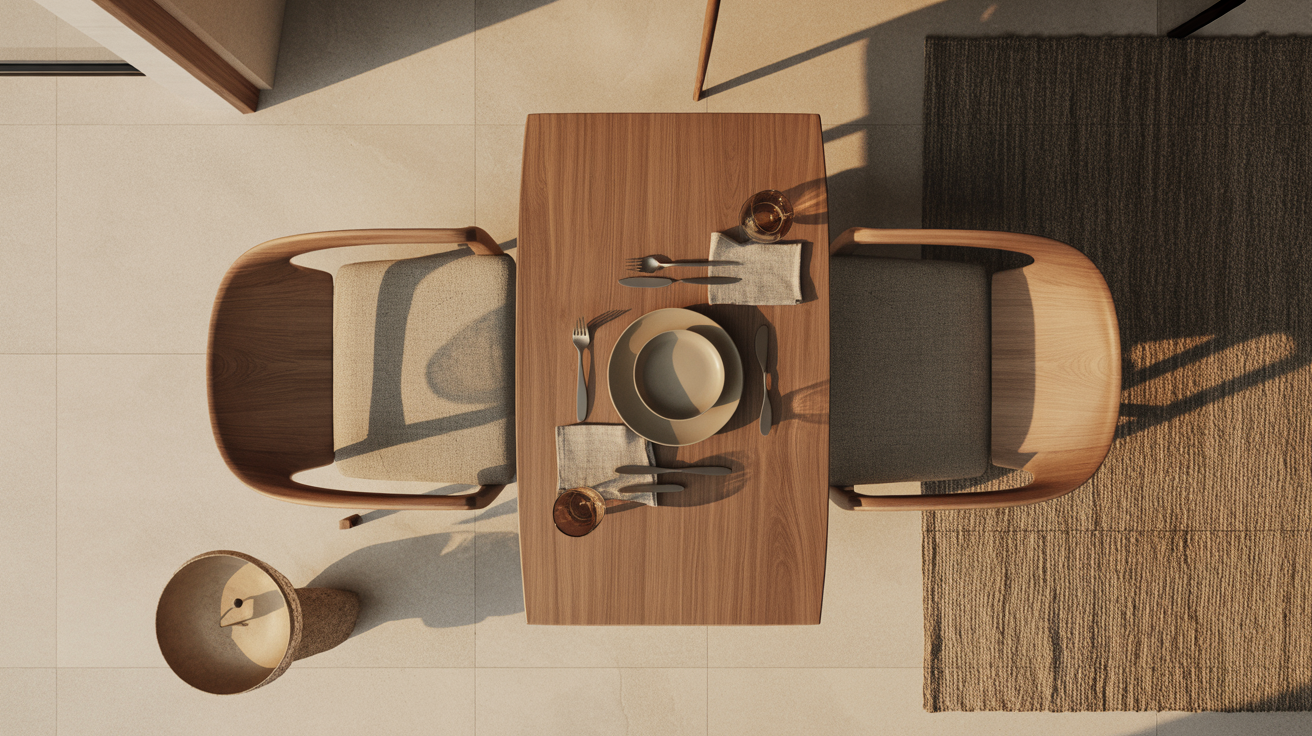
How to set a table for any occasion: where every fork, glass, and napkin goes, exact spacing in inches, and a simple formula that scales from Tuesday to a feast.
Setting a table well is mostly memory plus a few inches of spacing. Forks go left, knives and spoons go right, the knife blade faces the plate, and glasses sit above the knife. Once you know the skeleton, everything else — a casual weeknight or a six-course dinner — is just adding or subtracting pieces. Here's the whole system, from a quick Tuesday setting to a proper dinner party, with the spacing that makes it look intentional rather than improvised.
The one rule that makes it click
Almost every place setting follows the same logic: you work from the outside in. The fork you use first sits farthest from the plate; the last piece sits closest. So a salad fork goes to the left of the dinner fork because salad usually comes first. Knives and spoons do the same on the right.
Two more anchors and you'll never have to look it up again:
- The knife blade always faces the plate. It's a centuries-old courtesy and the fastest way to check a setting at a glance.
- Drinks live on the right, bread lives on the left. Glasses sit above the knife; the bread plate sits above the forks. The "b-and-d" trick helps: a lowercase b with your left hand (bread, left), a lowercase d with your right (drink, right).
Get those three things right and you've got a correct table. Everything below is detail.
The everyday setting (the one you'll use most)
A weeknight table doesn't need much, but a little structure makes even pasta feel considered.
- Dinner plate centered in front of the chair.
- Fork on the left.
- Knife on the right, blade in.
- Napkin under the fork or folded on the plate.
- Water glass above the knife.
That's it — five pieces, thirty seconds. Add a spoon to the right of the knife if there's soup or dessert. A small charger or placemat underneath grounds the setting and protects a wood table. This is the base you build everything else on.
The casual entertaining setting
When friends come over but it's not formal, you add a layer without much fuss:
- Everything from the everyday setting, plus:
- Salad fork to the left of the dinner fork.
- Bread plate above the forks, with a small butter knife laid across it.
- Wine glass to the right of (and slightly above) the water glass.
- A cloth napkin instead of paper.
This is the sweet spot for most dinners at home — enough structure to feel intentional, not so much that anyone worries about which fork to use.
The formal place setting, piece by piece
A full place setting looks complicated until you see it as the everyday version with more of the same. Here's where each piece sits and roughly how much room it wants.
| Item | Where it goes | Spacing / detail |
|---|---|---|
| Charger / service plate | Centered at the seat | About 1" from the table edge |
| Dinner plate | On the charger | Centered |
| Salad / soup plate | On the dinner plate, when served | Stacked, cleared between courses |
| Dinner fork | Immediately left of plate | Tines up |
| Salad fork | Left of dinner fork | Used first, so it's outermost |
| Dinner knife | Immediately right of plate | Blade facing the plate |
| Soup spoon | Right of the knife | Outermost on the right |
| Teaspoon | Right of the knife (inside soup spoon) | If serving coffee/tea |
| Dessert fork & spoon | Above the plate, horizontal | Fork points right, spoon points left |
| Bread plate | Above the forks | With butter knife across it |
| Water goblet | Above the knife tip | The anchor glass |
| Wine glass(es) | Right of and below the water | Red, white, then flute, outward |
| Napkin | Left of forks, or on the plate | Folded simply |
The whole grid sits inside a tidy zone: utensils about an inch from the table edge, lined up at the bottom so the setting reads as a clean baseline.
Spacing: the numbers that make it look professional
The difference between a setting that looks styled and one that looks scattered is almost entirely spacing. A few targets:
| Measurement | Target | Why it matters |
|---|---|---|
| Between place settings (elbow room) | 24" center-to-center | Guests aren't bumping arms |
| Utensil distance from table edge | About 1" | Aligned, not hanging off |
| Gap between plate and flatware | A finger's width (~½–1") | Tidy, not crowded |
| Charger from table edge | 1" | Frames the setting |
| Dessert utensils above plate | 1" gap | Clear of the plate rim |
If you remember only one number, make it 24 inches per setting. That's the comfortable elbow-to-elbow allowance, and it's also how you figure out how many people a table actually seats. A 72-inch table fits about three settings per long side comfortably. (For more on table size and the clearances around it, our dining room styling guide covers how the whole zone fits together.)
Napkins, glasses, and the small finishing touches
The bones are done; these touches make a table feel warm rather than clinical.
- Napkins: A simple flat fold or a loose roll in a ring beats anything elaborate. Casual meals, fold and tuck under the fork; dinner, lay it on the plate.
- Glasses: Set only what you'll use. An empty wine glass at a meal with no wine just looks like a prop. Polish glassware so it catches candlelight.
- Candles and centerpiece: Keep them under about 12 inches so people can see across the table. A low bowl, a few stems, or a pair of tapers is plenty.
- Serving pieces: Set serving spoons and forks near the dishes they belong to, not at individual seats.
Resist the urge to fill the table. The most common over-styling mistake is crowding the center; leave room for the food, which is the actual point.
Shop this guide
- White 4 Piece Scallop Stoneware Service For Four Dinner Set
- Matte Gold Stainless Steel Twenty Piece Hand Forged Flatware Set
- 18" Set of Four Espresso Basketweave Faux Leather Placemats
The short version
- Forks left, knives and spoons right, blade facing the plate; glasses above the knife, bread plate above the forks.
- Work from the outside in — the first utensil used sits farthest from the plate.
- Everyday setting: plate, fork, knife, napkin, water glass. Add pieces from there.
- Allow 24" per setting, keep utensils about 1" from the edge, and keep the centerpiece under 12" tall.
- A formal setting is just the everyday one with more of the same, arranged in order of use.
A table that's easy to set well starts with pieces that work together. Shop dining — tables, chairs, and the quiet tableware foundations that make every meal feel considered.
Frequently asked questions
Which side do the fork and knife go on?
Forks go on the left of the plate; knives and spoons go on the right. The knife blade always faces the plate. If you're setting multiple utensils, arrange them in the order they'll be used, working from the outside in.
Where do the glasses go in a place setting?
Glasses sit above the knife, to the upper right of the plate. The water goblet is the anchor, set just above the knife tip; wine glasses go to its right and slightly below, arranged in the order they'll be poured.
How much space should each place setting have?
About 24 inches from the center of one setting to the next. That gives each guest comfortable elbow room and is also the simplest way to calculate how many people a table seats.
What's the difference between a casual and formal table setting?
A casual setting uses one fork, one knife, a plate, a napkin, and a water glass. A formal setting adds a salad fork, soup spoon, bread plate, dessert utensils, and additional glasses. The formal version is just the casual one with more pieces in the same outside-in order.
Where does the napkin go?
Either to the left of the forks or folded on the plate. For casual meals, tucking it under the fork keeps the setting tidy; for a dinner party, placing it on the plate looks more finished.