Comparisons
Dining Room Styling: Centerpieces and Everyday Tablescapes
6 min read
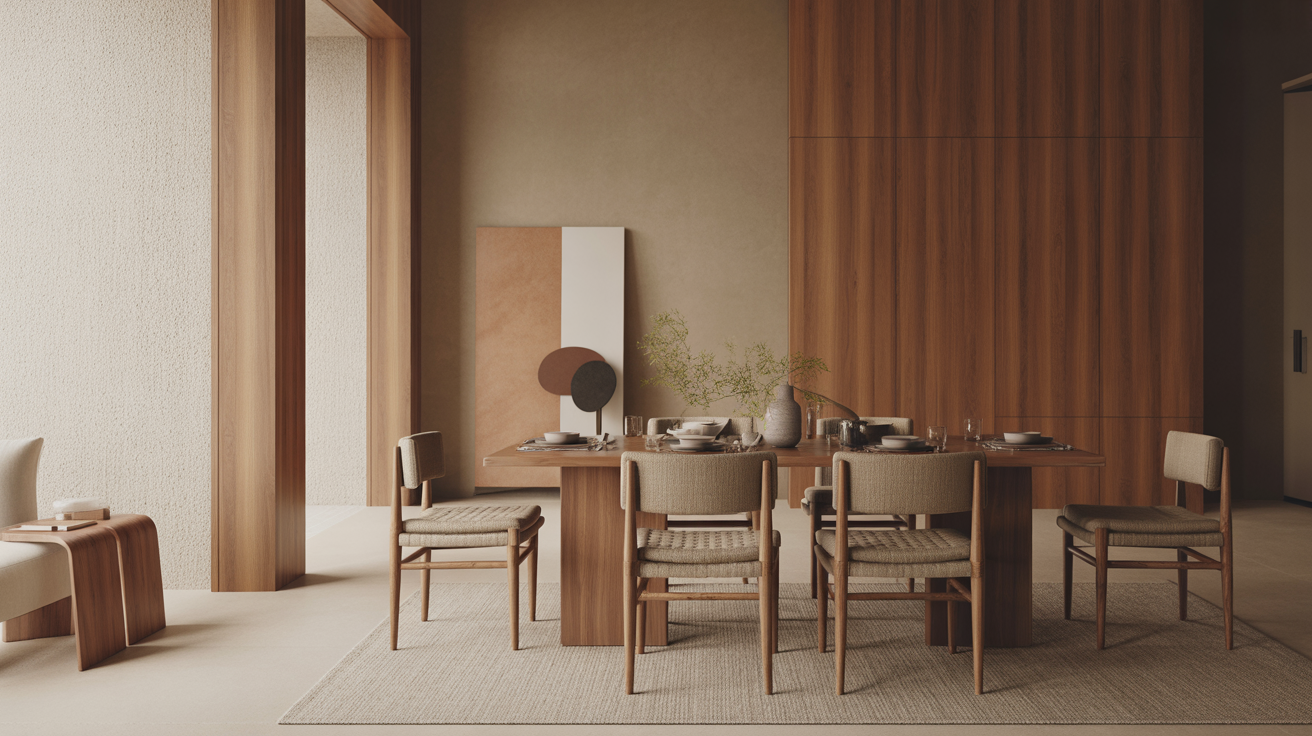
Dining room styling that works every day, not just for guests: simple centerpiece ratios, an everyday-to-dinner-party tablescape formula, and what to leave off.
Good dining room styling isn't about setting a holiday table. It's about giving the table a quiet, intentional look on a regular Tuesday — something that survives real life, gets out of the way at dinner, and scales up gracefully when people come over. The whole thing runs on a few ratios and one principle: leave room to actually eat.
Here's how to style a dining table that looks considered every day and rises to the occasion when you need it to.
The everyday centerpiece: keep it low and keep it simple
The biggest centerpiece mistake is making it a project. The everyday version should be something you can leave out, push aside in five seconds, and not water-replace every two days. Three reliable formulas:
- One sculptural object. A single vessel, bowl, or low piece of pottery in the center. Quiet, architectural, done.
- A low arrangement. Greenery or seasonal stems in a low bowl — low enough to see across. Branches and foliage last far longer than cut flowers.
- The pair. Two matching objects flanking the center — a pair of candlesticks, two small vessels — for a table that's long and would look thin with a single point.
The rule that ties these together: keep it under 12 inches tall so people can see each other across the table, and keep the center clear enough to slide a serving dish in. A centerpiece you have to move before dinner isn't styling — it's a chore.
For long rectangular tables, run a low element down the center rather than clustering everything in one spot; the proportions of the table want length, not a single dot.
Centerpiece proportions, by table
A centerpiece that's right for a round table looks lost on a long one. These are easy ratios to work from.
| Table | Centerpiece footprint | Good options |
|---|---|---|
| Round, 4-seat (40–48") | One object, ~⅓ of the table's width | Single low bowl or vessel |
| Round, 6-seat (54–60") | One larger object or a tight trio | Low arrangement, or bowl + two candles |
| Rectangular, 6-seat (60–72") | A runner-length grouping, ~⅔ of length | Low stems + pair of candlesticks |
| Rectangular, 8-seat+ (84"+) | Repeated elements down the center | Three vessels, or a low runner of greenery |
Notice the pattern: round tables want a single focal point; long tables want repetition or a line. Working with the table's shape instead of against it is what makes a centerpiece look like it belongs.
The everyday-to-dinner-party formula
A good dining setup has layers you add and subtract depending on the day. Think of it as four levels:
- The base (always on). The bare table, or a runner if the surface needs softening. A wood table can usually go bare — the grain is the styling. A glossy or stone top often looks better with a linen runner to break the reflection. (If you're still choosing a table, the surface matters here; see our guide to dining tabletop materials.)
- The everyday layer. The simple centerpiece from above, plus maybe a small tray to corral salt, pepper, and a candle. This is your default, and it should look finished on its own.
- The casual-meal layer. Placemats or napkins, simple stoneware, water glasses. Quick to set, easy to clear.
- The dinner-party layer. Cloth napkins, candlelight, layered plates, the second glass. You build up from the everyday base — you don't start from scratch.
The advantage of this approach is that your table never looks empty between meals and never feels like a production to upgrade. You're adding layers, not rebuilding.
Tablescape rules that hold up
A few principles make any table setting look intentional rather than fussy:
- Light it low and warm. Candles or a low arrangement at eye-meeting height; nothing that blocks faces. If you have a pendant overhead, hang it so the bottom sits about 30–36" above the tabletop — high enough to clear sightlines, low enough to pool warm light.
- Repeat, don't match exactly. A set of identical everything reads as a showroom. Repeat a material or a tone — three vessels in the same clay, candlesticks in the same metal — and let small variation make it feel collected.
- Odd numbers calm a grouping. Three objects almost always look more relaxed than two or four. It's a small thing your eye reads as natural.
- Leave breathing room. The most common over-styling error is filling the table. Negative space is what makes the few objects you keep look chosen. Clear two-thirds of the surface and style the middle third.
- Tie it to the room, not the season. A permanent palette of warm neutrals and natural materials means you're swapping one stem or one candle color for the season, not redecorating.
A small set of versatile decor pieces — a couple of vessels, a low bowl, a pair of candlesticks, a linen runner — covers nearly every version of the table you'll ever set.
Don't forget the chairs and the floor
Styling the table is half the room. The chairs and the floor frame it.
- Chairs should pull all the way under the table when not in use — if they don't, the room reads cluttered. Confirm seat-height-to-apron clearance when you buy.
- A rug under the dining set should be large enough that the back legs of every chair stay on it when pulled out — usually the table footprint plus about 24" on every side. A rug that's too small makes chairs catch on the edge and the whole zone look undersized.
- Mix, but anchor. Mixed dining chairs (a bench on one side, chairs on the other; or wood paired with upholstered) look intentional when they share a tone or material. One shared thread keeps the mix from reading as leftovers.
Shop this guide
- 14" White And Beige Ombre Ceramic Bud Jug Vase
- Set of 2 Black Distressed Geometric Metal Candle Holders
- Set of Two Mod Aluminum Scoop Centerpiece Bowls
The short version
- Keep the everyday centerpiece low (under 12") and simple: one object, a low arrangement, or a pair.
- Match the centerpiece to the table — a focal point for round, a line or repetition for rectangular.
- Build in layers: a finished everyday base you add napkins, candles, and place settings onto for guests.
- Light low and warm, repeat rather than match, use odd numbers, and leave two-thirds of the table clear.
- Frame the table with chairs that tuck fully under and a rug large enough to hold the back legs when chairs pull out.
A dining room that styles itself starts with the right table and chairs. Shop dining — tables, chairs, and the quiet decor that makes everyday meals feel considered.
Frequently asked questions
What should I put on my dining table every day?
Keep it simple and low: one sculptural object, a low bowl of greenery, or a small tray with a candle. The everyday centerpiece should stay under 12 inches tall, leave the center clear for serving dishes, and look finished without any effort.
How tall should a dining table centerpiece be?
Under about 12 inches so guests can see each other across the table. If you want height — tall candlesticks or branches — keep the elements thin and open so sightlines stay clear between them.
What size centerpiece for a round vs. rectangular table?
A round table wants a single focal object about a third of its width. A long rectangular table wants a runner-length grouping or repeated elements down roughly two-thirds of its length. Match the centerpiece shape to the table shape.
Do I need a runner on a wood dining table?
No — a good wood table can go bare, since the grain is the styling. A runner helps on glossy, stone, or reflective tops, or when you want to soften and warm a casual meal. It's an option, not a requirement.
How do I style a dining table without it looking cluttered?
Clear roughly two-thirds of the surface and style only the center. Use odd numbers, repeat one material or tone instead of matching everything exactly, and keep the centerpiece low. Negative space is what makes the kept objects look intentional.