Rooms & Occasions
Nursery Furniture Guide: Crib, Glider, Dresser, and Storage
7 min read
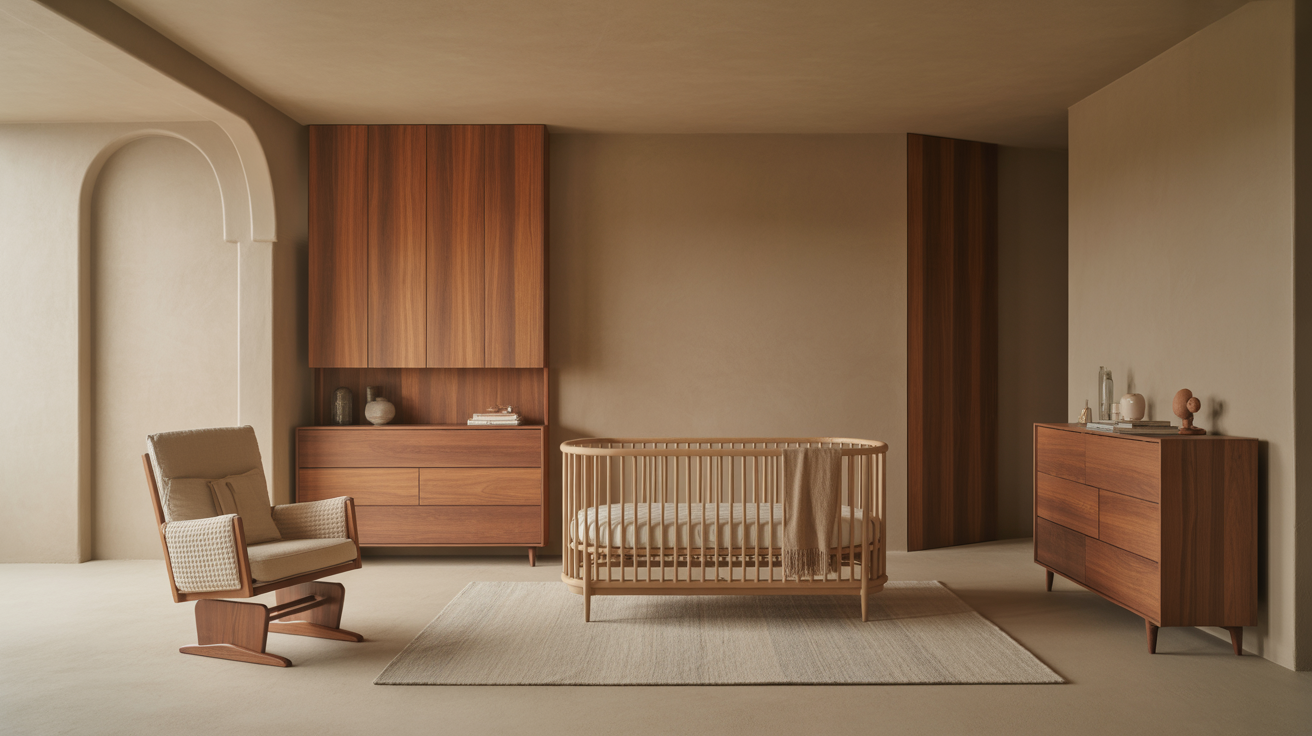
A calm, practical nursery furniture guide: what to buy, clearance numbers for crib and glider, storage that lasts past the diaper years, and a safety checklist.
A nursery needs surprisingly little: somewhere safe for the baby to sleep, somewhere comfortable for you to sit, somewhere to change a diaper, and somewhere to put everything. That's the whole list. A crib, a glider, a dresser that doubles as a changing station, and smart storage will carry you through the first couple of years. Everything else is optional. Here's how to choose those four pieces, how to lay them out so the room actually works at 3 a.m., and a brief safety note worth reading twice.
The four pieces that matter
Resist the urge to buy a matching set of eight things. Most of a nursery's furniture earns its keep only if it does real work.
- The crib. The one non-negotiable. A full-size crib that converts to a toddler bed stretches the investment for years. Look for adjustable mattress height so you can lower it as the baby starts to pull up.
- The glider or rocker. You will spend more hours here than anywhere else in the room. Comfort, back support, and a quiet, smooth motion matter far more than looks. Add an ottoman if the chair doesn't recline.
- The dresser-plus-changing-top. A sturdy dresser with a changing pad on top is the smartest piece in the room. It handles diapers now and becomes plain storage later, instead of a changing table you'll discard in 18 months. Our guide on how to choose a dresser covers drawer construction and the height that's comfortable to use.
- Storage. Baskets, bins, a small bookcase, closet organizers. Babies come with a startling volume of small objects, and open, grab-able storage beats anything you have to dig through one-handed.
A bookcase, a soft rug, blackout curtains, and a hamper round things out, but none of those are urgent. Buy the four core pieces well and add the rest as you learn what the room is missing.
Clearances and dimensions for a nursery
A nursery is usually a small room doing a lot, and you'll be moving through it half-asleep while carrying a baby. Give yourself room to do that safely. These are practical targets, not rigid rules.
| Item | Dimension / clearance | Why it matters |
|---|---|---|
| Standard full-size crib (exterior) | ~52" x 28" | Plan the footprint before buying |
| Walkway around the crib | 24–36" on accessible sides | Room to lift the baby in and out |
| Changing surface height | 36–43" (about counter height) | Saves your back over thousands of changes |
| Clearance in front of the changing dresser | 30" | Room to stand and turn with the baby |
| Glider footprint with ottoman | ~30" x 50" deep when reclined | Account for the recline, not just the seat |
| Glider rocking clearance behind | 12–18" | The chair travels as it rocks |
| Walkway to the door | 30–36" | A clear path you can carry through at night |
| Nightlight / lamp reach from the glider | within arm's length | One-handed control while feeding |
The number people forget is the recline depth on the glider. A chair that measures 32 inches deep can need 50 inches once the footrest is up. Measure the reclined depth and leave a path behind it before you decide where it goes.
How to lay out the room
Think in three stations connected by a clear path.
Sleep station. Place the crib on the quietest wall, away from the door and out of direct sun. Keep windows, cords, and shelving out of arm's reach of the crib — more on that below. Leave 24 to 36 inches on the sides you'll use to lift the baby.
Feeding station. Put the glider near a window for daytime light, with a small table or shelf within arm's reach for a lamp, water, and burp cloths. A soft, dimmable light here is worth more than an overhead fixture you'll never use at night.
Changing station. The dresser-with-pad goes on a wall where you can keep diapers, wipes, and a change of clothes within one arm's length — you'll never have both hands free. Thirty inches of standing room in front is enough.
Connect the three with a 30-to-36-inch walkway you can navigate in the dark. Then stop. An uncluttered nursery is calmer for the baby and far easier for you.
A brief safety note
This is general guidance, not medical or product-safety advice — always follow your crib and furniture manufacturer's instructions and current pediatric safety recommendations.
- Buy a crib that meets current US safety standards. Avoid older or hand-me-down cribs that may not comply, and never use one with missing parts or a drop side.
- Anchor tall furniture to the wall. Dressers and bookcases can tip when a toddler climbs or pulls drawers open. Use the included anti-tip hardware and secure them to a stud. This matters the moment a baby can stand.
- Keep the crib clear. A bare, firm mattress with a fitted sheet is the standard recommendation. Keep pillows, bumpers, and soft toys out of the sleep space.
- Mind cords and reach. Keep blind cords, lamp cords, and anything that can be pulled down out of reach of the crib and changing area.
- Re-check as the baby grows. Lower the mattress before they can pull up, and re-anchor or rearrange as they start to climb. Our childproofing and anchoring overview carries this thinking into the toddler years.
Choosing pieces that last past the diaper years
The nursery you build now should quietly become a toddler room without a second shopping trip.
- A convertible crib becomes a toddler bed, then sometimes a daybed.
- A dresser sheds its changing pad and stays a dresser for a decade.
- A glider moves to a reading corner or another room.
- Open storage that holds diapers now holds books and toys later.
That continuity is the whole argument for spending on the dresser and crib and going light everywhere else. For evolving the space as the child grows, see our companion piece on kids' room furniture that grows with them.
A quick worked example
Picture a 10-by-11-foot nursery. Crib centered on the inside wall, away from the window, with 30 inches of clear floor on the approach side. Dresser-with-changing-pad on the adjacent wall, anchored to a stud, with diapers at arm's reach and 30 inches of standing room in front. Glider angled into the corner by the window, ottoman in front, a small shelf beside it for a dimmable lamp — and 16 inches behind for the recline. A low bookcase and two baskets handle overflow. One 32-inch path loops from the door past all three stations. Calm, navigable in the dark, and ready to grow.
The short version
- Four pieces do the work: crib, glider, dresser-with-changing-pad, and storage. Skip the matching eight-piece set.
- Choose a convertible crib and a real dresser so the room grows into a toddler room on its own.
- Leave 24–36 inches around the crib, 30 inches in front of the changing dresser, and a 30–36 inch path to the door.
- Account for the glider's reclined depth (often ~50 inches) and leave 12–18 inches behind it to rock.
- Safety first: a compliant crib, a bare sleep space, and tall furniture anchored to the wall. Follow manufacturer and pediatric guidance.
Building a nursery that grows with your family? Shop Bedroom for convertible cribs, dressers that double as changing stations, and storage sized for a calm, uncluttered room.
Frequently asked questions
What furniture do I actually need for a nursery?
Four pieces carry the load: a crib (a convertible one lasts longest), a comfortable glider or rocker, a sturdy dresser with a changing pad on top, and storage like baskets or a small bookcase. A rug, curtains, and a hamper are nice but not urgent.
How much space do I need around a crib?
Leave 24 to 36 inches of clear floor on the sides you'll use to lift the baby in and out, and keep a 30-to-36-inch walkway to the door so you can carry the baby through safely at night. A standard full-size crib is roughly 52 by 28 inches.
Do I need a separate changing table?
Usually not. A sturdy dresser at about counter height (36 to 43 inches) with a secured changing pad on top does the same job and stays useful as plain storage long after the diaper years. It's the more economical and longer-lasting choice.
How do I keep nursery furniture safe?
Use a crib that meets current US safety standards, keep the sleep space bare except for a firm mattress and fitted sheet, and anchor tall dressers and bookcases to the wall with anti-tip hardware secured to a stud. Re-check as the baby learns to stand and climb. Always follow manufacturer instructions and current pediatric guidance.
Where should the crib go in the room?
On the quietest wall, away from the door and out of direct sunlight, and clear of windows, blind cords, and anything within arm's reach that could be pulled into the crib. Leave room on the accessible sides to lift the baby comfortably.
How can I make a small nursery work?
Stick to the four core pieces, choose a dresser that doubles as the changing station, go vertical with a bookcase and wall storage, and keep one clear path connecting the sleep, feeding, and changing stations. Less furniture makes a small nursery calmer and safer.