Rooms & Occasions
The Mudroom / Drop Zone: Organizing the Entry You Actually Use
7 min read
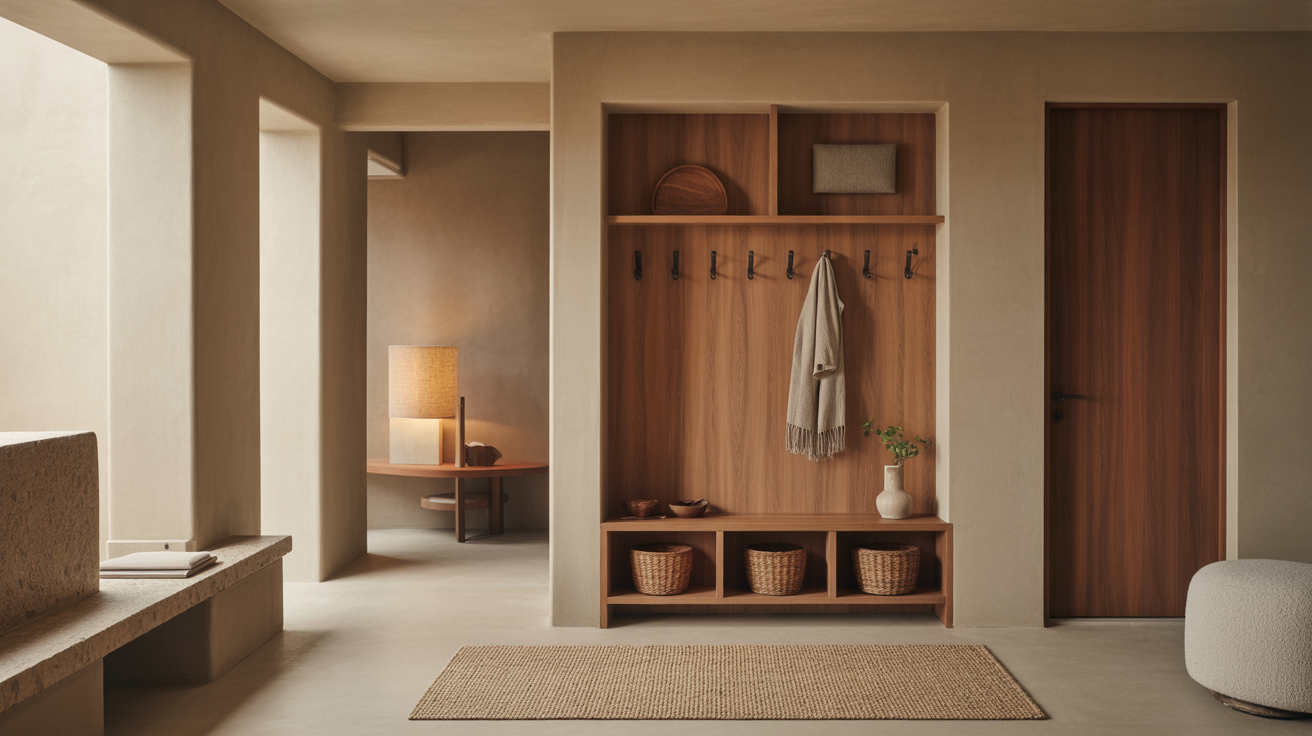
Build a mudroom or drop zone that actually works: the five stations every entry needs, real bench and hook heights, and a plan for homes with no mudroom at all.
Most homes have a formal front entry and a real one — the door everyone actually uses, usually off the garage, kitchen, or side. That real entry is where shoes pile up, bags get dropped, and mail accumulates, and it's the one worth organizing. A working mudroom or drop zone gives every incoming object a home the second you walk in: a place for shoes, a hook for bags and coats, a surface for keys and mail, and a bin for the daily chaos. Build those few stations and the clutter stops at the door instead of spreading through the house.
Design for the door you actually use
Before buying anything, watch your own traffic for a day. Where do you really come in? What's in your hands? Where does it land now? The pile that forms on its own is telling you exactly where the drop zone needs to be — you're not fighting the habit, you're giving it a system.
The formal front entry can stay pretty and minimal. The working entry — the garage door, the kitchen side door, the back hall — is where the storage goes. Putting the system where the habit already lives is the difference between a mudroom that works and a beautiful one nobody uses. If your real entry is also your front door, our entryway styling guide covers making it look good while it works.
The five stations every drop zone needs
A complete drop zone handles five things. Get all five and nothing has an excuse to land on the floor or counter.
- A seat for shoes-on, shoes-off. A bench is the anchor. Nobody balances on one foot to remove boots — give them somewhere to sit, with shoe storage underneath.
- Hooks for the daily stuff. Coats, bags, leashes, hats. Hooks beat a closet for everyday items because they take one motion. A closet is where things go to be forgotten; a hook is where they go to be grabbed tomorrow.
- A surface for keys, mail, and pockets. A small shelf, the top of a cabinet, or a wall ledge. Keys need one consistent home or they're lost daily.
- A bin or basket for the chaos. Returns, library books, things heading back to the car, mail to deal with later. One catch-all bin keeps the surface clear.
- A spot for the seasonal and the bulky. Umbrellas, sports gear, off-season coats, the dog's things. Cubbies, baskets, or a tall cabinet keep these from sprawling.
Five stations, and the entry runs itself. Miss the bench and shoes scatter; miss the key surface and you're searching every morning.
Heights and dimensions that make it work
A drop zone has to fit real bodies doing real motions — sitting to pull off boots, hanging a coat without ducking. These numbers keep it comfortable.
| Element | Target dimension | Why |
|---|---|---|
| Bench seat height | 17–19" | Comfortable to sit and put on shoes |
| Bench depth | 14–18" | Supports you without blocking the walkway |
| Adult coat hooks | 60–66" from floor | Coats hang clear of the floor |
| Kids' hooks | 36–48" from floor | Reachable so kids actually use them |
| Shelf above hooks (for hats, baskets) | ~72" | Out of the way, holds backstock |
| Key/mail ledge height | ~40–48" | Easy to reach walking in |
| Walkway clear in front of bench | 36" | Room to sit and for others to pass |
| Cubby/locker width per person | ~12–15" | One zone per family member |
Two numbers do the heavy lifting: a 17-to-19-inch bench you can actually sit on, and hooks at 60 to 66 inches for adults (with a lower row at 36 to 48 inches if kids use the space). Hooks too high mean coats land on the bench instead.
Give everyone a zone
In a busy household, the reason a mudroom fails is shared, undefined storage — everyone's stuff in one pile. The fix is assigning each person a vertical zone: their own hook, their own cubby or basket, their own shoe spot, stacked in a 12-to-15-inch-wide column. Kids especially keep a system that's clearly theirs and at their height.
A simple labeled column per person turns "put your stuff away" into something a five-year-old can do. It also makes the morning scramble faster, because everyone knows exactly where their things live.
When you don't have a mudroom
Most homes don't have a dedicated mudroom, and you don't need one. A drop zone is a function, not a room, and you can build it against any wall by the door you use.
- A slim entry bench with shoe storage plus a row of wall hooks above it creates a full drop zone against three feet of wall.
- A hall tree combines bench, hooks, and a shelf in one freestanding piece for tight spaces.
- A narrow console with baskets underneath works where there's no room for a bench — keys and mail on top, shoes and bags in the baskets.
- A wall of hooks plus a tray on a shelf is the minimum viable drop zone for an apartment, and it works.
- The back of a closet door or the side of a cabinet holds hooks and a shoe rack where wall space is scarce.
Even three feet of wall by the right door beats a dedicated mudroom by the wrong one. Browse benches, hooks, and entry storage in the living category and build the zone where your traffic already lands.
A quick worked example
A family of four comes in through the garage into a back hall with one open wall. A 16-inch-deep bench at 18 inches high runs along it, with cubbies underneath — one per person, 14 inches each, for shoes. Above the bench, two rows of hooks: adults at 64 inches, kids at 42, one column per person. A narrow shelf at 46 inches holds a tray for keys and a basket for outgoing mail and returns. A tall basket at the end takes umbrellas and the dog's leash. Thirty-six inches of clear floor in front to sit and pass. Everyone has a zone, everything has a home, and the kitchen counter stays clear.
Shop this guide
- Brown Suede Shoe Storage Bench with Drawer
- Four Hook 28" White Solid Wood Wall Mount Coat Rack
- 23" Classic White Floating Wall Shelf
The short version
- Organize the door you actually use — the garage, kitchen, or side entry — not the formal front door.
- Build five stations: a bench, hooks, a key-and-mail surface, a catch-all bin, and a spot for seasonal gear.
- Set the bench at 17–19 inches, adult hooks at 60–66 inches, kids' hooks at 36–48 inches, with 36 inches clear in front.
- Give each family member their own vertical zone so the system runs itself.
- No mudroom needed: a bench with hooks, a hall tree, or a console with baskets makes a drop zone against any wall.
Ready to stop the pile at the door? Shop Living for entry benches, hooks, hall trees, and storage to build a drop zone that fits the way your household actually comes home.
Frequently asked questions
What's the difference between a mudroom and a drop zone?
A mudroom is a dedicated room near the entry for shoes, coats, and gear. A drop zone is the same function in less space — a bench, hooks, and a surface against any wall by the door you actually use. You don't need a whole room; you need the five stations a drop zone provides.
What does a good mudroom or drop zone need?
Five stations: a bench for putting shoes on and off (with shoe storage under it), hooks for coats and bags, a surface for keys and mail, a catch-all bin for daily chaos, and a spot for seasonal or bulky items. Get all five and nothing has an excuse to pile on the floor.
How high should mudroom hooks and benches be?
Set adult coat hooks 60 to 66 inches from the floor and a lower row at 36 to 48 inches for kids. A bench should be 17 to 19 inches high and 14 to 18 inches deep, with 36 inches of clear floor in front to sit down and let others pass.
How do I create a drop zone without a mudroom?
Build it against any wall by the door you use most: a slim bench with shoe storage and hooks above, a freestanding hall tree, or a narrow console with baskets underneath. Even three feet of wall handles the essentials. A wall of hooks and a tray is the minimum that works in an apartment.
Where should I put a drop zone?
At the door your household actually uses — usually off the garage, kitchen, or a side hall, not the formal front door. Watch where shoes and bags already pile up for a day; that spot is telling you where the system needs to go. Put the storage where the habit already lives.
How do I keep a busy family's mudroom organized?
Give each person their own vertical zone — one hook, one cubby or basket, one shoe spot — in a 12-to-15-inch-wide column, with kids' hooks at their height. Labeled, clearly-owned zones turn "put your things away" into something everyone, including small kids, can actually do.