Sizing Guides
Outdoor Furniture Materials: What Actually Survives Sun, Rain, and Winters
6 min read
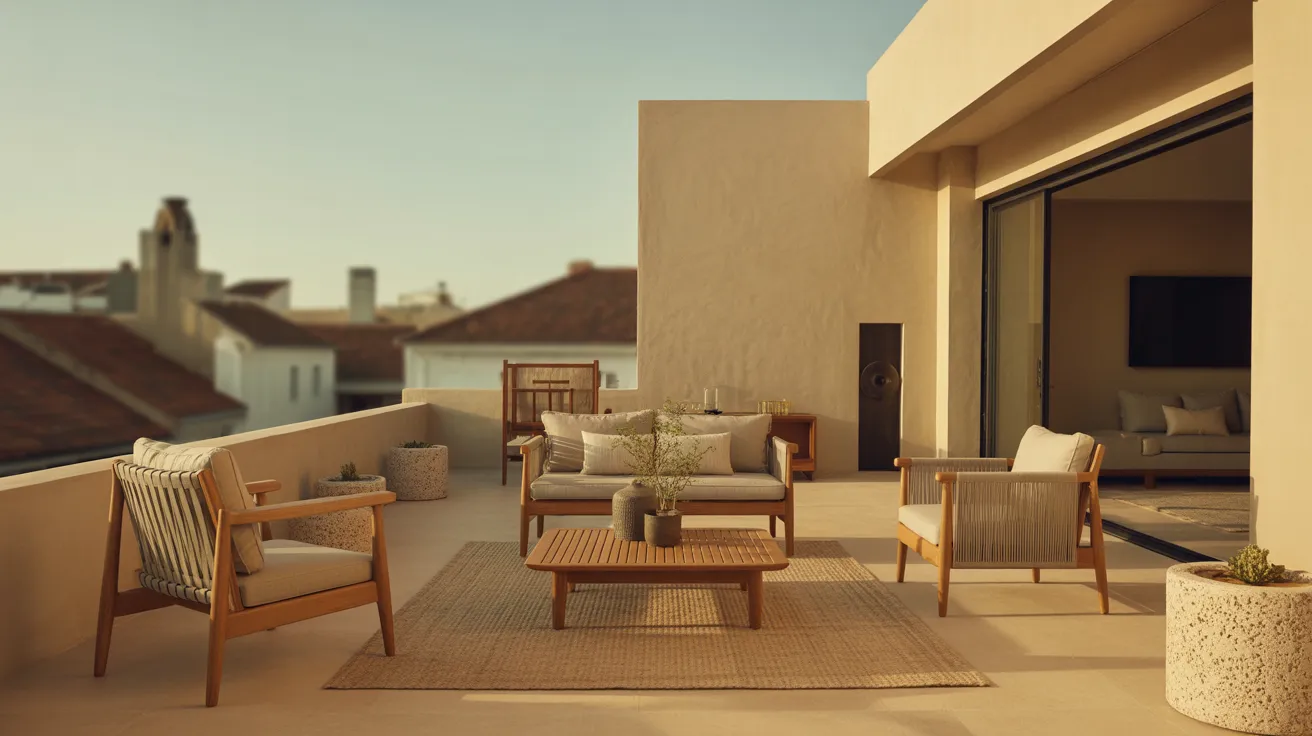
Compare the best outdoor furniture materials — teak, aluminum, steel, wicker, and more — and learn what actually survives sun, rain, and winter.
If you want outdoor furniture that lasts, three materials lead the field: teak, powder-coated aluminum, and synthetic (HDPE) resin wicker. Teak handles decades of weather and silvers gracefully; aluminum won't rust and shrugs off coastal air; quality resin wicker keeps its color through years of UV exposure. Everything else involves a trade-off — and the right trade-off depends on your climate, your storage situation, and how much maintenance you're honestly willing to do.
Here's the full comparison, material by material.
The quick comparison
| Material | Weather resistance | Weight | Upkeep | Best for |
|---|---|---|---|---|
| Teak | Excellent — sun, rain, freeze | Heavy | Low (oil only if you want to keep the honey tone) | Long-term investment pieces, all climates |
| Acacia / eucalyptus | Good with sealing | Medium | Annual sealing or oiling | Warm, drier climates; covered patios |
| Powder-coated aluminum | Excellent — rustproof | Light | Very low — rinse and go | Coastal air, balconies, rearrangers |
| Steel (powder-coated) | Good until coating chips | Heavy | Watch for scratches; touch up promptly | Windy sites that need anchored weight |
| Wrought iron | Good, but rust-prone if neglected | Very heavy | Periodic rust checks and repainting | Classic looks, permanent placement |
| HDPE / resin wicker | Excellent — UV-stable | Light–medium | Very low | All-weather lounges and sectionals |
| Natural wicker / rattan | Poor outdoors | Light | High — keep dry | Covered porches and sunrooms only |
| Concrete / stone | Excellent surface; sealing helps | Very heavy | Reseal periodically; watch freeze-thaw | Tables and benches that never move |
Wood: teak and its more affordable cousins
Teak is the benchmark for a reason. Its natural oils resist water, insects, and rot without any coating, and a well-built teak piece can serve 20 years or more outdoors. Left alone, it weathers from honey-gold to a soft silver-gray — a look many people choose teak for. If you prefer the original tone, a once-a-year teak oiling keeps it warm.
Acacia and eucalyptus offer wood's warmth at a gentler price. They're dense and handsome, but they lack teak's oil content, so they depend on you: seal them annually, keep them off wet ground, and store or cover them through hard winters. On a covered patio in a mild climate, they're a smart buy. Exposed on a Midwest deck through freeze-thaw cycles, they'll age in dog years.
A quick structural note for any wood: check the joinery. Mortise-and-tenon joints and solid slats outlast stapled or thinly bolted construction regardless of species.
Metal: aluminum vs. steel vs. iron
This is the most common head-to-head, so let's settle it plainly.
Powder-coated aluminum is the most forgiving outdoor metal. It cannot rust — aluminum doesn't contain iron — which makes it the default choice near saltwater and in rainy climates. It's light enough to rearrange for company, and modern frames are far sturdier than the flimsy tube chairs the material once implied. The one caveat: in very windy, exposed spots, lightweight pieces can travel. Look for thicker-gauge frames, or simply choose heavier material where wind is real.
Powder-coated steel is stronger and heavier — it stays put. The vulnerability is the coating: once a scratch reaches bare steel, rust starts, and it works from the inside out. Inspect seasonally and touch up chips early.
Wrought iron is the heaviest of all, with a classic garden character. It demands the most vigilance against rust but rewards it with decades of service. Best for furniture that has a permanent home.
Teak vs. aluminum, the short answer: choose teak for warmth, mass, and a piece you'll keep for decades; choose aluminum for zero-rust, low-effort, easy-to-move furniture — especially on balconies and near the coast. Many of the best outdoor setups mix both: an aluminum frame sofa beside a teak coffee table.
Wicker: the synthetic-vs-natural divide
The word "wicker" describes a weave, not a material — and the material is everything.
Synthetic resin wicker (look for HDPE, high-density polyethylene) is made for weather. Good HDPE weave is dyed through the material, so color survives years of UV; cheap PVC-based weave fades and cracks, often within two or three seasons. If a listing doesn't name the resin, ask.
Natural wicker and rattan are beautiful and genuinely unsuitable for open weather. Rain swells and weakens the fibers; sun makes them brittle. Reserve them for covered porches, sunrooms, and indoor corners that want an outdoor mood.
Cushions and fabric: where most "weatherproof" sets fail
Frames usually outlive their cushions. Two specs separate fabric that lasts from fabric that disappoints:
- Solution-dyed acrylic is the gold standard for outdoor fabric — color runs through the fiber, so it resists fading even in full sun, and it dries fast.
- Quick-dry foam cores let cushions drain instead of holding water like a sponge.
Even the best cushions appreciate help: shake off standing water, and bring them in (or into a deck box) for the off-season. Our season-by-season outdoor care guide covers the full routine in about ten minutes per season.
Match the material to your climate
- Hot, high-UV (Southwest, Southern California). UV is the enemy. HDPE wicker, aluminum, and solution-dyed fabrics hold up; cheap plastics and unsealed woods fade and crack. Shade helps everything.
- Coastal and salt air. Aluminum and teak, full stop. Salt accelerates rust in any steel or iron piece, even coated ones.
- Rainy (Pacific Northwest). Drainage matters as much as material: open weaves, quick-dry cushions, breathable covers. Teak and aluminum excel; acacia needs diligent sealing.
- Freeze-thaw winters (Northeast, Midwest). Water that enters a material and freezes will widen every crack. Teak, aluminum, and HDPE tolerate it; store or cover wood and cushions, and empty any piece that can trap water before the first freeze.
- Balconies and small terraces. Weight and scale dominate: aluminum and resin pieces are easy to move, and they won't strain weight limits.
If you're designing the whole space rather than replacing one chair, it's worth reading our patio layout guide — material choices land differently once you've zoned the space for dining, lounging, and quiet corners.
Shop this guide
- Blue And Brown Solid Wood Director Chair
- Set of Two Dark Gray Aluminum Outdoor Stacking Dining Chairs
- Set of 2 Taupe Faux Rattan Outdoor Stacking Arm Chairs
The short version
For furniture that genuinely survives the outdoors, start with teak, powder-coated aluminum, or HDPE resin wicker, and insist on solution-dyed acrylic for cushions. Match the material to your climate — aluminum near salt air, teak for the long haul, everything covered or stored through freeze-thaw winters. Buy the honest trade-off, not the optimistic one, and your terrace will still look composed five summers from now.
Build a terrace that lasts — Shop Outdoor for pieces made to live outside.
Frequently asked questions
What is the most weather-resistant outdoor furniture material?
Teak, powder-coated aluminum, and HDPE resin wicker are the three most reliable across sun, rain, and freezing winters. Among metals, aluminum wins because it cannot rust.
Is teak better than aluminum for outdoor furniture?
Neither is better universally. Teak offers unmatched longevity and a natural look that improves with age, but it's heavy and costs more. Aluminum is rustproof, light, and nearly maintenance-free. Coastal or balcony settings favor aluminum; forever-home patios justify teak.
Can outdoor furniture stay outside all winter?
Teak, aluminum, and HDPE frames generally can, though covers extend their life. Cushions, natural wood, and anything that traps water should be stored. The freeze-thaw cycle, not the cold itself, is what destroys furniture.
What outdoor furniture doesn't fade in the sun?
Look for solution-dyed acrylic fabrics and through-dyed HDPE weave — in both, the color is part of the material rather than a surface layer. Powder-coated metals also hold color well; cheap PVC wicker and surface-printed fabrics fade fastest.
How long should outdoor furniture last?
Quality teak: 20+ years. Powder-coated aluminum and good HDPE wicker: 10–15. Sealed acacia with consistent care: 5–10. Cushions: typically 3–5 years of full-time exposure, longer with off-season storage.