Rooms & Occasions
Patio Layout for Entertaining: Zones, Flow, and Furniture
7 min read
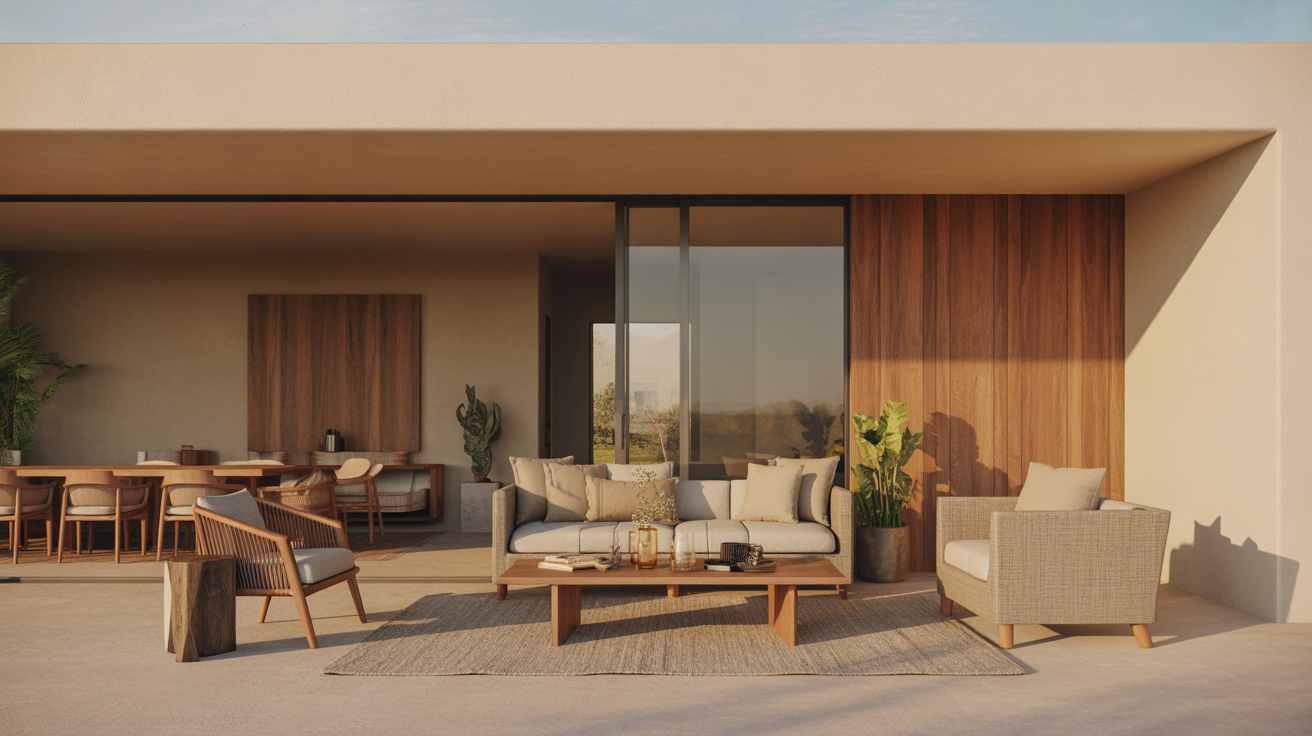
Patio layout ideas for entertaining: how to zone an outdoor space for dining and lounging, clearance numbers, traffic flow, and furniture that works hard.
A patio that hosts well is laid out the same way a good open-plan room is: in zones, with clear paths between them. You want a place to eat, a place to lounge, and enough room to move between the two without anyone climbing over a chair. Plan the zones first, protect the walkways, and choose furniture that pulls double duty, and even a modest patio becomes a genuine outdoor living space for entertaining. Here's how to lay it out.
Think in zones, not in furniture
The instinct is to push everything against the edges of the patio and leave a big empty middle — which gives you a lot of perimeter seating and nowhere that feels like a room. Instead, divide the space into purposeful zones, exactly as you would inside.
The four zones most entertaining patios want, in rough priority order:
- Dining. A table and chairs, ideally near the kitchen door so serving is easy.
- Lounging. Soft seating — a loveseat, lounge chairs, a sofa — arranged around a coffee or fire feature for conversation.
- A focal point. A fire pit, a view, or a planted corner that anchors the lounge and gives the eye somewhere to land.
- Circulation. The paths connecting it all, plus the entry from the house and out to the yard.
You won't always fit all four. On a small patio, pick the two that matter most — usually dining plus a small lounge — and let the rest go. A patio that does two things well beats one crammed with four.
The clearances that keep it comfortable
Outdoor layouts fail for the same reason indoor ones do: not enough room to move. These are the numbers to design around.
| Where | Clearance | Why |
|---|---|---|
| Main walkway / traffic path | 36" | People pass without turning sideways |
| Around a dining table (all sides) | 36" | Chairs pull out, guests walk behind |
| Between lounge seating and a coffee/fire table | 14–18" | Reach a drink without barking a shin |
| In front of a sofa or chair (legroom) | 24"+ | Comfortable stretch-out room |
| Around a fire pit (seating to flame) | At least 24–36" | Safe and comfortable; check the unit's rating |
| Doorway / threshold from the house | Keep fully clear | The most-used path of all |
The two to anchor on: 36 inches for any walkway and 36 inches around the dining table. Tape them out on the patio before you buy anything — it's striking how much smaller the usable area is than the total square footage suggests.
Map the flow before you place a single chair
How people move through a patio determines whether a party feels easy or bottlenecked. Three paths to plan:
- House to patio. The door from the kitchen or living room is the busiest route — keep it clear and put the dining zone within easy reach of it so carrying food out isn't a trek.
- Patio to yard. If steps lead down to grass, keep that path open so kids, pets, and guests can flow through without weaving between chairs.
- Zone to zone. Leave a clear 36-inch lane between the dining and lounge areas so people can drift between eating and relaxing.
The goal is a loop, not a maze. Guests should be able to circle from the door to the food to the seating and back without backtracking past the same chair twice.
Right-size the furniture to the patio
Outdoor furniture runs large, and a set that looks fine in a showroom can swallow a real patio. Scale to the space:
- Small patio (under ~120 sq ft): A bistro table for two or four, plus a pair of lounge chairs or a small bench. Skip the full sectional.
- Medium patio (~120–250 sq ft): A dining set for four to six and a small lounge grouping — a loveseat with two chairs around a coffee table.
- Large patio / deck (250+ sq ft): Room for a full dining set, a sectional or sofa-and-chairs lounge, and a focal feature like a fire pit, each in its own zone.
Furniture that earns its keep on an entertaining patio:
- Modular outdoor seating reconfigures from everyday lounging to party seating in minutes.
- A storage bench or deck box doubles as a seat and stows cushions out of the weather.
- Nesting or stacking side tables give everyone a place to set a drink, then store small.
- Stackable extra chairs appear when the guest list grows and disappear after.
Whatever you choose, the materials have to live outside. Powder-coated aluminum, teak, and quality all-weather wicker hold up; cushions should be performance fabric. The full breakdown is in our guide to outdoor furniture materials, and keeping it all looking new is covered in the outdoor furniture care guide.
Define the zones so they read as rooms
Once the furniture is placed, a few moves make the zones feel intentional rather than like furniture parked on concrete:
- Ground each zone with an outdoor rug. A weather-rated rug under the lounge and another under the dining set visually separates them and warms the hard floor. It's the single clearest way to say "this is a room."
- Anchor the lounge with a focal point. A fire pit, a low coffee table, or a planted corner gives the seating a reason to face inward. Conversation grouping beats a row of chairs against a wall.
- Use plants as soft walls. Tall planters or a row of pots can divide zones, add privacy, and screen a less attractive edge without building anything.
- Layer warm lighting throughout. String lights overhead, lanterns on the table, a glow near the lounge. Lighting is what keeps the patio alive after sunset, which is prime entertaining time.
Practical entertaining touches
A few details separate a patio that looks ready from one that actually hosts well:
- A serving station. A console, bar cart, or sideboard near the dining zone saves endless kitchen trips. Even a small surface helps.
- Shade for the day, light for the night. An umbrella or pergola for midday meals, warm lighting for the evening — patios get used at both ends of the day.
- Room for the unplanned. Leave a little open floor for a folding chair, a cooler, or kids underfoot. A fully furnished patio with no slack feels tight the moment guests arrive.
Shop this guide
- Six Piece Outdoor Brown Metal Sofa Seating Group
- 50000 BTU 22" Brown Wicker Propane Rectangular Fire Pit
- 8' Aqua Polyester Square Market Patio Umbrella
The short version
- Lay the patio out in zones — dining, lounging, a focal point, and walkways — instead of pushing everything to the edges.
- Anchor on 36" walkways and 36" around the dining table; tape it out before buying.
- Plan the flow: house-to-patio, patio-to-yard, and zone-to-zone, aiming for a loop, not a maze.
- Scale furniture to the patio and lean on modular, storage, and stackable pieces that pull double duty.
- Ground each zone with an outdoor rug, anchor the lounge with a focal point, and layer in warm lighting.
A patio laid out for entertaining is an outdoor room, not a furniture storefront. Shop outdoor — modular seating, dining sets, and weather-ready pieces that turn a patio into a place to gather.
Frequently asked questions
How do I lay out a patio for entertaining?
Divide it into zones — dining, lounging, a focal point, and clear walkways — just as you would an indoor open-plan room. Place dining near the house door, anchor the lounge around a coffee table or fire pit, and keep 36-inch paths between zones so people can move freely.
How much clearance do I need around patio furniture?
Keep main walkways and the space around a dining table at 36 inches, leave 24 inches or more of legroom in front of lounge seating, and allow 14 to 18 inches between a sofa and its coffee table. Tape the clearances out before buying to see the real usable area.
How do I arrange furniture on a small patio?
Pick the two zones that matter most — usually a small dining set plus a pair of lounge chairs — and skip the rest. Choose compact, dual-purpose pieces like a bistro set, a storage bench, and nesting side tables, and protect at least one clear walkway.
What furniture works best for an entertaining patio?
Modular outdoor seating that reconfigures for parties, a storage bench that doubles as a seat, nesting or stacking side tables for drinks, and a few stackable extra chairs. Pair weatherproof frames (aluminum, teak, resin wicker) with performance-fabric cushions.
How do I make a patio usable at night?
Layer warm lighting: string lights overhead, lanterns on tables, and a glow near the lounge or a fire pit. Evening is prime entertaining time, and soft, warm light is what turns a daytime patio into a place people want to linger after dark.