Trends
Quiet Luxury at Home: Understated, Not Flashy
8 min read
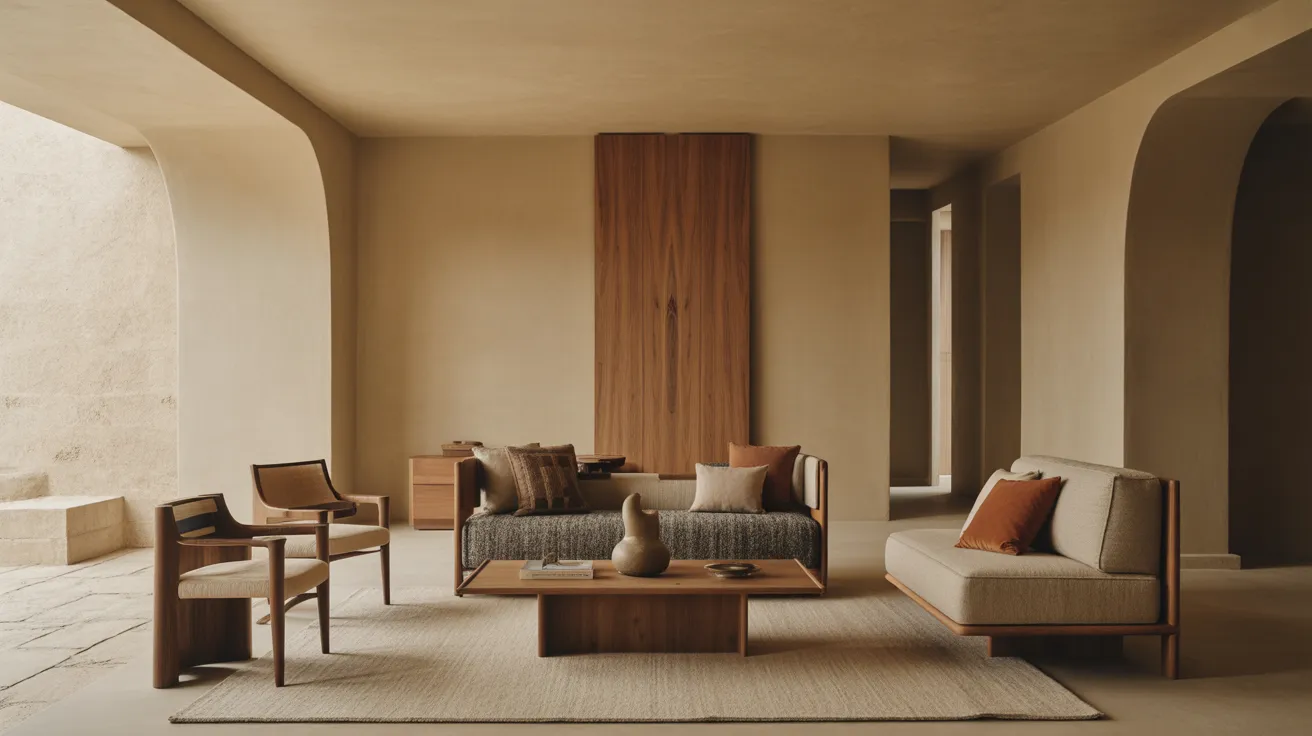
Quiet luxury at home, explained: the materials, proportions, and restraint behind understated interiors — plus practical, room-by-room ways to get the look.
Quiet luxury at home is the practice of building a refined room out of material quality, generous proportion, and restraint — rather than logos, gloss, or obvious price signals. The idea borrows from a movement in fashion, where the most expensive wardrobe is often the one with nothing to prove. Translated to interiors, it means a room that rewards a second look: the heft of a stone tabletop, the drape of a heavy linen curtain, the way light settles into a wool rug. Nothing shouts. Everything holds up.
What Quiet Luxury Actually Means
Loud luxury announces itself. It relies on shine, scale, and recognizable references — the marble that photographs well, the metallic that catches the eye, the silhouette you've seen in a hundred showrooms. It works in a glance and tires by the second week.
Quiet luxury does the opposite. It withholds the obvious in favor of the felt. You notice the room is good before you can say why, and the reasons are tactile: the seams are straight, the wood has depth, the upholstery sits without a wrinkle. A useful way to think about it — quiet luxury is what's left when you remove everything that exists to be noticed and keep only what exists to be lived with.
It is not the same as minimalism, though they're often confused. A quiet luxury room can be layered, even full. The discipline isn't about quantity; it's about quality and coherence. One excellent thing, chosen well, earns its place. Ten adequate things competing for attention do not.
The Principles Behind the Look
1. Material before motif
In a quiet luxury home, the material is the decoration. A solid oak table needs no inlay. A boucle or wool chair needs no contrast piping. Choose surfaces with natural depth — stone with visible veining, wood with honest grain, weighty woven textiles — and let them carry the room. Pattern and ornament become optional, not load-bearing.
2. Proportion you can feel
Scale is the quiet hallmark most people miss. Refined rooms tend to commit: a sofa that fills its wall rather than floating timidly in the middle, a rug large enough to reach under the front legs of every seat, art hung at a confident size. Underscaled furniture reads as hesitant no matter how nice the piece is. When in doubt, go one size up and pull pieces slightly apart for breathing room.
3. A disciplined, tonal palette
Quiet luxury lives in a narrow band of warm neutrals — ivory, oatmeal, taupe, greige, soft brown, charcoal — with contrast kept low and undertones kept warm. The interest comes from variation within the family, not from bright accents. For the mechanics of building depth from a restrained color story, our neutral palette guide covers how to keep it from going flat.
4. Craft over branding
The mark of quality here is invisible: tight joinery, an even hem, a finish that's consistent edge to edge, hardware that operates smoothly. Quiet luxury never trades on a visible name or an obvious "designer" silhouette. If a piece needs a label to communicate its value, it isn't speaking the language.
5. Restraint as a finishing move
The last step is usually subtraction. A quiet luxury room is edited — surfaces left partly bare, one strong object rather than three competing ones, negative space treated as a material in its own right. Restraint is what lets the good pieces register. Crowd them and they cancel each other out.
The Quiet Luxury Palette and Materials
The palette works in tonal layers. The proportions matter more than the exact shades — roughly 70 percent foundation neutrals, 20 percent mid-tones, 10 percent grounding darks and metals used sparingly.
| Role | Tones | Materials | Where it works |
|---|---|---|---|
| Foundation (~70%) | Ivory, oatmeal, greige, soft taupe | Matte plaster, heavy linen, wool, cotton | Walls, sofas, curtains, bedding |
| Mid-layer (~20%) | Mushroom, camel, stone gray, soft brown | Boucle, leather, slubbed weaves, wool rugs | Accent chairs, rugs, throws, cushions |
| Grounding darks | Walnut, espresso, charcoal | Solid wood, natural stone, blackened metal | Tables, shelving, lamp bases, frames |
| Quiet metals | Aged brass, bronze, brushed nickel | Unlacquered or matte finishes | Hardware, lighting, small accents |
A note on metals: quiet luxury favors warm, low-shine finishes that age gracefully — unlacquered brass that develops a patina, brushed bronze, oil-rubbed surfaces. High-polish chrome and bright gold read as loud almost by default. Used sparingly, a warm metal becomes jewelry for the room rather than the headline.
Quiet Luxury, Room by Room
Living room
Start with one substantial, beautifully made sofa in a tactile neutral, and resist the urge to surround it with matching pieces. Pair it with a single excellent chair, a generous wool rug, and a stone or solid-wood coffee table with real weight to it. Keep the surfaces calm: a stack of books, one ceramic object, a candle. The discipline here is leaving room around things. For more on building a restrained, warm scheme that doesn't feel cold, our warm minimalism guide is the closest cousin to this style. Our living room collection is built for exactly this kind of editing — pieces with enough presence to stand alone.
Dining room
A single solid-wood or stone table, sized to fill its space with about 36 inches of clearance to walk behind seated guests, anchors the whole room. Choose chairs for comfort and material honesty over decorative flourish — upholstered seats in a flat, durable weave, or solid wood with a hand-finished feel. One sculptural pendant hung 30 to 36 inches above the tabletop pools light where people gather. Skip the centerpiece arms race; a low bowl or a few stems is plenty.
Bedroom
The bedroom is where quiet luxury pays off fastest, because calm is the entire point. Layer bedding in two or three tones of one family — heavy linen sheets, a textured coverlet, one folded throw. Keep the bed low and the headboard simple but substantial. Replace overhead glare with two warm bedside lamps, and clear the nightstands to a lamp, a book, and a single object. The empty surface is the luxury.
Entry and small spaces
An entry needs three honest things: somewhere to set keys, somewhere to hang a coat, and a mirror to double the light. Choose one well-made console or bench instead of a cluttered landing zone. In small spaces, restraint reads as luxury more clearly than anywhere else — there's nowhere for excess to hide.
How to Get the Look Without Overspending
Quiet luxury is more about judgment than budget. A few moves get you most of the way there.
- Edit before you buy. Clear surfaces and remove anything that exists only to fill space. Most rooms look more expensive after subtraction alone.
- Upgrade what you touch. Heavy linen curtains, a good wool throw, a solid-feeling drawer pull. The hand registers quality faster than the eye.
- Swap shine for matte. Trade glossy and high-chrome finishes for matte and warm-metal ones. This single shift quiets a room dramatically.
- Buy one anchor per room, slowly. A sofa, a rug, or a dining table chosen deliberately sets the tone for everything around it. Smaller pieces from a considered decor selection can follow over months.
- Mind the proportions you already own. Pulling a too-small rug or art piece up to the right scale often costs little and changes everything.
Where Quiet Luxury Goes Wrong
Three failure modes account for most disappointing attempts. The cold museum: restraint without warmth, so the room reads expensive but uninviting — fix it with tactile materials and warm light. The matchy set: sofa, loveseat, and chair in identical fabric, which reads as a showroom display rather than a curated home — vary the materials while keeping tones related. The quiet-but-cheap trap: neutral and minimal, but built from thin, glossy, lightweight pieces that give the game away on touch — quiet luxury depends on real material quality, so spend on fewer, better things.
Shop this guide
- 31" White and Brown Boucle and Solid Wood Arm Chair
- Beige Linen Blend Upholstered Arched Full Headboard With Nail Head Trim
- 48" Natural Solid Wood Dining Table
The Short Version
- Quiet luxury = material quality + proportion + restraint, with no reliance on logos or gloss.
- Let the material be the decoration; skip motif and ornament where good surfaces can carry the room.
- Stay in a warm, low-contrast neutral palette and find interest in texture, not bright color.
- Choose matte and warm-metal finishes over high shine.
- Buy fewer, better, well-proportioned pieces — one anchor per room, chosen slowly.
When you're ready to find those anchor pieces, explore the collection — it's built on the same principle this whole style rests on: fewer things, made well, that quietly hold up.
Frequently asked questions
What is quiet luxury in interior design?
Quiet luxury is a design approach built on material quality, generous proportion, and restraint instead of logos, gloss, or obvious price signals. The goal is a refined room that reveals its quality gradually — through texture, craft, and coherence rather than at a glance.
How is quiet luxury different from minimalism?
Minimalism is mainly about reducing the number of things in a room. Quiet luxury is about the quality and coherence of whatever is there, and it can be layered or even full. They overlap in their discipline, but quiet luxury leans harder on tactile materials and warmth.
What colors work for a quiet luxury home?
A narrow, warm-neutral band: ivory, oatmeal, greige, taupe, soft brown, and charcoal, with low contrast. Interest comes from variation within the palette rather than bright accent colors, with warm metals used sparingly.
Does quiet luxury have to be expensive?
No. It depends more on judgment than budget — editing, proportion, matte over shine, and a few well-chosen pieces. The strategy is to spend on fewer, better things and let restraint do the rest.
What materials say quiet luxury?
Solid wood with honest grain, natural stone with visible veining, heavy linen, wool, boucle, leather, and warm low-shine metals like aged brass or bronze. The common thread is depth and weight you can feel.