Trends
Mid-Century Modern, Made Warm: The Complete Guide
9 min read
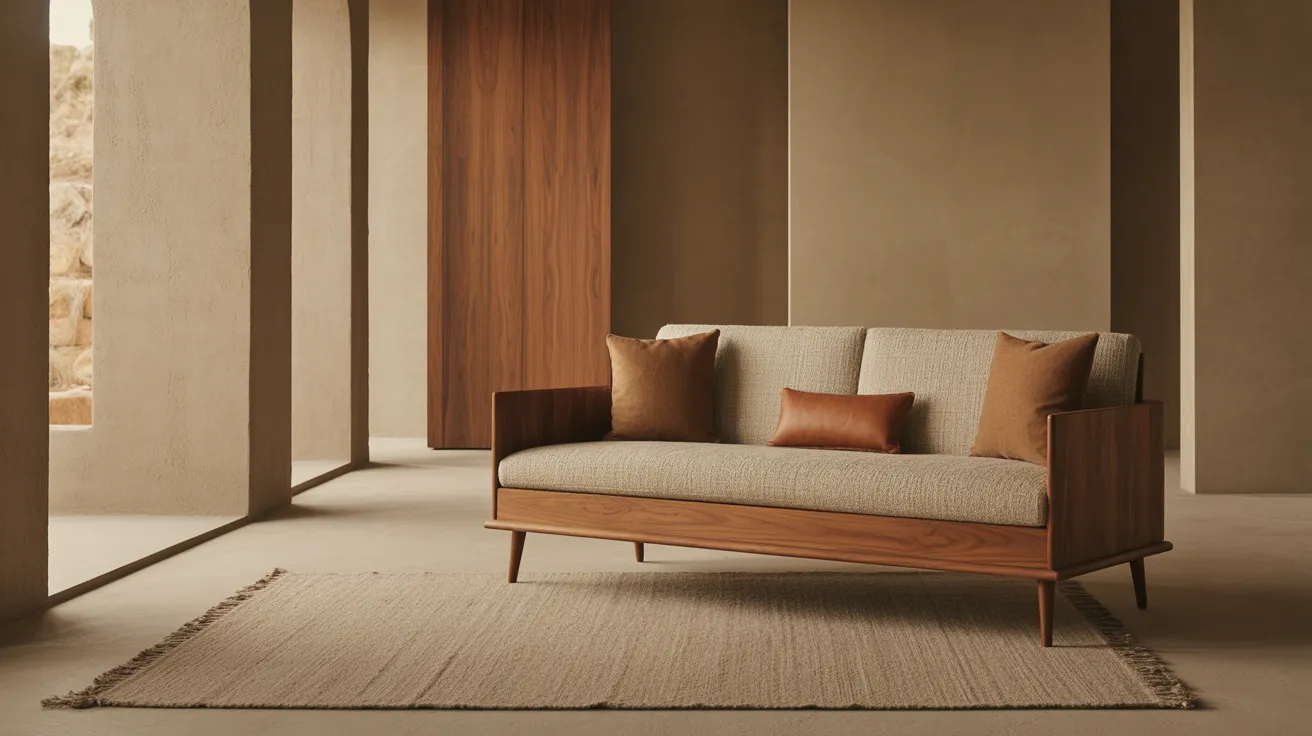
Mid-century modern, made warm: what MCM is, its core principles, the palette and materials, and how to soften the look so it feels cozy and current — not a showroom.
Mid-century modern (MCM) is the design style that emerged from roughly the 1940s through the 1960s: clean lines, organic curves, tapered legs, functional forms, and a love of natural wood. It never really left, but the version worth living in today is the warm one — MCM softened with texture, earthier color, and a lighter hand, so it feels like a home rather than a furniture museum or a set from a period drama. This guide covers what mid-century modern actually is, and how to keep its bones while warming everything around them.
The good news for anyone who loves the look: the warmth is mostly in how you style it, not in buying different furniture.
What Mid-Century Modern Is
Mid-century modern came out of a postwar moment that prized optimism, function, and new manufacturing techniques. Designers stripped away ornament for honest form: a chair should look like what it is and do its job beautifully. The result is a recognizable set of traits — clean, uncluttered lines; gentle organic curves alongside the straight ones; tapered, often splayed legs that make furniture appear to float; warm wood, especially walnut and teak; and function with no fuss.
It's one of the most enduring styles in modern design because those forms are genuinely good — a well-proportioned MCM sofa or sideboard looks as right today as it did sixty years ago. The problem is that MCM, styled coldly, reads as a showroom or a stage set: all hard surfaces, retro colors, and gleaming wood with nothing soft to land on.
What "made warm" means
Warming mid-century modern doesn't mean abandoning it. It means keeping the iconic silhouettes — tapered legs, clean lines, walnut — and surrounding them with what classic MCM photos lacked: soft texture, earthier muted color, layered lighting, and a lived-in looseness. You're not changing the furniture; you're changing the temperature around it. It's a close relative of warm minimalism — the same instinct toward warmth and restraint, applied to a specific furniture vocabulary.
MCM grew from Bauhaus and International Style ideals of function and simplicity, then warmed up in the hands of Scandinavian and American designers who loved organic curves and natural wood. The "made warm" interpretation pulls those organic, Scandinavian threads forward — the teak, the wool, the soft daylight — and dials back the harder, atomic-age side that can feel costumey today. The aim is timeless, not themed.
The Five Principles of Warm Mid-Century Modern
1. Keep the iconic forms
The silhouettes are the soul of the style, so don't dilute them. Tapered, splayed legs. Low, clean-lined sofas. Organic curves in chairs and tables. Sideboards with simple fronts. These shapes carry the MCM identity; everything else here is about surrounding them with warmth. One or two genuine statement silhouettes anchor a room.
2. Lead with warm wood — and mix the tones
Wood is the warmest thing about mid-century modern, and walnut and teak are its signatures. Lean into them. And resist the urge to match every wood piece exactly: a room of identical walnut reads flat and showroom-like. Mixing a warm walnut sideboard with a lighter oak chair and a darker accent creates the depth that makes a room feel collected. Our guide on how to mix wood tones covers the dominant-tone rule that keeps this looking intentional.
3. Trade retro brights for muted, earthy color
This is the single biggest warming move. Classic MCM palettes lean on saturated retro colors — bright teal, orange, mustard, avocado. Used at full strength, they're the thing that makes a room read as a costume. Warm MCM keeps the same color families but mutes them: rust instead of orange, ochre instead of bright mustard, olive instead of avocado, terracotta and warm browns instead of primary brights. The personality stays; the loudness goes.
4. Soften with texture and layered lighting
The fastest way to make MCM cozy is to add the soft surfaces vintage photos skipped. A wool or shag rug under the sofa. Boucle, sheepskin, or nubby wool on a hard-lined chair. Linen curtains. Throws and textured cushions. Then light it warmly — globe pendants, arc floor lamps, and table lamps at 2700K, on dimmers, never relying on a single overhead. Layered warm light is what turns a graphic mid-century room into an inviting one. The texture pairing guide shows how to combine these surfaces.
5. Loosen the styling
Period-perfect MCM can feel staged. Warm it by relaxing the styling: don't buy a matched set, mix in a non-MCM piece or two (a chunky modern sofa, a contemporary art print), let plants and books and a slightly imperfect arrangement in. The goal is a room that looks gathered over time, not delivered in one shipment. A little looseness is what reads as "home."
The Warm Mid-Century Palette and Materials
The warm MCM palette keeps mid-century's color identity but pulls every hue toward the muted, earthy end. Roughly 70 percent warm neutrals and wood, 20 percent muted retro accent color, 10 percent darker anchors.
| Role | Tones | Materials | Where it works |
|---|---|---|---|
| Foundation (~70%) | Warm white, cream, oatmeal, warm gray, walnut, teak | Wood, wool, linen, cotton | Walls, large upholstery, wood furniture, floors |
| Muted accents (~20%) | Rust, ochre, olive, mustard-brown, muted teal, terracotta | Velvet, wool, ceramic, leather | Accent chairs, cushions, throws, art, decor |
| Grounding darks | Dark walnut, espresso, charcoal, black | Wood, leather, blackened metal | Sideboards, legs, lamp bases, frames |
| Warm metal | Aged brass, bronze, gold tones | Metal | Lighting, hardware, legs, accents |
Two materials deserve special attention. Leather — especially warm cognac and tan — is one of the most authentically mid-century materials there is, and it ages beautifully; a single leather lounge chair warms a whole MCM room. Walnut, with its rich grain and warm tone, is the wood that most says "mid-century"; if you invest in one wood piece, this is the one.
Warm Mid-Century Modern, Room by Room
Living room
Anchor with a clean-lined, low sofa and one iconic silhouette — a lounge chair with tapered legs, ideally in leather or warm wool. Add a walnut or teak coffee table and sideboard, mixing the wood tones rather than matching. Ground everything on a wool or shag rug, layer in textured cushions and a throw, and light it with a globe pendant or arc lamp plus a warm table lamp. Pull in one muted accent color through art or a single chair. The living room collection is a natural starting point for these anchor pieces.
Bedroom
A low platform bed with tapered legs and a simple headboard sets the MCM tone. Keep bedding in warm neutrals with one muted accent (a rust or olive throw), walnut nightstands, two warm-toned table lamps, and a wool rug underfoot. The bedroom is where "made warm" matters most — a coldly styled MCM bedroom feels like a hotel, so lean hard on soft texture and warm light.
Dining room
A round or oval table with a pedestal or splayed legs, surrounded by molded or wood-framed chairs (mixing two styles is welcome). Warm wood is the star; soften it with upholstered seats, a textured runner, and a sculptural pendant — a globe or warm-metal fixture — hung 30 to 36 inches above the table.
Entry and small spaces
A slim walnut console with tapered legs, a round mirror kept subtle rather than kitschy, and one warm lamp. Small spaces suit MCM well because the raised legs make rooms feel open and airy. Keep accessories muted and few.
How to Get the Look Without a Vintage Hunt (or a Showroom Bill)
You don't need original vintage pieces or a head-to-toe set to land warm MCM.
- Buy one or two iconic silhouettes, not a full suite. A single tapered-leg sofa or a leather lounge chair establishes the style. Surrounding it with non-MCM pieces actually warms the look.
- Mute the color you already have. Swap bright retro accents for their earthy cousins — rust for orange, ochre for bright mustard. This is the cheapest, highest-impact warming move.
- Add the soft layer vintage rooms skipped. A wool or shag rug, textured cushions, a throw, and linen curtains transform a hard-lined room. Start here if the room feels cold.
- Warm the wood, and mix it. One walnut anchor piece plus your existing lighter woods, handled with the dominant-tone rule, reads richer than a matched set. See how to mix wood tones.
- Fix the lighting. Swap to 2700K bulbs, add a globe or arc lamp, put fixtures on dimmers. Warm, layered light does more for MCM coziness than any single purchase.
A few muted, tactile pieces from a considered decor collection — ceramics, a throw, cushions in earthy tones — complete the warming layer without overbuying.
Where Warm MCM Goes Wrong
A handful of mistakes turn warm MCM back into a costume. The full matched set: identical wood bought together reads as showroom — fix it by mixing periods and wood tones. The retro-bright overload: saturated orange, teal, and avocado at full strength tips into theme — fix it by muting every accent. The soft-less room: all wood and clean lines with nothing tactile feels like a stage — fix it with rugs, texture, and throws. The single cold overhead: harsh, flat light drains the warmth — fix it with layered, dimmable, 2700K light.
Walnut pieces with clean mid-century lines work best mixed with what you already own, not bought as a matched set.
Shop this guide
- Modern Mid Century Walnut Nightstand with Single Drawer
- Mid Century Walnut and Gray Faux Marble Two Drawer Nightstand
- 63" Walnut Rectangular Dining Table
The Short Version
- Mid-century modern = clean lines, organic curves, tapered legs, and warm wood from the 1940s–60s. The forms are timeless; the styling is what dates.
- "Made warm" keeps the iconic silhouettes and surrounds them with softness — earthy muted color, wool and shag, layered warm light, looser styling.
- Mute the retro brights (rust not orange, ochre not mustard) — the single biggest warming move.
- Lead with walnut and leather, and mix wood tones instead of matching a full set.
- Add the soft layer vintage rooms skipped, fix the lighting to warm and dimmable, and let the room look gathered, not delivered.
When you're ready to choose your anchor silhouette, explore the collection — clean-lined, warm-wood pieces that read mid-century without the showroom feel. Layer in the earthy textiles and ceramics from the decor collection to bring the warmth.
Frequently asked questions
What is mid-century modern style?
Mid-century modern is a design style from roughly the 1940s to 1960s defined by clean lines, organic curves, tapered legs, functional forms, and warm natural wood like walnut and teak. It emphasizes simplicity, honest materials, and good proportion, and it has remained popular for decades.
How do you make mid-century modern feel warm and not like a museum?
Keep the iconic silhouettes but soften everything around them: mute the retro colors into earthy tones, add wool rugs, textured cushions, and throws, mix wood tones instead of matching, layer warm 2700K lighting, and loosen the styling so the room looks gathered rather than staged.
What colors are mid-century modern?
Classic MCM uses warm wood neutrals plus saturated retro accents — teal, orange, mustard, avocado. The warm, livable version keeps the same families but mutes them into rust, ochre, olive, and terracotta against cream and walnut foundations.
What materials define mid-century modern?
Warm woods (especially walnut and teak), leather (cognac and tan), wool, and metal accents in brass or bronze. The "made warm" approach adds soft texture — shag and wool rugs, boucle, sheepskin, and linen — that vintage rooms often lacked.
Is mid-century modern still in style?
Yes. MCM has stayed relevant for decades because its proportions and forms are genuinely good. The current preference is the warmer, more muted, more textured interpretation over the bright, graphic retro version.
Can I mix mid-century modern with other styles?
Yes, and mixing is part of what warms it. Pairing iconic MCM silhouettes with a chunkier modern sofa, contemporary art, or organic and warm-minimal pieces keeps the look from feeling like a period set and makes it read as a collected home.