Rooms & Occasions
The Best Dining Tables for Small Spaces (2026 Buyer's Guide)
6 min read
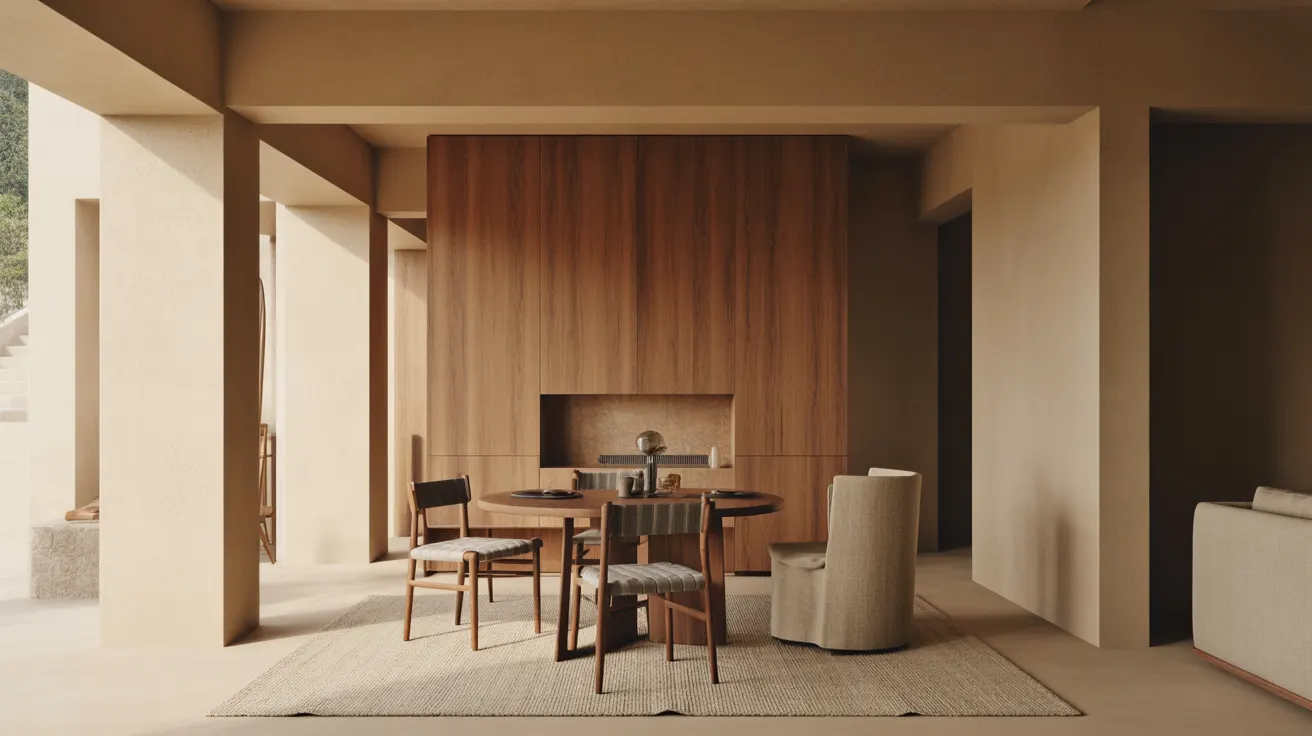
The best dining tables for small spaces save room without sacrificing seats. Here's what to look for, plus the table types that work in apartments and nooks.
The best dining table for a small space gives you enough room to actually eat without dominating the floor, and ideally adapts when you need to seat more people. That usually means a round table, a slim rectangle pushed against a wall, or an extendable design that stays compact day to day and grows for guests. Below we cover what to look for, then the kinds of tables worth considering, so you can match a piece to your room and how you live.
What to look for in a small dining table
A dining table sets the rhythm of a home, so even in a small space it's worth getting the proportions and flexibility right.
Footprint and clearance. You need about 36 inches between the table edge and the nearest wall or furniture so chairs can pull out and people can walk behind seated diners. That clearance often matters more than the tabletop itself. Measure your room, subtract the clearance, and what's left is the space your table can occupy.
Shape. Round tables seat people efficiently and have no corners to navigate in a tight room, which makes them a small-space favorite. Square tables suit two to four people and tuck neatly into a corner. Slim rectangles work against a wall or in a galley-style layout. Match the table shape to the shape of your space.
Per-seat space. Each diner needs roughly 24 inches of width to eat comfortably. A 36-inch round seats four snugly; a 42 to 48-inch round seats four comfortably and four-to-six in a pinch. Knowing this keeps you from buying a table that looks fine empty but cramps everyone once it's set.
Flexibility. Extendable, drop-leaf, and console-to-dining tables let you live small most of the time and expand for company. If you host even occasionally, this feature is worth prioritizing over a slightly larger fixed top.
Base style. A pedestal or trestle base lets diners slide chairs in from any side and tuck their legs freely, where four corner legs can get in the way at a crowded small table. Pedestals also read as lighter in a tight room.
If you're styling the whole area, our piece on setting up a small dining area covers chairs, lighting, and layout, and round versus rectangular dining tables digs deeper into the shape decision.
Our picks for small spaces
Each pick below describes the kind of table that fills the slot. In-stock examples are linked where the catalogue has a genuine match.
Best round table for a tight room. Look for a round table roughly 36 to 42 inches across on a single pedestal base. The corner-free shape eases traffic, the pedestal lets everyone tuck their legs and chairs in cleanly, and 36 to 42 inches comfortably seats four. A warm wood or stone-look top keeps it feeling like a real dining table rather than a side piece. This is the most reliable default for small apartments.
Our pick: 48" Brown Round Solid Teak Wood Dining Table
Best extendable table for occasional hosting. Look for a table with a butterfly leaf or drop-in extension that stays compact for everyday meals and opens up to seat six or more. You get a two-to-four-seat footprint most days and a dinner-party table when you need it, without owning two tables. Confirm the leaf stores easily, whether it's self-storing inside the table or removable. Ideal for anyone who lives small but hosts.
Our pick: 64" Brown Solid Wood Removable Leaf Trestle Base Dining Table
Best drop-leaf table for the smallest rooms. Look for a drop-leaf design where one or both sides fold down against the base. Folded, it works as a slim console against a wall or a table for two; raised, it seats four. This is the most space-efficient option for studios and very small kitchens, where the table needs to nearly disappear between meals. Look for a sturdy hinge and a stable folded position.
Our pick: 63" Clear And Black Glass And Metal Drop Leaf Pedestal Base Dining Table
Best square table for a corner. Look for a square table around 30 to 36 inches that tucks into a corner or sits against a wall, seating two to four. The compact square footprint suits couples and small households who don't need extra leaves, and it reads neatly in a kitchen or a small dining zone. A square also pairs well with a corner bench to save even more space.
Our pick: 59" Clear And Gray Square Glass And Solid Wood Pedestal Base Dining Table
Best slim rectangular table for a narrow layout. Look for a rectangle that's only 28 to 32 inches deep but long enough to seat four to six along its length. In a long, narrow room or a galley-style space, a slim rectangle gives you seats without pushing into the walkway. Pair it with a bench on one side to slide fully under the table when not in use, freeing the floor.
Best console-to-dining table for ultra-small homes. Look for a transforming table that lives as a narrow console against a wall and expands into a full dining table when opened. It's the most flexible option for studios and multi-use rooms, letting the dining function appear only when you need it and vanish the rest of the time. Check the expanded stability and how many people it seats at full size before you commit.
Shop this guide
- 48" Brown Round Solid Teak Wood Dining Table
- 64" Brown Solid Wood Removable Leaf Trestle Base Dining Table
- 63" Clear And Black Glass And Metal Drop Leaf Pedestal Base Dining Table
The short version
In a small space, the best dining table fits your clearances, suits the shape of your room, and ideally flexes when you have company. Round tables ease traffic and seat people efficiently, squares tuck into corners, slim rectangles suit narrow rooms, and extendable, drop-leaf, or console-to-dining designs let you live small and host big. Measure for 36 inches of clearance, plan about 24 inches per diner, and lean toward a pedestal base. The picks above point you to the right type for your space.
Ready to compare options? Shop Dining to browse small-space tables and the chairs to go with them.
Frequently asked questions
What's the best dining table shape for a small space?
Round is usually the safest choice. It seats people efficiently, has no corners to bump into, and reads as lighter in a tight room. Square tables are great for corners and couples, and slim rectangles work in long, narrow layouts. Match the table's shape to the shape of the space you have.
How much clearance do I need around a small dining table?
Aim for about 36 inches between the table edge and any wall or furniture so chairs can pull out and people can pass behind diners. In very tight rooms you can shave that to around 30 inches against a wall side, but don't go much lower or it becomes hard to use.
How many people can a small dining table seat?
A 36-inch round or square seats four snugly; a 42 to 48-inch round seats four comfortably. Plan on about 24 inches of width per person. If you regularly host more, an extendable or drop-leaf table lets you stay compact day to day and add seats when you need them.
Are extendable dining tables worth it for small spaces?
For most small-space households, yes. They give you a compact everyday footprint and the ability to seat more for guests without owning two tables. The main thing to check is how the leaf stores, since a self-storing or easily removable leaf is far more practical than one you have to find a closet for.
Should I choose a pedestal or four-leg dining table for a small room?
A pedestal or trestle base is usually better in tight quarters. It lets diners slide chairs in from any side and tuck their legs freely, and it reads as visually lighter. Four corner legs can interfere with chairs at a crowded small table, especially when you add a leaf or squeeze in an extra seat.
Can I fit a dining table in a studio apartment?
Yes, with the right type. Drop-leaf tables, console-to-dining designs, and small round tables are made for this. Choose something that folds flat or doubles as a console between meals so the dining function appears only when you need it, and keep the footprint to two or four seats unless you frequently host.