Rooms & Occasions
The Best Nightstands for Small Bedrooms (2026 Buyer's Guide)
6 min read
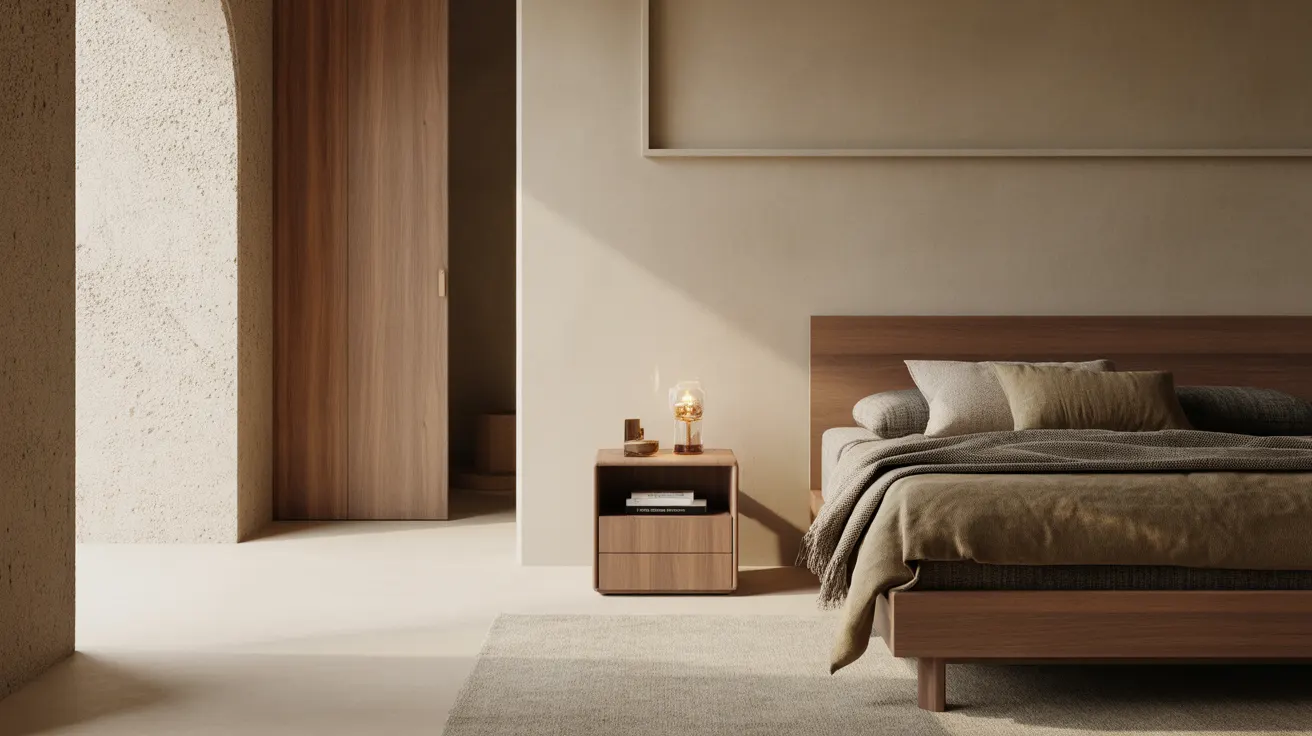
The best nightstands for small bedrooms are slim, smart, and space-saving. Here's what to look for, plus the nightstand types that fit tight spaces beautifully.
The best nightstand for a small bedroom holds what you need within arm's reach, a lamp, a glass of water, your phone, a book, without crowding the room or blocking the path around the bed. In tight spaces that usually means a slim footprint, a height that matches your mattress, and a little hidden storage. Below we cover what to look for, then the kinds of nightstands worth considering, so you can match a piece to your bed and your space.
What to look for in a small-bedroom nightstand
A nightstand is a small piece doing a focused job, so the right specs matter more than the overall size.
Footprint. In a small bedroom, every inch beside the bed counts. Narrow nightstands around 12 to 16 inches wide give you a surface for the essentials without eating the walkway. If space is really tight, a wall-mounted or pedestal design frees up the floor entirely.
Height. Aim for a nightstand within a couple inches of your mattress top, ideally level with it or slightly below. That keeps your lamp, water, and phone easy to reach without fumbling. A nightstand that's much taller or shorter than the bed feels off and is harder to use lying down.
Storage. A drawer hides the small stuff, glasses, chargers, hand cream, medication, that you don't want on display, which keeps the surface and the room feeling calm. An open shelf below adds a spot for books or a basket. In a small room, hidden storage earns its place fast.
Surface space. You need enough top to hold a lamp plus a few essentials. A round or small square top works for minimalists; a slightly wider top suits anyone who keeps more by the bed. Balance surface against footprint so you get what you need without going bulky.
Visual weight. Leggy designs with space underneath, glass tops, and light finishes keep a small bedroom feeling open. A solid block of a nightstand stores more but reads heavier. Choose based on whether you need storage or breathing room more.
If you're planning the whole room, our guide to furnishing a small bedroom covers layout and storage, and how to choose a nightstand goes deeper on pairing it with your bed.
Our picks for small bedrooms
Each pick below describes the kind of nightstand that fills the slot. In-stock examples are linked where the catalogue has a genuine match.
Best narrow nightstand for tight spots. Look for a slim nightstand around 12 to 16 inches wide on a compact footprint, ideally with a drawer for hidden storage. It fits the sliver of space between a bed and a wall or door without blocking the path, and the drawer keeps the small clutter out of sight. A light finish or leggy base keeps it from feeling bulky. This is the most versatile small-bedroom choice.
Best wall-mounted nightstand for zero floor footprint. Look for a floating, wall-mounted nightstand or a small wall shelf with a drawer. By taking the piece off the floor entirely, you free up the space beside the bed for cleaning and circulation, and the room instantly feels more open. Choose one with enough surface for a lamp and the essentials, and mount it level with your mattress top. Ideal for the smallest bedrooms.
Our pick: 14" Brown Wood One Drawer Floating Nightstand
Best nightstand with maximum storage. Look for a compact nightstand with two or three drawers, or a drawer plus a lower shelf, that stays narrow but stores a lot. When closet and dresser space is limited, a nightstand that holds more does double duty. The trick is finding one with real storage in a footprint that still respects the walkway. Prioritize drawer depth and smooth runners.
Our pick: 19" Espresso Wood Three Drawer Nightstand
Best round pedestal nightstand for soft lines. Look for a small round nightstand on a pedestal or tripod base. The corner-free top is shin-friendly beside a bed, the small footprint suits tight rooms, and the rounded shape softens a space full of straight bed-and-wall lines. It's a more display-forward, minimalist option, best for anyone who keeps only a lamp and a couple of essentials on top.
Best leggy nightstand for an airy feel. Look for a nightstand with slim exposed legs and open space underneath, ideally with a single drawer and a thin profile. Letting the floor show through makes a small bedroom feel lighter and larger, and a single drawer covers basic storage. Pair it with a light finish or glass top to maximize the open, spacious effect.
Best multi-purpose piece that doubles as a nightstand. Look for a small stool, a compact side table, or a slim cabinet that can serve as a nightstand and also work elsewhere. In a very small or changing space, a flexible piece that isn't locked to one role is practical, and it can move to the living room or entry if your layout shifts. Choose one at the right height beside your bed with at least room for a lamp and a phone.
Shop this guide
The short version
In a small bedroom, the best nightstand is slim, the right height, and ideally storing a little out of sight. Keep the footprint narrow, around 12 to 16 inches, match the height to your mattress, and choose a drawer if you need to hide clutter or a leggy, light design if you want the room to feel open. Whether you go wall-mounted to free the floor, multi-drawer for storage, or a soft round pedestal, the picks above point you to the right type for your space.
Ready to find the right one? Shop Bedroom to compare small-bedroom nightstands and the rest of your setup.
Frequently asked questions
What size nightstand fits a small bedroom?
A narrow one, roughly 12 to 16 inches wide, fits most small bedrooms without blocking the walkway. The key is leaving enough room to walk and to open the drawer or get in and out of bed. If even a narrow nightstand is tight, a wall-mounted design frees up the floor completely.
How tall should a nightstand be?
Aim for within a couple inches of your mattress top, ideally level with it or just below. That height keeps your lamp, water, and phone easy to reach while you're lying down. A nightstand that's much taller or shorter than the bed is awkward to use and looks unbalanced.
Do I need two nightstands in a small bedroom?
Not necessarily. If the bed has space on only one side, a single nightstand is fine and frees up the other side. If both sides are accessible and you share the bed, two small matching pieces are convenient, but you can also mix a nightstand on one side with a slim shelf or a stool on the other to save space.
What's the best nightstand for a bedroom with no floor space?
A wall-mounted or floating nightstand. By taking the piece off the floor, you keep the area beside the bed clear for circulation and cleaning, and the room feels more open. A small wall shelf with a built-in drawer gives you a surface and a little hidden storage without any footprint at all.
Should a small nightstand have a drawer?
For most people, yes. A drawer hides the small items, chargers, glasses, medication, that otherwise clutter the surface and the room. In a small bedroom where storage is scarce, that hidden capacity is valuable. If you keep almost nothing by the bed, an open or minimalist design can work and feels lighter.
Can a side table be used as a nightstand?
Absolutely. A small side table at the right height, within a couple inches of your mattress, with room for a lamp and a few essentials, makes a fine nightstand and often costs less or takes less space. The main trade-off is that many side tables lack a drawer, so you give up the hidden storage a dedicated nightstand offers.