Rooms & Occasions
Hosting for a Crowd: Seating, Flow, and Flexible Furniture
7 min read
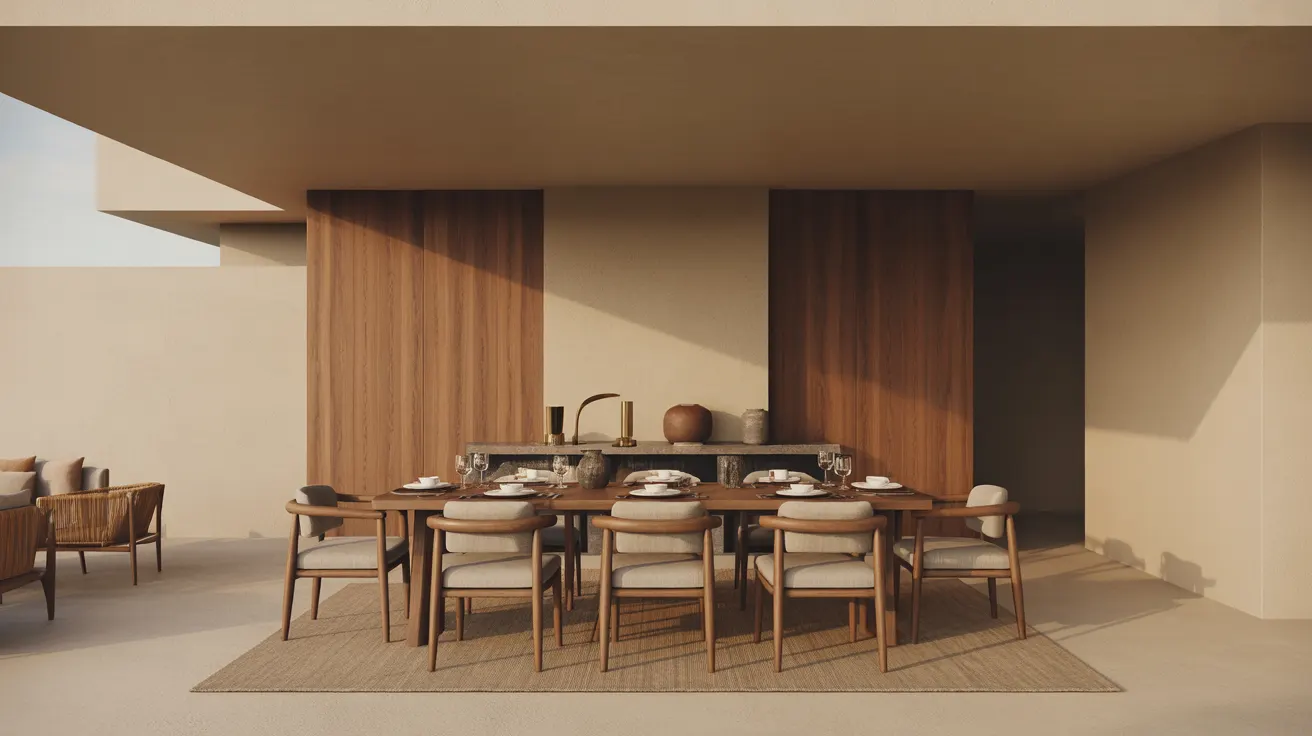
How to host a dinner party at home for more people than your table seats: extra seating that works, traffic flow, flexible furniture, and a calm, doable plan.
Hosting more people than your home was furnished for is a solvable problem, and it's mostly about three things: enough places to sit, room to move between them, and furniture that does double duty. You don't need a banquet hall — you need a plan for seating, a clear path through the space, and a few flexible pieces that expand when the guest list does. Here's how to host a dinner party at home for a crowd without it feeling cramped or chaotic.
Start with the real number, not the optimistic one
Before you move a single chair, count honestly. How many people are actually coming, and what kind of gathering is it? The seating you need changes completely depending on the format:
- Seated dinner: Everyone needs a real chair at a real surface. This is the most space-hungry format and caps at whatever you can genuinely fit.
- Buffet or family-style: Guests serve themselves and sit wherever there's a seat. You need seats, but not all at one table.
- Cocktail / standing: Most people stand and mingle; you need perches for maybe a third of the group, not all of it.
Matching the format to your space is the single biggest decision. A studio that can't seat ten for dinner can easily host ten for a standing party. Pick the format your home can actually carry, and the rest gets easier.
Seating math: how much room each person needs
Comfort comes down to clearances. These are the numbers that keep a full room from feeling like a subway car.
| Situation | Allowance per person | Why it matters |
|---|---|---|
| Seated at a table | 24" of table edge | Elbow room without bumping |
| Clearance behind a chair to walk | 36" | Someone can pass behind a seated guest |
| Clearance behind a chair to just sit/scoot | 24" minimum | Tighter, but workable |
| Standing-party density | 6–8 sq ft per person | Comfortable mingling, not packed |
| Buffet table clearance | 36"+ around it | Two-way traffic at the food |
| Main walkway through the space | 30–36" | Keeps the room flowing |
The two numbers to anchor on: 24 inches of table per seated guest and 36 inches of walkway through the main routes. Plan the table to the first number and the floor plan to the second, and a crowded evening still feels relaxed. (For where every plate and glass goes once seats are set, see how to set a table.)
Extra seating that actually works
You rarely need to buy a second dining set. You need a few pieces that quietly add capacity:
- Benches. A bench on one side of the dining table seats two or three in the space of a couple of chairs, and tucks fully underneath when not in use. The most space-efficient seat there is.
- Storage ottomans and poufs. These pull double duty all year — footrest and surface day to day, extra seat when you're hosting. A pair scattered near the sofa adds seats without adding bulk. (If you're choosing one, our ottoman guide covers the styles that work hardest.)
- Folding or stacking chairs in a good material. Stored in a closet, brought out for the occasion. Wood or woven ones look far better than the metal event kind.
- Counter and bar stools. If you have an island or a bar-height surface, that's seating you already own — use it for a casual buffet meal.
- The "borrow from another room" move. The desk chair, the bedroom accent chair, the entry bench — pull them in for the night and return them after.
Aim to have a plan for every guest before they arrive, with one or two seats in reserve.
Plan the flow before the guests, not during
The difference between a relaxed party and a bottlenecked one is traffic flow. Walk your space and design three things:
- The entry landing. Where do coats, bags, and bottles go? Clear a spot by the door so the first ten minutes don't clog the entry. A bench or console here earns its keep.
- The food-and-drink hub. Put drinks and food in different spots if you can — a bar cart by the window, food on the dining table or counter. Splitting them keeps a single line from forming and gives the room two natural gathering points.
- The conversation zones. People cluster where there's something to lean on or sit near. Pull seating into small groupings rather than one long line against the walls. Two or three small clusters beat one big ring every time.
The goal is a loop, not a dead end: guests should be able to circle from entry to drinks to food to seating and back without anyone having to squeeze past the buffet twice.
Flexible furniture that expands with the guest list
The homes that host well are usually furnished with a little flexibility built in. Pieces worth having on hand:
- An extendable dining table. A leaf or two turns a four-seater into a six- or eight-seater — the cleanest way to scale a seated dinner.
- Nesting tables. Scatter them as drink rests during a party; nest them back after. No one wants to hold a glass all night.
- A console or sideboard. Doubles as a buffet surface and a bar station, then goes back to everyday storage.
- Modular or movable seating. Lightweight chairs and poufs you can rearrange in two minutes mean the room reconfigures around the night.
You don't need all of these — even one extendable table plus a couple of ottomans transforms what your home can hold.
A calm host's running order
Hosting feels hard when it all lands at once. Spread it out:
- Day before: Pre-stage the table, chill drinks, do the heavy cleaning, and decide where everything will sit.
- A few hours before: Arrange the seating clusters, set out the bar, prep what can be prepped, and clear the entry.
- An hour before: Light candles, dim the lamps to warm, and finish anything that needs to be hot.
The quietest hosting trick is doing the spatial work early so the evening itself is just people and food.
Shop this guide
- 60" Brown Solid Wood Live Edge Dining Bench
- 20" Silver Aluminum Contemporary Scoop Decorative Bowl
- Champagne Metal And Mirrored Glass Rolling Bar Cart
The short version
- Pick the format your space can carry — seated dinner, buffet, or standing — before anything else.
- Plan 24" of table per seated guest and 36" of walkway through the main routes.
- Add capacity with benches, storage ottomans, counter stools, and a few good folding chairs.
- Split food and drinks into separate stations and arrange seating in small clusters to keep flow easy.
- Build in flexibility — an extendable table, nesting tables, a sideboard-as-buffet — and do the spatial work the day before.
The right table and a few flexible pieces are what let a normal home host a crowd. Shop dining — extendable tables, benches, and seating that scales up when the guest list does.
Frequently asked questions
How many people can I seat for dinner at home?
Allow 24 inches of table edge per guest, plus at least 36 inches of clearance behind chairs to walk. A 72-inch table comfortably seats six; an extendable table or a bench on one side stretches that further. Count the table length and divide by 24 for a realistic number.
How do I seat more guests than I have chairs?
Lean on flexible pieces: a bench on one side of the table, storage ottomans and poufs as extra seats, counter stools, and a few good-looking folding chairs stored away for occasions. Borrow chairs from other rooms for the night, and an extendable table to add length.
How much space does a standing party need?
Plan for about 6 to 8 square feet per person for comfortable mingling. Keep main walkways at 30 to 36 inches, and give the food and drink stations 36 inches of clearance so lines don't form. Standing parties hold far more people than seated dinners.
Should food and drinks be in the same place?
Separate them when you can. Putting drinks in one spot (a bar cart or counter) and food in another (the table or island) creates two gathering points and prevents a single bottleneck. It's one of the simplest ways to improve flow.
What furniture is best for entertaining a crowd?
An extendable dining table, a bench, storage ottomans that double as seats, nesting tables for drink rests, and a console or sideboard that works as a buffet. Flexible, dual-purpose pieces let a normal home expand for a gathering and shrink back after.