Frequently Asked
Ottoman Guide: Storage, Cocktail, and Accent Ottomans Compared
7 min read
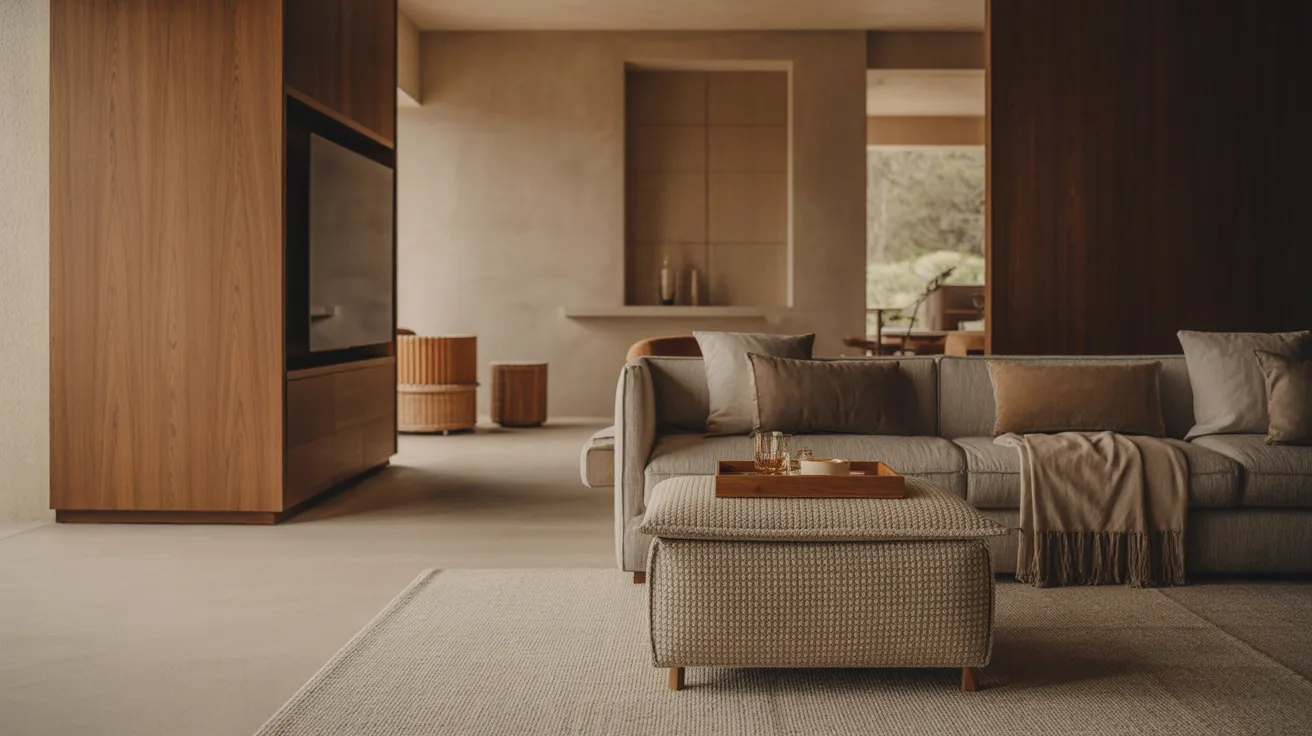
Storage, cocktail, or accent ottoman? The sizing rules, heights, and trade-offs that help you pick the right ottoman for your living room — with numbers.
The right ottoman starts with one decision: what job is it doing? A footrest should sit within 1 to 2 inches of your sofa's seat height. A cocktail ottoman replacing a coffee table should be about 1 to 2 inches lower than the seat and large enough to be useful. A storage ottoman trades a little comfort for a hidden cubic foot or two. Pick the job first, and the dimensions fall out of it.
An ottoman is the most flexible piece in a living room — footrest, extra seat, soft surface, hidden storage — but that flexibility is exactly why people buy the wrong one. Here's how to match the ottoman to the way you'll actually use it.
The four jobs an ottoman does
- Footrest (with a chair or sofa). Pairs with a seat for putting your feet up. Comfort is the whole point, so height match matters most.
- Cocktail ottoman (coffee-table replacement). A large, often upholstered surface in front of the sofa. Softer than a hard coffee table, kinder in homes with kids, and doubles as extra seating.
- Accent / pouf. A small, movable piece that adds a seat, a texture, or a pop of color. Pulls up to the sofa when guests arrive, tucks away otherwise.
- Storage ottoman. A lid or hinged top hides blankets, toys, or games. The everyday-tidiness workhorse.
Some ottomans do two jobs well; few do all four. Choosing the primary job keeps you from compromising on the one that matters.
Heights and sizes, by job
| Job | Height | Footprint | Pair it with |
|---|---|---|---|
| Footrest ottoman | 16–18 in. | 20–24 in. wide | Sofa/chair seat at 17–19 in. |
| Cocktail ottoman | 14–18 in. | 30–48 in. wide/round | Sofa with seat at 17–19 in. |
| Accent pouf | 14–18 in. | 16–24 in. round | Anywhere; floats in a room |
| Storage ottoman (bench) | 16–19 in. | 36–54 in. long | End of bed or under a window |
The guiding numbers: a footrest should land within 1 to 2 inches of the seat it serves so your legs extend naturally. A cocktail ottoman should sit 1 to 2 inches below the sofa seat and span at least half the sofa's length to feel proportional. A storage bench at the foot of a bed should be a few inches shorter than the mattress top.
Ottoman vs. coffee table: which belongs in front of your sofa?
This is the most common ottoman question, and it comes down to how the space gets used.
Choose a cocktail ottoman if you have young kids (no hard corners), you like putting your feet up, you host and want flex seating, or your room reads better with softness than another hard surface. The trade-off: drinks and books need a tray to sit level, since the top is cushioned.
Choose a coffee table if you want a stable surface for laptops, dishes, or display, you like an open shelf for books, or the room already has enough soft, upholstered mass. The trade-off: hard edges and no extra seat.
Or do both — a slim coffee table for one zone and an ottoman tucked at a chair. If you're weighing the surface decision in full, our coffee table guide covers clearance and proportion in detail; the same 14-to-18-inch height and "half the sofa length" logic applies to a cocktail ottoman.
A practical fix for the cushioned-top problem: keep a flat, rigid tray on the ottoman. It turns the soft surface into a stable spot for drinks and remotes without losing the footrest function.
Storage ottomans: what to check before you buy
A storage ottoman earns its place by being genuinely useful, not just by having a lid. Look for:
- A lid that stays up on its own, ideally with a soft-close or stay hinge, so you're not holding it open with one hand while you reach in.
- A usable interior, measured. Listings give exterior size; the inside is smaller. For blankets and bulky items, look for at least 10 to 12 inches of interior depth.
- A removable or wipeable lining if it'll hold things that shed or spill.
- A weight-rated top if it doubles as a seat — a flimsy lid sags when someone sits on it.
Storage ottomans shine in small living rooms where every piece needs a second job. They turn a footrest into a place to hide the visual clutter that makes compact rooms feel chaotic — a tactic that fits right into our small living room arrangement guide.
Shape and placement
- Rectangular cocktail ottomans suit long sofas and rectangular rooms; they echo the sofa's line.
- Round and oval ottomans soften a room full of straight edges and are kinder to walking paths — no corners to catch a shin. They also work well in front of a sectional's inside corner.
- Square ottomans split the difference and pair cleanly with two-cushion sofas or a pair of chairs.
Leave 14 to 18 inches between the ottoman and the sofa — close enough to reach with your feet or set down a cup, far enough to walk past. If it's a footrest, you can sit it closer or even nudged against the seat.
Materials: matching the ottoman to its job
- Performance fabric or leather for cocktail and storage ottomans that take daily contact, feet, and the occasional spill. These earn their keep in busy rooms.
- Bouclé, linen, and wool for accent poufs and pieces that stay decorative — texture-forward, but reserve them for lower-traffic corners.
- Tufted or smooth tops are aesthetic, but a deeply tufted top collects crumbs and resists a level tray; a smooth top is the friendlier surface if the ottoman doubles as a table.
Coordinate the ottoman with the room rather than matching it to the sofa exactly. An ottoman in a contrasting texture or a quiet accent color does more for a room than one cut from the same cloth as the couch.
Shop this guide
- 29" Gray And Black Chenille Ottoman With Storage
- 26" Blue And Black Velvet Ottoman With Storage
- 18" Brown Cotton Striped Pouf Ottoman
The short version
Decide the ottoman's main job first. A footrest matches the seat height it serves (16 to 18 inches). A cocktail ottoman sits 1 to 2 inches below the sofa seat, spans at least half its length, and wants a tray on top to act as a table. An accent pouf adds a flexible seat and texture. A storage ottoman trades a little comfort for hidden volume — check the hinge, the interior depth, and the lid's weight rating. Leave 14 to 18 inches to the sofa, choose round or oval to spare your shins, and pick durable upholstery for anything in the line of daily traffic.
Once you know the job, Shop Living for ottomans sized to the way you'll actually use them.
Frequently asked questions
Can an ottoman replace a coffee table?
Yes — a cocktail ottoman is a soft alternative that adds seating and removes hard corners. Keep a rigid tray on top so drinks and laptops have a level surface, and size it to span at least half the sofa's length, sitting 1 to 2 inches below the seat.
How tall should an ottoman be?
A footrest ottoman should be within 1 to 2 inches of the seat it serves, usually 16 to 18 inches. A cocktail ottoman should sit slightly below the sofa seat, around 14 to 18 inches. Storage benches at the foot of a bed run 16 to 19 inches.
How big should a cocktail ottoman be?
Aim for a width or diameter of at least half your sofa's length — commonly 30 to 48 inches. That keeps it proportional and reachable from the seat. Leave 14 to 18 inches of clearance between the ottoman and the sofa.
Are storage ottomans worth it?
In small living rooms, yes. They hide blankets, games, and clutter while still working as a footrest or seat. Check that the lid stays up on its own, the interior is at least 10 to 12 inches deep, and the top is weight-rated if you'll sit on it.
What's the difference between an ottoman and a pouf?
A pouf is a small, light, often soft-sided ottoman meant to be moved easily and used as a casual seat or footrest. A standard ottoman is larger and more structured, and may include storage or serve as a cocktail-table surface.
How much space should I leave between an ottoman and the sofa?
Fourteen to 18 inches for a cocktail ottoman — close enough to reach, far enough to walk past. A footrest ottoman can sit closer, even touching the seat, since you'll extend your legs onto it.