Comparisons
Pendant vs. Flush Mount vs. Recessed: Choosing Ceiling Lights
7 min read
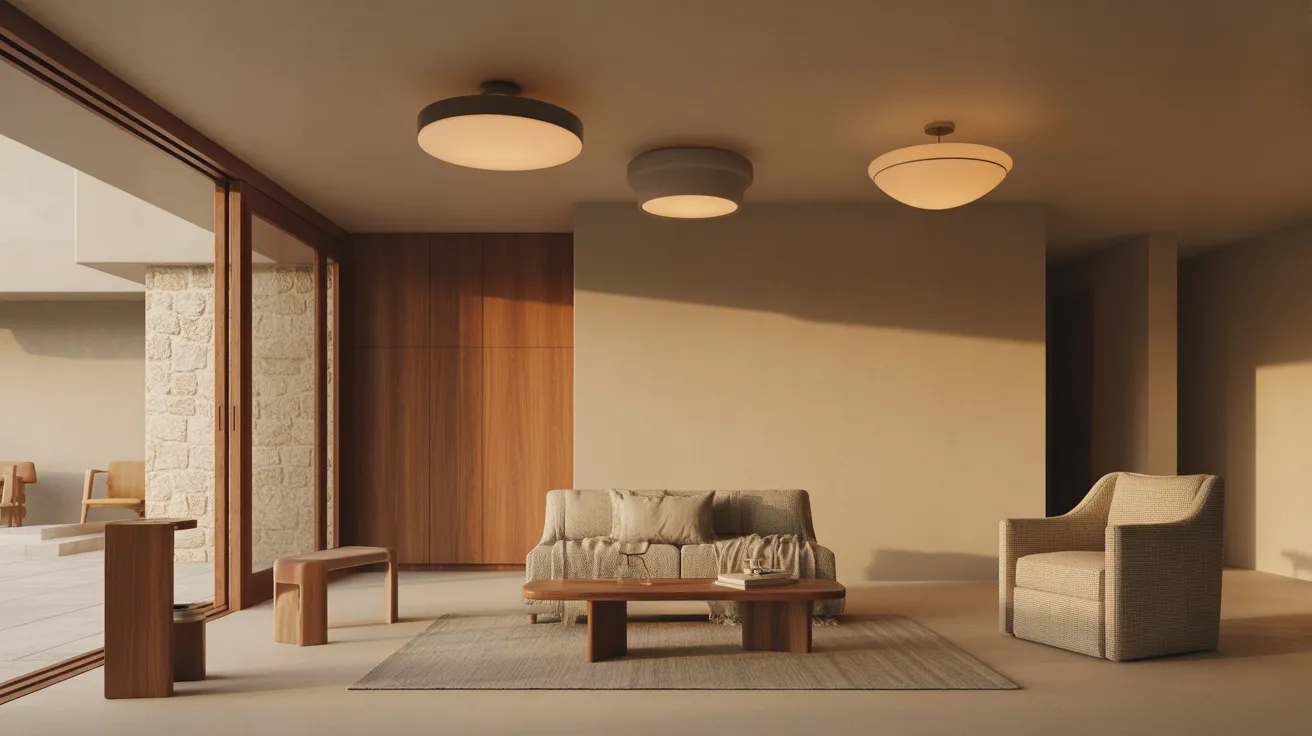
Pendant, flush mount, or recessed ceiling lights? Compare ceiling height needs, light spread, style impact, and best rooms so you light each space right.
The honest short answer: use a flush mount for low ceilings and clean general light in hallways, bedrooms, and small rooms; use a pendant where you want a focal point and direct light over a specific spot like an island or dining table; and use recessed lighting for even, invisible coverage across a whole room or to wash a wall. The best lit rooms rarely pick just one — they layer all three. The real question is which type does which job in each space.
These Aren't Competitors — They're Roles
This comparison is a little different from most. Pendant, flush mount, and recessed aren't three answers to the same question; they're three tools that do different jobs. Trying to light a kitchen with a single fixture is exactly why so many rooms feel either harsh or gloomy. Good lighting comes from combining types — ambient light to fill the room, task light where you work, accent light for mood — which is the whole idea behind layered lighting.
So read this less as "which one wins" and more as "which one belongs over the island, which over the bed, which in the ceiling grid." Two factors decide most of it: your ceiling height and the job the light needs to do in that spot.
Side-by-Side Comparison
| Pendant | Flush / Semi-Flush Mount | Recessed (Can / Downlight) | |
|---|---|---|---|
| Mounting | Hangs from cord, rod, or chain | Sits against (flush) or just below ceiling | Set into the ceiling; nearly invisible |
| Ceiling height needed | Higher — it hangs down | Works with low ceilings (flush) | Any; ideal for low ceilings |
| Light direction | Focused/downward over a spot | Broad, general room fill | Directional pools; even when spaced well |
| Style impact | High — a design statement | Low to medium — quiet, clean | Minimal — disappears into ceiling |
| Best at | Task + focal point | General ambient light | Even ambient + accent washing |
| Headroom clearance | Must hang clear of heads and tables | Excellent — out of the way | Excellent — flush with ceiling |
| Install effort | Moderate (swap an existing fixture) | Easy (swap an existing fixture) | High — cut ceiling, often new wiring |
| Dimmable | Usually | Usually | Usually (best as a layer) |
| Best rooms | Kitchen island, dining, entry, bedside | Hallway, closet, bedroom, small room, laundry | Whole-room base, kitchen, living, baths |
Pendants: Focus and Personality
A pendant hangs from the ceiling on a cord, rod, or chain, dropping light (and a strong dose of style) onto a specific spot. It's the type people notice — a row of pendants over a kitchen island or a sculptural fixture over a dining table is often the design moment of the room. Functionally, a pendant excels at task lighting: it puts light where you actually need it, close to the work surface or table, rather than scattering it across the whole room.
The constraints are physical. Pendants hang down, so they need ceiling height and careful placement — too low and people knock their heads or it blocks sightlines across a table; too high and it stops doing its job. Hanging height is its own small science, which we cover in the pendant light height guide. One pendant also rarely lights a whole room; it's a focal and task tool, not a general-fill solution, so it usually works best alongside recessed or other ambient light.
Pendants suit kitchen islands, dining tables, entryways, bedside reading, and any spot where you want both directed light and a visual anchor.
Flush and Semi-Flush Mounts: The Quiet Workhorse
A flush mount sits tight against the ceiling; a semi-flush drops just a few inches below it. Either way, it stays out of the way while spreading broad, general light across a room. This is the unsung hero of low-ceiling spaces and circulation areas — it provides solid ambient light without eating headroom or demanding the height a pendant or chandelier needs.
Flush mounts are also the easiest upgrade: in most rooms you're simply swapping one ceiling fixture for another at the existing electrical box, no ceiling surgery required. The semi-flush version buys you a little more visual interest and slightly better light spread (the gap lets light bounce off the ceiling) while still working under modest heights. The honest limit is ambition: flush mounts are about competent, even, unremarkable light. They won't make a design statement the way a pendant does, and a single one in a large room can feel flat — but for the rooms they're meant for, that quiet reliability is exactly the point.
Flush mounts suit hallways, closets, laundry rooms, bedrooms, small rooms, and any low-ceiling space that needs clean general light.
Recessed Lighting: The Invisible Layer
Recessed lights (also called can lights or downlights) install into the ceiling so the trim sits nearly flush with the surface. They essentially disappear, which is their entire appeal: even, architectural light with no visual clutter and zero headroom impact. Spaced correctly, a grid of recessed lights gives smooth, shadow-free coverage across a whole room, and angled or wall-wash versions can highlight art, bookshelves, or a textured wall beautifully.
The cost of that clean look is installation. Recessed lighting means cutting into the ceiling and often running new wiring — a bigger project than swapping a fixture, frequently one for a pro and not always feasible in every space (concrete ceilings, certain rentals). It's also easy to overdo: a ceiling peppered with too many cans can read like a parking garage, and recessed light alone, pointing straight down, can feel flat and unflattering without other layers to soften it. Used as the even base layer beneath pendants and lamps, though, recessed lighting is what makes a room feel professionally lit.
Recessed suits whole-room ambient coverage, kitchens, living rooms, bathrooms, and accent-washing walls — almost always as part of a layered plan rather than the only light.
Choose Pendant If / Choose Flush Mount If / Choose Recessed If
Choose a pendant if:
- You have a specific spot to light — island, dining table, bedside, entry.
- Your ceilings are tall enough to hang one clear of heads and sightlines.
- You want a focal point with real personality, not just illumination.
- You're swapping an existing fixture and want an easy, high-impact change.
Choose a flush or semi-flush mount if:
- Your ceilings are low and a pendant would hang in the way.
- You need clean general light in a hallway, closet, bedroom, or small room.
- You want the simplest possible fixture swap.
- Quiet, out-of-the-way function matters more than making a statement.
Choose recessed lighting if:
- You want even, invisible coverage across a whole room.
- Low ceilings or a minimalist look rule out hanging fixtures.
- You're renovating or can run new wiring (it's a bigger install).
- You're building a base ambient layer to combine with pendants and lamps.
Shop this guide
The Short Version
Stop thinking "which one" and start thinking "which job." For low ceilings and clean general light in passageways and small rooms, flush mounts are the easy, reliable answer. For a focal point and direct light over an island, table, or bedside — with the ceiling height to hang it — pendants bring both function and personality. For even, invisible whole-room coverage or wall washing, recessed is unmatched, provided you can handle the bigger install. And in any room that really needs to work, combine them into layers rather than asking one fixture to do everything.
Ready to light each room right? Shop Lighting and browse pendants, flush mounts, and recessed options by room and ceiling type.
Frequently asked questions
What ceiling height do I need for a pendant?
Enough that the fixture hangs well clear of heads in walkways and doesn't block sightlines over a table. As a general guide, allow roughly 7 feet of clearance from the floor in open areas, and hang pendants higher over tables and islands so people can see across. Low ceilings usually favor a flush mount or recessed light instead — see the pendant height guide for specifics.
Are flush mounts better than recessed for low ceilings?
Both work well for low ceilings since neither hangs down. Flush mounts are far easier to install (a simple fixture swap) and add a bit of style at the ceiling; recessed disappears entirely but requires cutting in and wiring. For a quick low-ceiling fix, flush mount; for a clean built-in look and a bigger budget, recessed.
Can recessed lighting alone light a whole room?
It can provide even ambient coverage, but recessed-only rooms often feel flat because the light points straight down and casts unflattering shadows. The best results layer recessed ambient light with task lighting (pendants, lamps) and accent light. Treat recessed as the base, not the entire plan.
Is it hard to install recessed lighting myself?
It's the most involved of the three — cutting holes in the ceiling and often adding wiring — and is frequently a job for an electrician, especially where there's no existing wiring or where ceiling access is limited. Pendants and flush mounts, by contrast, usually just replace an existing fixture.
Can I mix all three in one room?
Yes, and the best-lit rooms do. A kitchen might use recessed lights for overall fill, pendants over the island for task and focal light, and undercabinet or accent lights to finish. Mixing types by job is the foundation of layered lighting, not a clash.