Frequently Asked
How to Choose Dining Chairs: Comfort, Height, and Material
7 min read
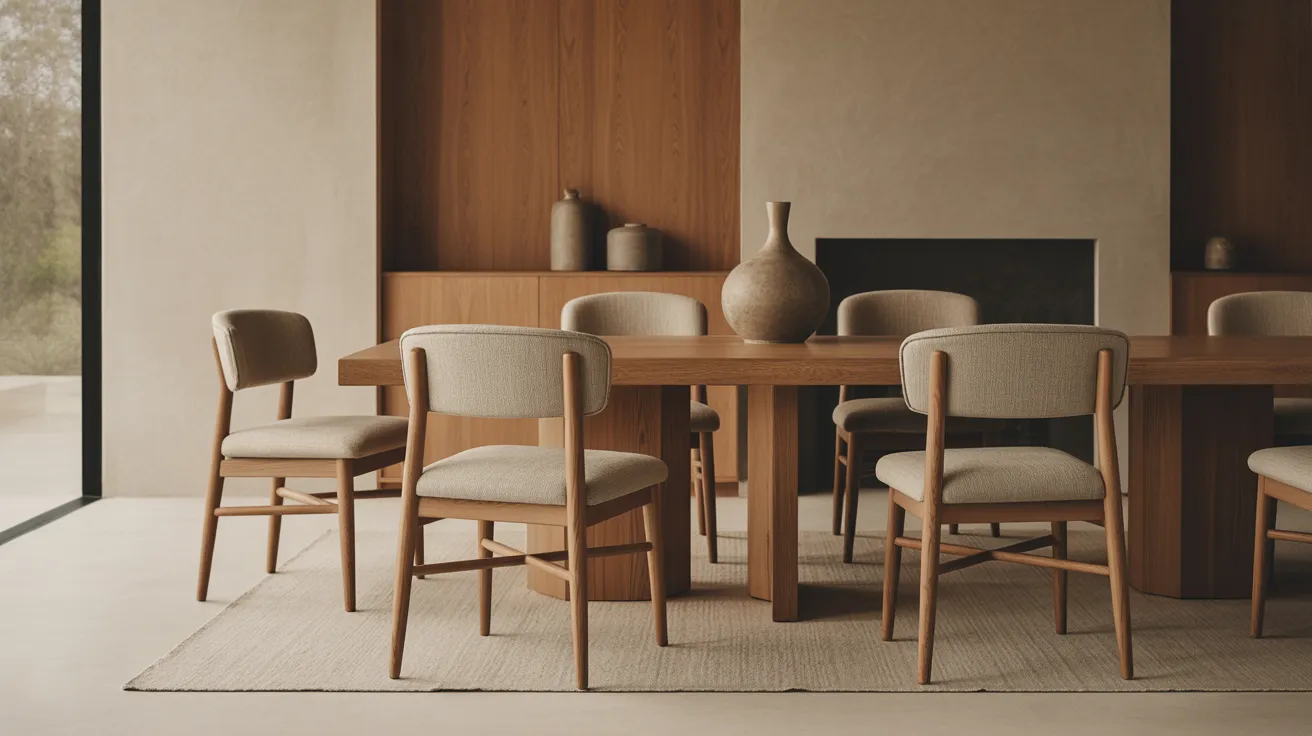
How to choose dining chairs that fit your table: seat height, clearance, comfort, and upholstered vs. wood. A practical guide with measurements in inches.
The single number that decides whether dining chairs fit is the gap between the seat and the underside of the table: aim for 10 to 12 inches. With a standard 30-inch-tall table, that means a seat height of 18 to 19 inches. Get that clearance right and your knees, your posture, and your meals all work. After that, it's about real comfort for long dinners, how many chairs fit around the table, and which material suits your household. Here is the full picture, with the measurements that matter.
Start with the fit: seat height and clearance
A dining chair has to live with a specific table, so size the two together.
- Standard dining table height is 28 to 30 inches.
- Standard dining chair seat height is 18 to 19 inches.
- The clearance you want — from seat top to table underside — is 10 to 12 inches, enough for your thighs and to cross your legs.
If your table is taller or has a thick apron (the rail under the top) or wide legs, recalculate. A 31-inch table or a 3-inch apron eats into that clearance fast, and a chair that's fine under one table can be cramped under another.
| Table height | Apron/underside clearance | Ideal seat height |
|---|---|---|
| 28 in. | 24–25 in. | 16–17 in. |
| 30 in. (standard) | 26–27 in. | 18–19 in. |
| 36 in. (counter) | 32–34 in. | 24–26 in. (counter stool) |
| 42 in. (bar) | 38–40 in. | 28–30 in. (bar stool) |
For the table side of this equation — how big a table you need and how many it seats — start with our dining table size guide, then bring the chairs to match.
How many chairs fit — and how far apart
Crowded seating ruins a good table. Two rules keep everyone comfortable.
- Give each diner about 24 inches of table width. That's the elbow room one place setting needs. A 72-inch table seats six along the sides comfortably; a 60-inch table seats four to six depending on whether you use the ends.
- Leave space between chairs. Aim for at least 6 inches between chairs side by side so people aren't bumping arms — more if the chairs have arms.
- Plan the pull-out clearance. You need about 36 inches from the table edge to the nearest wall or furniture so a chair can slide back and a person can stand. Tight rooms can manage 30 inches; below that, getting up becomes a maneuver.
Armchairs at the head of the table look gracious but take more width — confirm they tuck under the apron and don't crowd the side chairs.
Comfort: the difference between sitting and lingering
For a table where people actually linger over dinner, comfort is worth more than looks. A few things to check:
- Seat depth: 16 to 18 inches supports most people without cutting behind the knees.
- Back support: a back with a slight recline or lumbar curve is far more comfortable for long meals than a bolt-upright plank. Even a small contour helps.
- Seat shape: a gently scooped or padded seat beats a flat, hard one for a two-hour dinner.
- Width: 18 to 20 inches across the seat suits most adults; armchairs need more.
- Arms: comfortable, but they take space and may not tuck under the table — measure the arm height against your apron clearance.
If you host long dinners, lean toward padded or contoured seats. If the table is mostly for quick meals or doubles as a workspace, a firmer wood seat is easy to wipe and slide.
Material: upholstered, wood, or a mix
Each material trades comfort, durability, and upkeep differently.
| Material | Best for | Trade-offs |
|---|---|---|
| Upholstered | Long dinners, comfort, warmth | Needs cleaning; spills show; favor performance fabric |
| Wood | Durability, easy wipe-down, classic look | Harder seat; a cushion helps |
| Metal | Modern look, sturdiness, indoor-outdoor | Can feel cold and hard without a pad |
| Woven (cane/rope/rattan) | Texture, lightness, airy feel | Less padding; check the seat support |
| Molded plastic/composite | Easy cleaning, casual, family-friendly | Less formal; comfort varies by shape |
A practical middle path many people choose: a wood or metal frame with an upholstered seat. You get the durability of the frame and the comfort of a padded seat. If you go fully upholstered, performance fabric resists the spills a dining chair inevitably meets — our overview of performance fabric explains when it's worth it. And if your tabletop is stone or wood, the chair material is a chance to add or echo texture; see how tops compare in our dining tabletop materials guide.
Should dining chairs match the table — or each other?
Neither rule is required. Three approaches that all work:
- Matching set. Chairs that coordinate with the table read pulled-together and calm — the safe, timeless choice.
- Contrasting set. A wood table with upholstered chairs (or vice versa) adds warmth and interest while staying cohesive. This is the easiest way to make a dining area feel considered.
- Mixed chairs. Two styles around one table — for instance, side chairs along the length and a different pair or bench at the ends — looks collected when there's a thread tying them together: a shared color, material, or seat height.
The key to mixing well is keeping seat heights consistent (so everyone sits level) and limiting the palette. Mismatched heights or too many competing finishes read as chaos rather than charm.
A quick pre-buy checklist
Before you order, confirm:
- Seat height gives 10 to 12 inches of clearance under your table.
- Arms (if any) tuck under the apron.
- Each diner gets about 24 inches of table width, with 6 inches between chairs.
- You have ~36 inches behind the table to pull a chair out and stand.
- The seat material suits how messy and how long your meals run.
Browse the range in Dining and filter by seat height to match your table first.
Shop this guide
- Set of 2 Light Gray Upholstered Fabric Dining Side Chairs
- Set of Two Brown Solid Wood Ladder Back Dining Side Chairs
- White Boucle Partially Open Back Dining Arm Chair
The short version
Fit comes first: aim for 10 to 12 inches of clearance between the seat and the table underside, which means an 18-to-19-inch seat height for a standard 30-inch table. Give each diner about 24 inches of table width, 6 inches between chairs, and 36 inches behind the table to stand. Choose comfort for long dinners (a contoured or padded seat, 16-to-18-inch depth), pick a material to match your household — wood for easy cleaning, upholstery for comfort, performance fabric for spills — and feel free to contrast or mix chairs as long as the heights stay level.
Ready to match chairs to your table? Shop Dining and filter by seat height to get the clearance right.
Frequently asked questions
What is the right seat height for dining chairs?
For a standard 30-inch table, choose a seat height of 18 to 19 inches. The goal is 10 to 12 inches of clearance between the seat and the underside of the table. Taller tables or thick aprons call for a lower seat to keep that gap.
How much space should be between dining chairs?
At least 6 inches between chairs side by side, and about 24 inches of table width per diner for elbow room. Add more space if the chairs have arms so people aren't bumping.
Do dining chairs have to match the table?
No. A matching set looks calm and classic, but contrasting chairs (wood table, upholstered chairs) or a mix of two styles can look more considered. Keep seat heights consistent and the palette limited so a mix reads intentional.
Are upholstered or wood dining chairs better?
Upholstered chairs are more comfortable for long dinners but need cleaning and favor performance fabric for spills. Wood chairs are durable and easy to wipe but harder underneath. A wood frame with an upholstered seat is a popular middle ground.
How much room do I need behind a dining chair?
About 36 inches from the table edge to the nearest wall or furniture, so a chair can slide back and a person can stand. Tight rooms can work with 30 inches; below that, getting up becomes awkward.
Can I mix different dining chairs around one table?
Yes. Mixing works when the chairs share something — a color, a material, or the same seat height. A common approach is one style along the sides and a bench or armchairs at the ends. Keep heights matched so everyone sits level.