Comparisons
Why Your Living Room Feels Unfinished — and the 5 Fixes That Work
6 min read
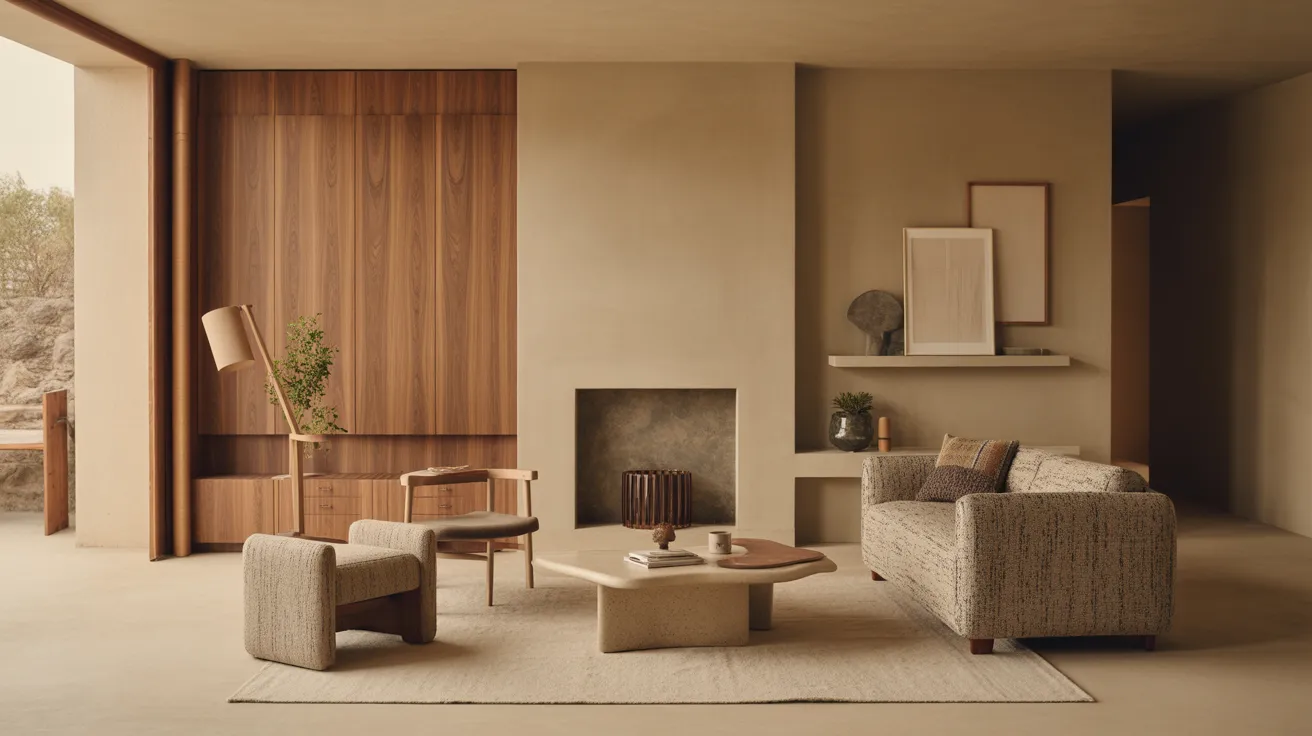
If your living room feels unfinished, the cause is usually one of five things. Here's how to fix the rug, lighting, layout, walls, and layers — fast.
You bought the sofa. You hung the TV. You even found a coffee table you like. And still, every time you walk in, some quiet voice says almost. The frustrating part is that "unfinished" rarely means you need more furniture — it almost always traces back to one of five specific, fixable gaps. Here's how to find yours and close it.
First, diagnose it: the squint test
Stand in the doorway and squint until the room blurs. What you'll see is the room's actual composition: blocks of furniture, pools of light and shadow, and the empty zones between them. An unfinished room usually shows one of these patterns — a floating island of furniture on bare floor, a flat wash of light from one ceiling fixture, pieces pressed against every wall with a dead middle, blank walls above seat height, or a room where every surface is the same smooth, hard material. Each pattern maps to one of the fixes below. Most rooms only need one or two of them.
Fix 1: The rug is too small — or missing
This is the most common culprit by a wide margin. A rug that only touches the coffee table makes everything around it look temporary, like furniture waiting to be arranged. The rug's actual job is to gather the seating into a single composition.
The rules, in numbers:
| Rule | The number |
|---|---|
| Front legs of every seat | On the rug |
| Rug width vs. sofa | 6–8" beyond each arm |
| Bare floor at the room's edge | 10–18" |
| Standard sofa (78–90") | 8x10 minimum, 9x12 better |
| Sectional | 9x12 minimum, 10x14 better |
If you're between sizes, go larger. Nobody has ever finished a room by sizing down the rug. For the full math on every room — bedrooms, dining, runners — our rug size guide covers it in detail.
Fix 2: You're living under one overhead light
A single ceiling fixture is lighting for cleaning, not for living. It flattens texture, deepens nothing, and makes 8 p.m. feel exactly like noon. Rooms that feel finished almost always have light at three heights: overhead, eye level, and low.
The working formula: one floor lamp near the seating, one table lamp on a console or side table, bulbs around 2700K, and dimmers wherever the wiring allows. In the evening, the overhead goes off and the lamps take over. If you want to understand why this works — and how ambient, task, and accent light divide the labor — Layered Lighting 101 breaks it down simply.
Fix 3: Everything is pushed against the walls
It feels efficient to line the perimeter, but it creates a hollow middle that no amount of decor can fill — the furniture reads as storage, not as an invitation. Pull the sofa 6–12" off the wall, even in a small room; the air gap alone makes the arrangement look deliberate. Then tighten the conversation zone: 14–18" between sofa and coffee table, and no more than 8 feet between any two seats that are supposed to talk to each other. A floated arrangement with a rug underneath it (see Fix 1 — these two compound) is what makes a living room read as a room rather than a corridor with seating.
Fix 4: The walls stop at seat height
Run your eye around the room: if everything visually interesting sits below 36", the upper two-thirds of the room is dead air, and dead air reads as unfinished. You don't need a gallery wall. You need two or three moments of height — one piece of art scaled to the wall (aim for roughly two-thirds the width of the sofa below it, centered at 57" eye level), a floor mirror leaned in a corner, a tall plant, or a bookcase that pulls the eye upward. Vertical layers are what make ceilings feel intentional instead of merely far away.
Fix 5: Every surface is the same texture
If the sofa is smooth, the table is smooth, the floor is smooth, and the walls are smooth, the room will feel like a rendering of itself — technically complete, emotionally vacant. Finished rooms carry at least three or four distinct materials the hand could identify blindfolded: wool underfoot, linen on the cushions, wood grain on the table, something ceramic or stone on a shelf, a warm metal on a lamp. Add texture in small, deliberate doses — a throw, two pillow covers, one woven object — rather than a haul of accessories. Depth, not quantity, is what your eye has been missing.
If you've done all five and it still isn't right
Sometimes the issue is structural — an awkward layout, competing focal points, a room that has to be three rooms at once — and a fresh set of trained eyes solves in one pass what trial and error won't solve in a year. LoftLoom's free room plan exists for exactly this: you share photos, measurements, and how you actually live, and we send back a plan for the room — layout, anchor pieces, and the finishing layer, sequenced so you can act on it gradually.
Shop this guide
- 8' X 10' Aqua And Teal Blue Abstract Washable Indoor Outdoor Area Rug
- 62" Grey Traditional Shaped Floor Lamp With Brown Bell Shade
- Modern Abstract Green Curvy Leaves Silver Framed Wall Art
The short version
- "Unfinished" is usually one of five gaps: rug, lighting, layout, vertical layers, or texture.
- Rug: front legs on, 6–8" past the sofa's arms, 8x10 minimum for a standard sofa.
- Light: three sources, three heights, 2700K, dimmers.
- Layout: pull seating off the walls; 14–18" sofa-to-coffee-table; seats within 8 feet of each other.
- Walls: two or three moments of height, art centered at 57".
- Texture: three or four materials the hand could name blindfolded.
If you'd rather have us map the whole sequence for your exact room, get a free design plan — share your space, and we'll send back the layout and layers that finish it.
Frequently asked questions
Why does my living room feel empty even with furniture in it?
Usually the furniture is fine and the connective tissue is missing: a rug large enough to gather the seating, lighting at more than one height, and something on the walls above 36". Empty-feeling rooms are typically missing layers, not pieces.
What should I add to make a room feel finished?
In order of impact: a correctly sized rug (front legs of all seating on it), two lamps at different heights, one large-scale piece of art or a mirror, and three or four contrasting textures across the textiles and surfaces.
How do I finish decorating a room on a budget?
Sequence it. Start with bulbs (2700K) and rearranging — both free or nearly so. Then the rug, because it has the highest visual payoff per dollar. Art, lamps, and textiles can follow one at a time; a room finished slowly tends to look more collected than one finished in a weekend.
What makes a living room look put together?
Composition: seating gathered on one rug, a clear focal point, light at three heights, height on the walls, and repeated materials — the same wood tone or metal appearing two or three times so the room reads as one decision instead of many.
Should every wall have something on it?
No — and rooms where every wall is filled often feel busier, not more finished. Two or three well-scaled moments with deliberate empty wall between them reads calmer and more intentional than full coverage.