Comparisons
Solid Wood vs. Veneer vs. Engineered Wood Furniture: An Honest Guide
8 min read
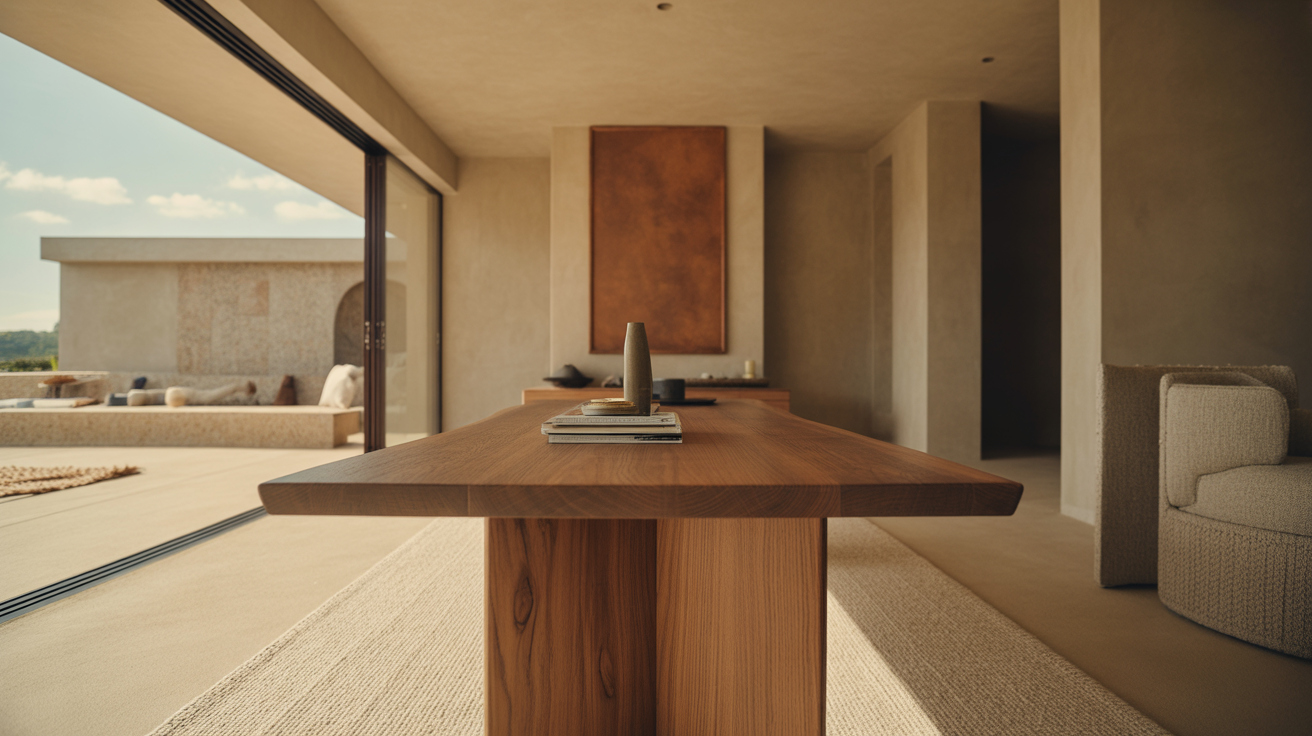
Solid wood, veneer, or engineered wood furniture? Compare durability, repairability, cost, and stability so you know what you're really paying for.
The honest short answer: solid wood is the most durable and repairable but costs the most and can move with humidity; a quality veneer over a stable core often looks just as beautiful, stays flatter, and costs less; and engineered wood (MDF or particleboard) keeps prices low and works fine for light-duty pieces but won't survive heavy use or moisture. The catch is that "wood" on a product page can mean any of these — and the gap between good veneer and cheap engineered wood is enormous.
Clearing Up the Confusion First
This comparison trips people up because the terms overlap in marketing copy. Let's set them straight before we compare.
- Solid wood means the piece is made from real lumber boards all the way through — a solid walnut tabletop is walnut top to bottom.
- Veneer is a thin slice of real wood (often a fine hardwood like walnut or oak) bonded to a more stable core underneath. The surface is genuine wood; what's beneath it varies.
- Engineered wood is the broad family of manufactured boards — MDF (medium-density fiberboard) and particleboard — made from wood fibers or chips pressed with resin. It's often what veneer is glued onto, and on its own it's usually finished with a printed laminate or melamine rather than real wood.
So these aren't always either/or. A well-made dresser might be a real-wood veneer over an engineered-wood core with solid-wood drawer fronts. The quality question isn't "is there veneer?" — it's "veneer over what, and built how?"
Side-by-Side Comparison
| Solid Wood | Wood Veneer (over stable core) | Engineered Wood (MDF / Particleboard) | |
|---|---|---|---|
| Surface | Real lumber throughout | Real wood slice on top | Often printed laminate; sometimes veneered |
| Durability | Highest; takes daily abuse | High; surface can chip at edges | Low to moderate; edges and joints are weak points |
| Repairable | Yes — sand, refinish, fill | Limited; deep scratches reach the core | Rarely; damage is usually permanent |
| Stability (warping) | Can expand, contract, warp with humidity | Excellent — stays flat | Stable when dry; swells permanently if wet |
| Moisture tolerance | Good if sealed | Good on surface; edges vulnerable | Poor; standing water ruins it |
| Weight | Heavy | Medium | Lighter (particleboard) to heavy (dense MDF) |
| Look | Authentic grain, ages with character | Authentic grain (it's real wood) | Convincing at a glance; repeats up close |
| Cost | Highest | Mid | Lowest |
| Lifespan | Decades; heirloom potential | 10–20+ yrs with care | 3–10 yrs depending on use |
| Best for | Tables, heirlooms, high-use surfaces | Large flat pieces, dressers, consoles | Budget pieces, light-duty, rentals |
Solid Wood: The Long Game
Solid wood is the material furniture nostalgia is built on, and the reputation is earned. A solid oak or walnut table can absorb decades of dinners, water rings, and the occasional gouge — then be sanded and refinished back to life. That repairability is the real superpower: solid wood is the only one of the three you can meaningfully restore. Each piece also has unique grain and develops a patina, which is why solid-wood furniture holds resale value the others don't.
The trade-offs are real, though, and rarely mentioned. Solid wood is alive in the sense that it moves — it expands and contracts with seasonal humidity, which can cause warping, cupping, or small cracks (called checking) if the piece isn't well constructed or the room swings between dry winter heat and summer damp. Good joinery and proper sealing manage this; cheap solid-wood furniture doesn't. It's also the heaviest and most expensive option, and large solid-wood tops are genuinely hard to make stay perfectly flat.
Solid wood suits dining tables, desks, and any surface that takes daily punishment — places where repairability and longevity justify the cost.
Veneer: The Most Misunderstood Material
Veneer has an undeserved bad reputation, mostly because people confuse a quality wood veneer with cheap printed laminate. They are not the same thing. A real-wood veneer is real wood — a thin slice of the same walnut or oak you'd pay a premium for in solid form, bonded to a stable core so it won't warp the way a wide solid board might. Some of the finest furniture ever made uses veneer specifically because it lets makers book-match dramatic grain across a large surface and keep it dead flat for decades.
Where veneer earns its mid-tier price is stability and looks per dollar: you get authentic grain and a flat, reliable surface for less than solid wood. The honest weaknesses are at the edges and in depth. A veneer is thin, so a deep scratch or chip can reach the core beneath, and unlike solid wood you can't sand it down repeatedly without going through the veneer layer. Edges and corners are the vulnerable spots — that's where damage shows first.
The quality tell: ask (or read) what the core is. A real-wood veneer over plywood or a solid frame is excellent furniture. The same veneer over flimsy particleboard is a different proposition.
Veneer suits large flat pieces — dressers, consoles, sideboards, bookcases — where flatness and grain matter and the surface won't take constant scraping.
Engineered Wood: Honest About Its Job
Engineered wood — MDF and particleboard — is the workhorse of affordable furniture, and there's nothing wrong with that when it's used for the right job. MDF is dense, smooth, and takes a painted or laminate finish beautifully (a lot of crisp white furniture is MDF). Particleboard is lighter and cheaper, the stuff of flat-pack pieces. Both keep prices accessible and are perfectly dimensionally stable as long as they stay dry.
The limits are clear and worth respecting. Moisture is the enemy: a spill left standing, a damp basement, or a leak swells engineered board permanently — it puffs up and crumbles, and there's no fixing it. Edges chip, screws can strip out of particleboard if a joint is over-tightened or reassembled too many times, and damage is generally permanent. Engineered wood also doesn't hold heavy loads or constant stress the way solid wood does. Up close, printed wood-look laminate repeats its grain pattern, which a trained eye catches.
Engineered wood suits budget builds, light-duty pieces (a bedroom nightstand, a media unit that won't get wet), rentals, and anything you expect to replace rather than keep for decades.
Choose Solid Wood If / Choose Veneer If / Choose Engineered If
Choose solid wood if:
- It's a high-use surface — a dining table, desk, or workbench — that needs to take abuse and be refinished.
- You want a piece to last decades or become an heirloom.
- Resale value or repairability matters to you.
- You can manage humidity and accept some natural movement.
Choose veneer (over a quality core) if:
- You want authentic wood grain and a flat, stable surface for less than solid wood.
- The piece is large and flat — dresser, console, sideboard, bookcase.
- You'll treat the surface reasonably and avoid gouging the edges.
- You've confirmed the core is plywood or solid framing, not flimsy particleboard.
Choose engineered wood if:
- Budget is the priority and the piece is light-duty.
- The item won't face moisture or heavy daily stress.
- You're furnishing a rental or a space you expect to change.
- You like a crisp painted finish (MDF excels here).
The Short Version
Buy by the job, not the label. For high-use, long-life surfaces — especially dining tables and desks — solid wood is worth the cost because it takes abuse and can be refinished. For large flat pieces where stability and grain matter, a real-wood veneer over a quality core gives you most of the beauty for less, and stays flatter than solid wood ever will. Engineered wood is the right honest choice for budget and light-duty pieces, as long as you keep it dry. The single most useful question at any price: what is the surface, and what is the core underneath it? And once you've got the material sorted, getting the wood tones to work together across a room is the next quiet skill.
Ready to compare construction? Shop Dining and check the materials listed on each piece — solid, veneer, and core details are where the real story lives.
Frequently asked questions
Is veneer furniture good quality, or cheap?
It depends entirely on the veneer and the core beneath it. A real-wood veneer over plywood or solid framing is genuinely high-quality furniture used in fine pieces for centuries. A printed laminate over thin particleboard is not — and both sometimes get called "veneer" loosely. Check what's underneath.
What's the difference between veneer and laminate?
Veneer is a thin slice of real wood. Laminate is a printed image of wood (or a synthetic surface) bonded to a board. Veneer has authentic grain and depth; laminate repeats a pattern and feels flatter. Laminate is more scratch- and moisture-resistant on the surface, but it isn't real wood.
Will solid wood furniture warp or crack?
It can, because wood naturally moves with humidity. Quality construction — proper joinery, sealing, and acclimated lumber — minimizes this, and keeping rooms from extreme humidity swings helps. Cheaply made solid wood is more prone to warping than a stable veneered piece.
Can engineered wood furniture be repaired?
Usually not in any lasting way. Chipped edges, stripped screws, and moisture swelling are generally permanent. It's built to be affordable, not refinished — plan to replace rather than restore.
Which is best for a dining table?
For a daily-use dining table, solid wood is the gold standard for durability and repairability — though a quality wood-veneer top can work and stays flatter. We compare wood against stone surfaces in our dining tabletop materials guide.